Guentzel M N, Field L H, Eubanks E R, Berry L J
Infect Immun. 1977 Feb;15(2):539-48. doi: 10.1128/iai.15.2.539-548.1977.
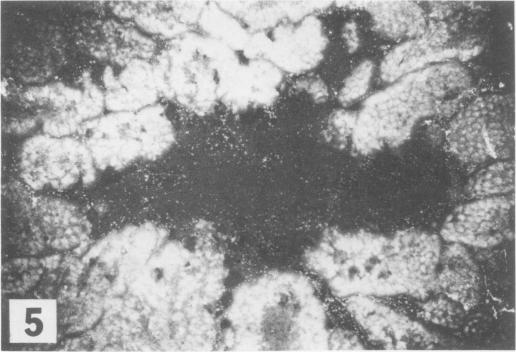
Infant mice 8 days of age were infected orally with virulent, motile, classical or El Tor strains of Vibrio cholerae and with nonmotile mutants of low virulence derived from the same strains. At intervals of 8 and 12 h postinfection, frozen thin sections of the ileum were prepared, stained with fluorescein isothiocyanate-labeled rabbit anti-vibrio antibody, and examined with the fluorescence microscope. The motile organisms were present in larger numbers, especially at 12h, and had penetrated the intervillous spaces and crypts of Lieberkuhn more completely than nonmotile vibrios. Dilution counts were made on various regions of the intestines of infant mice challenged orally 12 h previously with either motile or nonmotile strains of V. cholerae. Greater numbers of organisms were found, especially in the upper intestinal regions, when motile organisms were used. Low numbers of vibrios, limited mostly to the lumen, were seen in the ileum of infant mice infected with motile organisms when the infants were the offspring of mothers that had been immunized with crude flagellar vaccine or a vesicular preparation derived from the vibrio cell surface. The distribution of vibrios in this case was similar to that found in infected infants of unvaccinated mothers challenged with nonmotile organisms. Motility appears to enable the bacteria to better populate the upper regions of the intestinal tract and to avoid the washing effects of secretions and peristalsis. Antibacterial immunity may function, at least in part, by making it impossible for motile vibrios to accomplish this widespread distribution within the ileum.
8日龄的幼鼠经口感染霍乱弧菌的强毒株、运动型的经典株或埃尔托生物型菌株,以及源自相同菌株的低毒力非运动型突变体。在感染后8小时和12小时的间隔时间,制备回肠的冷冻薄切片,用异硫氰酸荧光素标记的兔抗弧菌抗体染色,并用荧光显微镜检查。运动型细菌数量更多,尤其是在12小时时,并且比非运动型弧菌更完全地穿透了绒毛间隙和利伯库恩隐窝。对12小时前经口用运动型或非运动型霍乱弧菌菌株攻击的幼鼠肠道的各个区域进行稀释计数。当使用运动型细菌时,发现细菌数量更多,尤其是在上部肠道区域。当幼鼠是用粗制鞭毛疫苗或源自弧菌细胞表面的囊泡制剂免疫过的母亲的后代时,在感染运动型细菌的幼鼠回肠中可见少量弧菌,主要局限于肠腔。在这种情况下,弧菌的分布与用非运动型细菌攻击的未接种疫苗母亲的感染婴儿中发现的分布相似。运动能力似乎使细菌能够更好地在肠道上部定植,并避免分泌物和蠕动的冲洗作用。抗菌免疫可能至少部分地通过使运动型弧菌无法在回肠内实现这种广泛分布而起作用。