Interdisciplinary Biological Sciences Graduate Program, Northwestern University, Evanston, Illinois, United States of America.
Department of Chemical and Biological Engineering, Northwestern University, Evanston, Illinois, United States of America.
PLoS One. 2020 Mar 9;15(3):e0226395. doi: 10.1371/journal.pone.0226395. eCollection 2020.
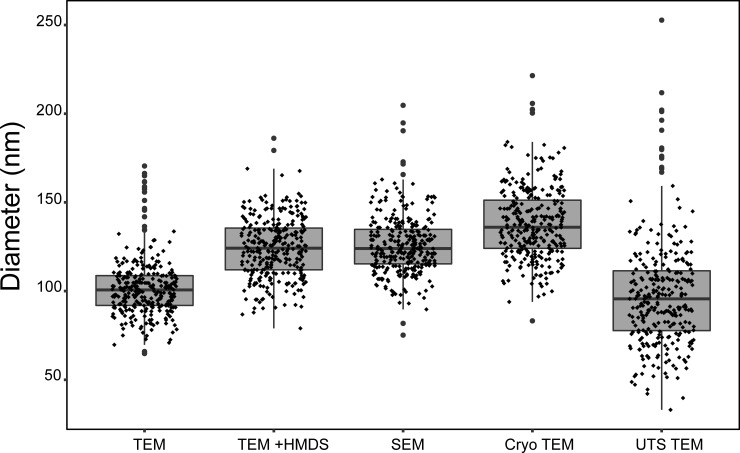
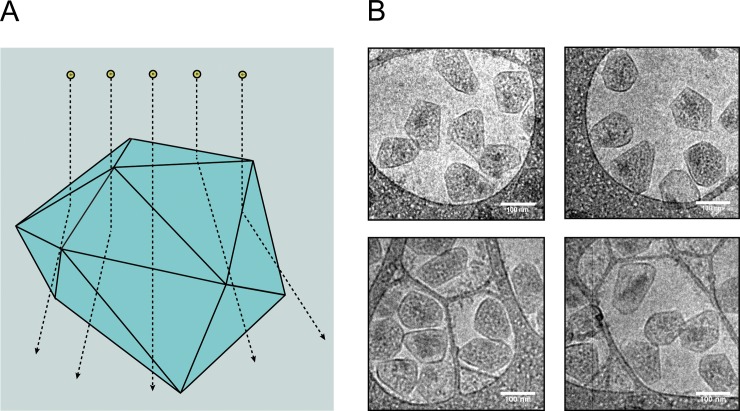
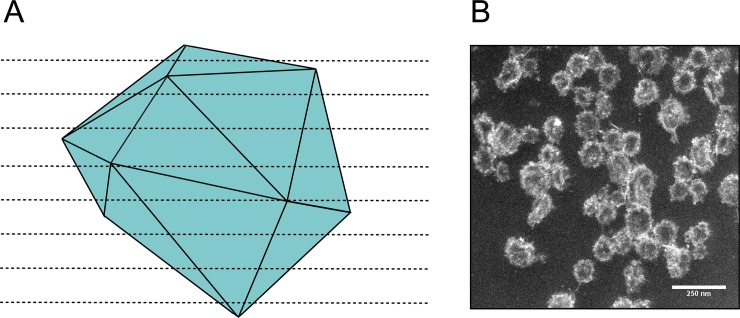
Bacterial microcompartments (MCPs) are protein-based organelles that encapsulate metabolic pathways. Metabolic engineers have recently sought to repurpose MCPs to encapsulate heterologous pathways to increase flux through pathways of interest. As MCP engineering becomes more common, standardized methods for analyzing changes to MCPs and interpreting results across studies will become increasingly important. In this study, we demonstrate that different imaging techniques yield variations in the apparent size of purified MCPs from Salmonella enterica serovar Typhimurium LT2, likely due to variations in sample preparation methods. We provide guidelines for preparing samples for MCP imaging and outline expected variations in apparent size and morphology between methods. With this report we aim to establish an aid for comparing results across studies.
细菌微室(MCP)是一种由蛋白质组成的细胞器,可包裹代谢途径。代谢工程师最近试图重新利用 MCP 来包裹异源途径,以增加目标途径的通量。随着 MCP 工程的日益普及,分析 MCP 变化并在研究之间解释结果的标准化方法将变得越来越重要。在这项研究中,我们表明,不同的成像技术会导致来自鼠伤寒沙门氏菌 LT2 的纯化 MCP 的表观尺寸出现差异,这可能是由于样品制备方法的差异所致。我们提供了用于 MCP 成像的样品制备指南,并概述了不同方法之间在表观尺寸和形态上的预期差异。通过本报告,我们旨在建立一种比较不同研究结果的辅助工具。