Vítor Alexandra C, Huertas Pablo, Legube Gaëlle, de Almeida Sérgio F
Instituto de Medicina Molecular João Lobo Antunes, Faculdade de Medicina da Universidade de Lisboa, Lisbon, Portugal.
Department of Genetics, University of Seville, Seville, Spain.
Front Mol Biosci. 2020 Feb 21;7:24. doi: 10.3389/fmolb.2020.00024. eCollection 2020.
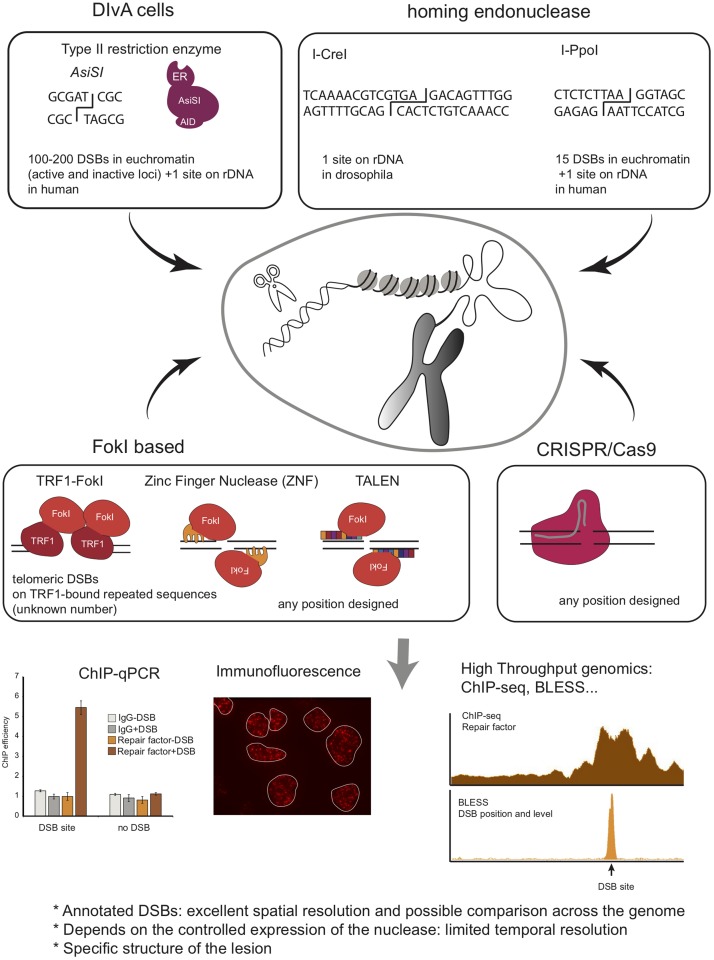
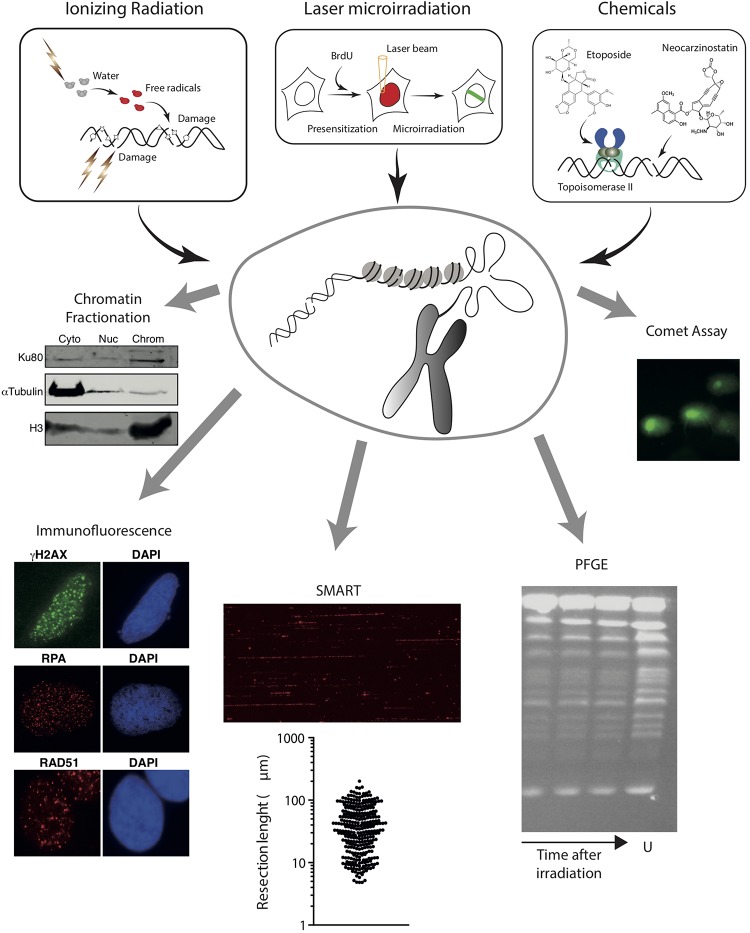
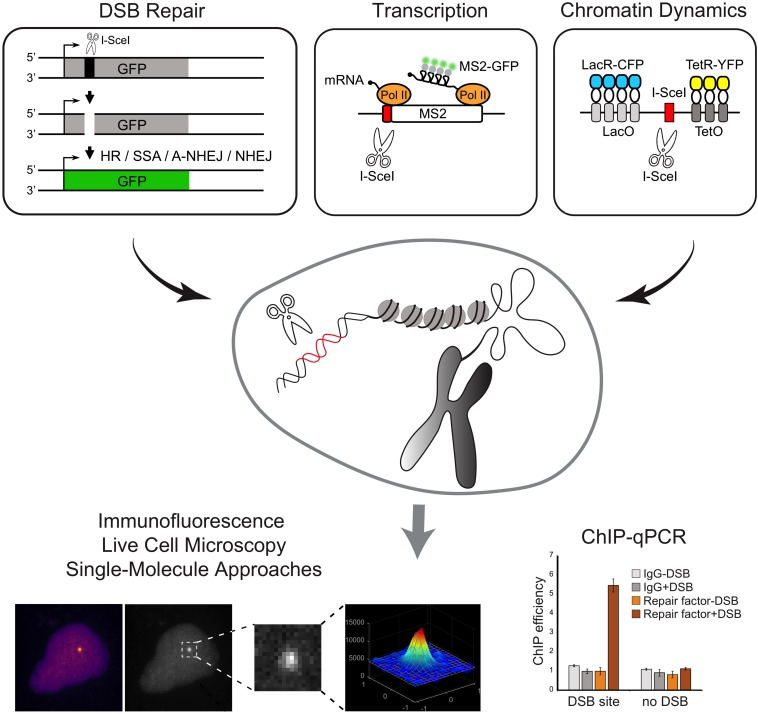
To ward off against the catastrophic consequences of persistent DNA double-strand breaks (DSBs), eukaryotic cells have developed a set of complex signaling networks that detect these DNA lesions, orchestrate cell cycle checkpoints and ultimately lead to their repair. Collectively, these signaling networks comprise the DNA damage response (DDR). The current knowledge of the molecular determinants and mechanistic details of the DDR owes greatly to the continuous development of ground-breaking experimental tools that couple the controlled induction of DSBs at distinct genomic positions with assays and reporters to investigate DNA repair pathways, their impact on other DNA-templated processes and the specific contribution of the chromatin environment. In this review, we present these tools, discuss their pros and cons and illustrate their contribution to our current understanding of the DDR.
为抵御持续性DNA双链断裂(DSB)带来的灾难性后果,真核细胞已形成一套复杂的信号网络,用于检测这些DNA损伤、协调细胞周期检查点并最终实现修复。这些信号网络共同构成了DNA损伤反应(DDR)。目前关于DDR分子决定因素和机制细节的认识,在很大程度上归功于开创性实验工具的不断发展,这些工具将在不同基因组位置可控诱导DSB与检测方法和报告基因相结合,以研究DNA修复途径、其对其他DNA模板化过程的影响以及染色质环境的具体作用。在本综述中,我们介绍这些工具,讨论其优缺点,并阐述它们对我们当前理解DDR的贡献。