Geng Bo-Yu, Cao Lian-Ying, Li Feng, Song Hao, Liu Chen-Guang, Zhao Xin-Qing, Bai Feng-Wu
1State Key Laboratory of Microbial Metabolism, Joint International Research Laboratory of Metabolic & Developmental Sciences of Ministry of Education, School of Life Sciences and Biotechnology, Shanghai Jiao Tong University, Shanghai, 200240 China.
2Key Laboratory of Systems Bioengineering (Ministry of Education), School of Chemical Engineering and Technology, Tianjin University, Tianjin, 300072 China.
Biotechnol Biofuels. 2020 Mar 5;13:36. doi: 10.1186/s13068-020-01672-5. eCollection 2020.
Microbial fuel cell (MFC) convokes microorganism to convert biomass into electricity. However, most well-known electrogenic strains cannot directly use glucose to produce valuable products. , a promising bacterium for ethanol production, owns special Entner-Doudoroff pathway with less ATP and biomass produced and the low-energy coupling respiration, making a potential exoelectrogen.
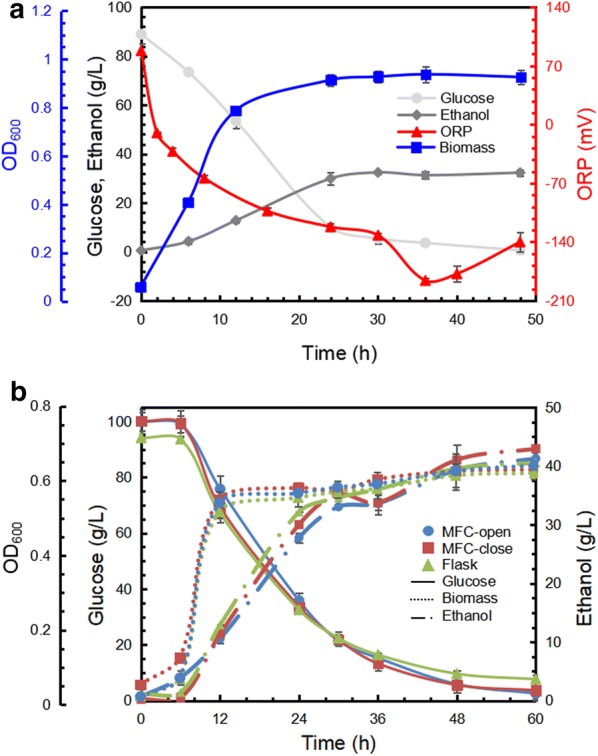
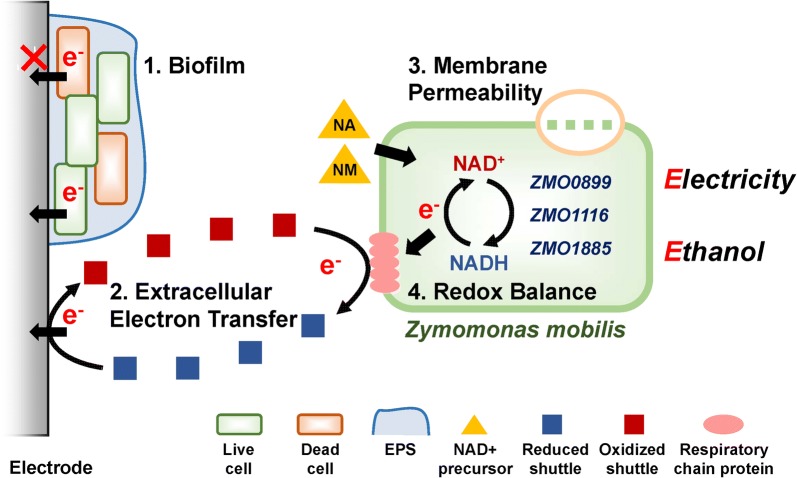
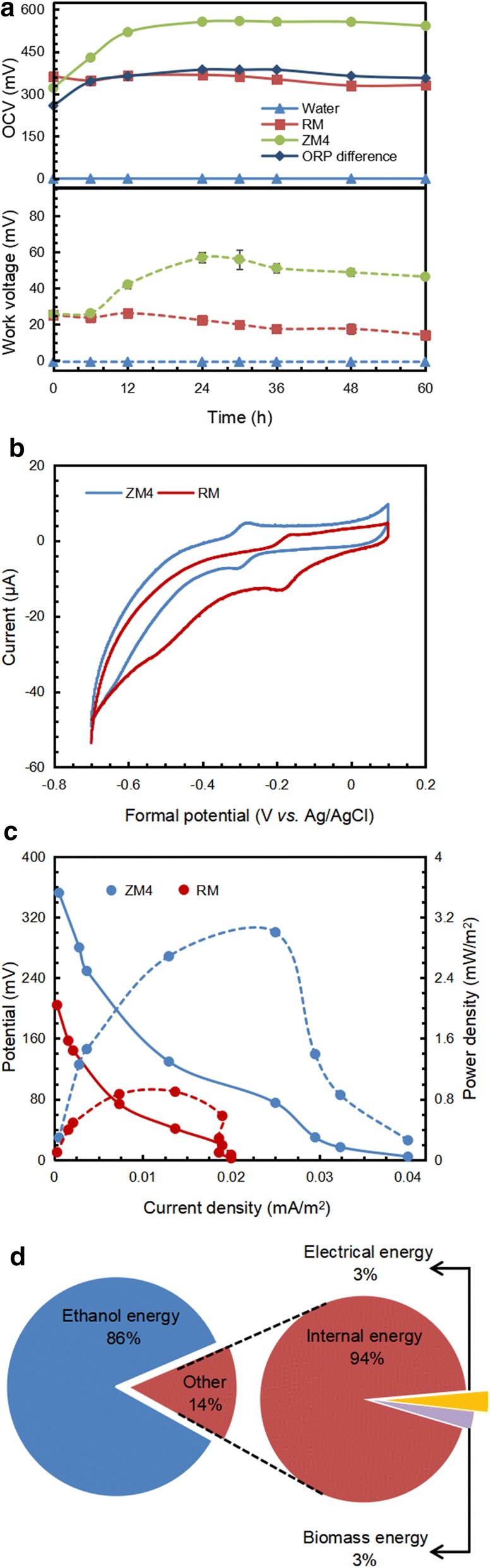
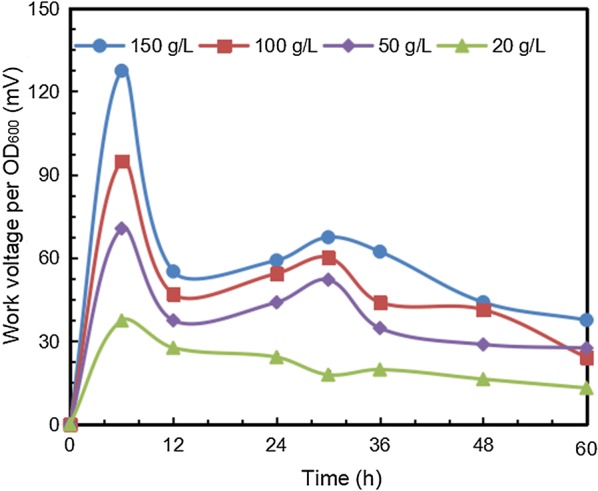
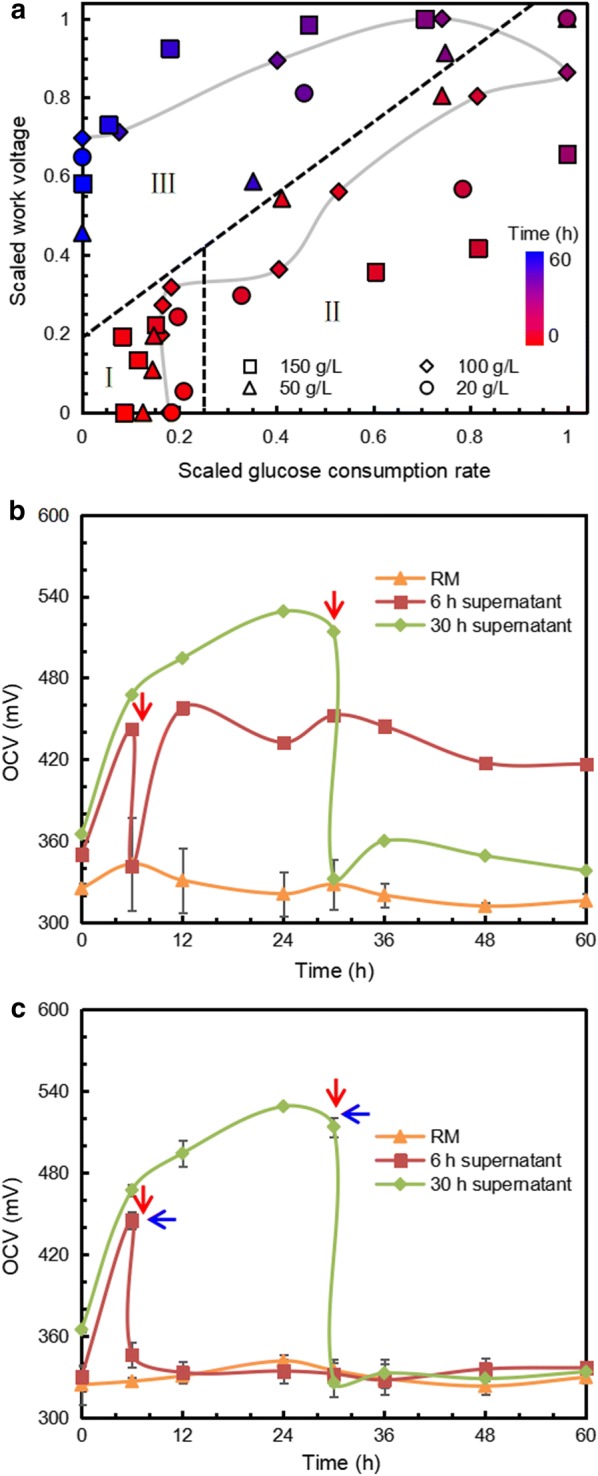
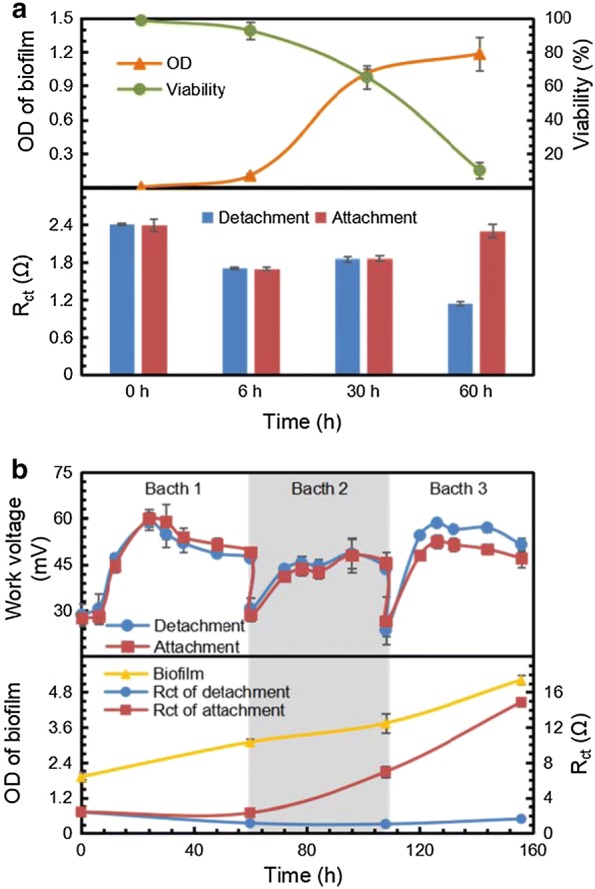
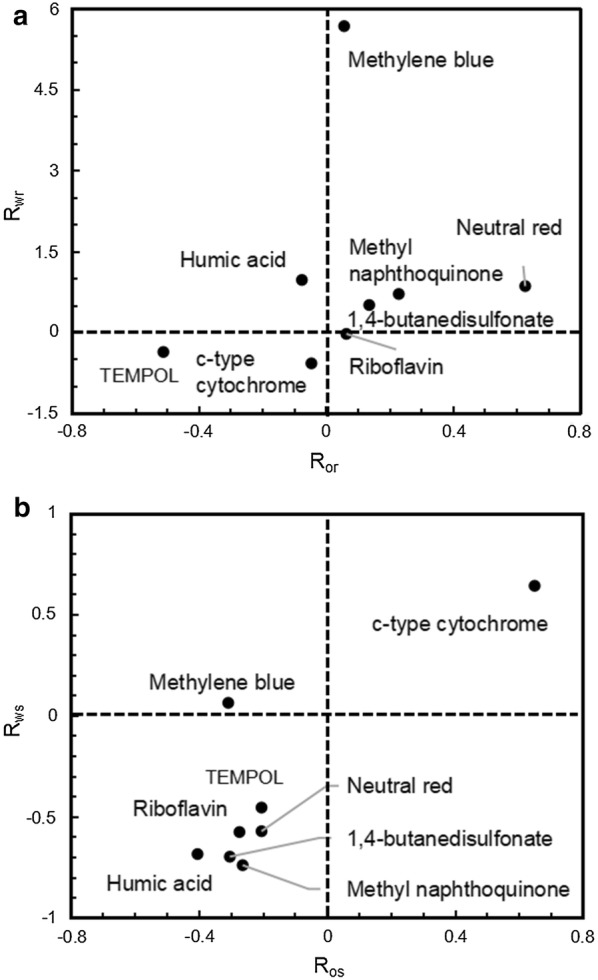
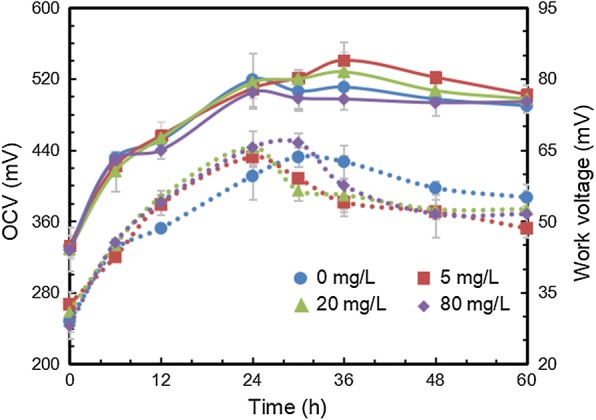
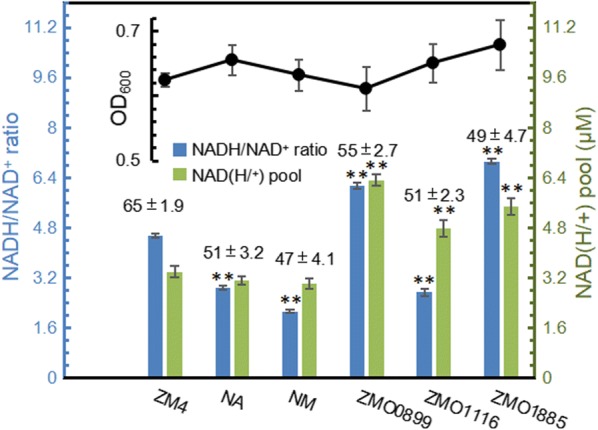
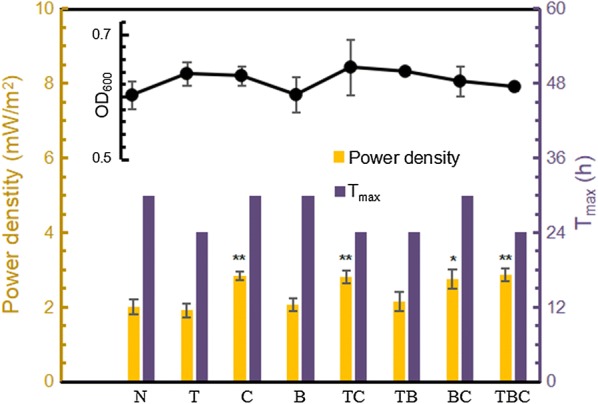
A glucose-consuming MFC is constructed by inoculating . The electricity with power density 2.0 mW/m is derived from the difference of oxidation-reduction potential (ORP) between anode and cathode chambers. Besides, two-type electricity generation is observed as glucose-independent process and glucose-dependent process. For the sake of enhancing MFC efficiency, extracellular and intracellular strategies are implemented. Biofilm removal and addition of -type cytochrome benefit electricity performance and Tween 80 accelerates the electricity generation. Perturbation of cellular redox balance compromises the electricity output, indicating that redox homeostasis is the principal requirement to reach ideal voltage.
This study identifies potential feature of electricity activity for and provides multiple strategies to enhance the electricity output. Therefore, additional electricity generation will benefit the techno-economic viability of the commercial bulk production for biochemicals or biofuels in an efficient and environmentally sustainable manner.
微生物燃料电池(MFC)促使微生物将生物质转化为电能。然而,大多数知名的产电菌株不能直接利用葡萄糖来生产有价值的产品。作为一种有前景的乙醇生产细菌,具有特殊的Entner-Doudoroff途径,产生的ATP和生物质较少,且能量耦合呼吸较低,使其成为一种潜在的外排电子菌。
通过接种构建了一个消耗葡萄糖的MFC。功率密度为2.0 mW/m²的电能源自阳极室和阴极室之间氧化还原电位(ORP)的差异。此外,观察到两种发电类型,即不依赖葡萄糖的过程和依赖葡萄糖的过程。为了提高MFC效率,实施了细胞外和细胞内策略。去除生物膜和添加某型细胞色素有利于电性能,吐温80加速发电。细胞氧化还原平衡的扰动会损害电输出,表明氧化还原稳态是达到理想电压的主要要求。
本研究确定了某菌电活性的潜在特征,并提供了多种提高电输出的策略。因此,额外发电将以高效且环境可持续的方式有利于生物化学品或生物燃料商业大规模生产的技术经济可行性。