Tabassum Sadia, Zafar Kamil, Umer Fahad
Department of Operative Dentistry, Jinnah Medical and Dental College, Karachi, Pakistan.
Department of Surgery (Section of Operative Dentistry), Aga Khan University Hospital, Karachi, Pakistan.
Eur Endod J. 2019 Oct 18;4(3):111-117. doi: 10.14744/eej.2019.80664. eCollection 2019.
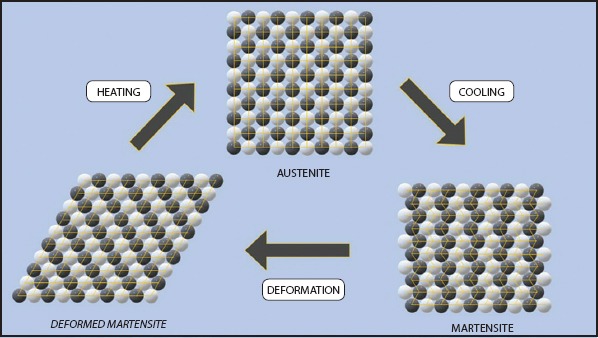
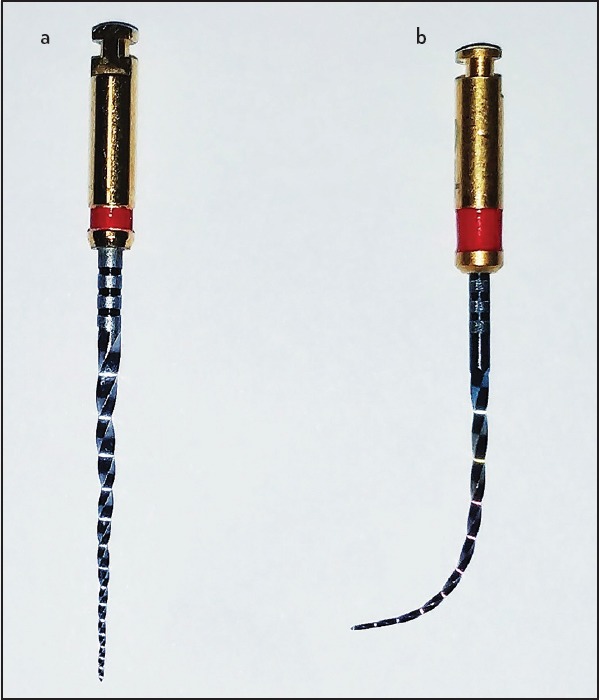
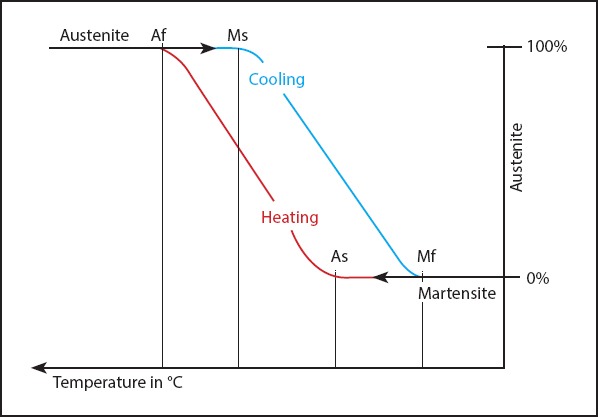
Ever since their introduction, nickel-titanium (NiTi) alloys have continued to revolutionize the field of endodontics. They have considerable advantages over the conventional stainless steel file in terms of mechanical properties. However, despite of their superior mechanical properties, NiTi alloys still pose some risk of fracture. Consequently, there has been considerable research conducted to investigate the mechanisms behind the occurrence of these procedural errors. Since the last decade, different proprietary processing procedures have been introduced to further improve the mechanical properties of NiTi alloys. These treatments include thermal, mechanical, electropolishing, and recently introduced electric discharge machining. The main purpose of these treatments is to impart a more martensitic phase into the files at normal body temperature, so that the maximum advantage of flexibility can be obtained. These heat-treated instruments also possess improved cyclic fatigue resistance when compared to conventional NiTi alloys. NiTi alloys can be subclassified as the instruments mainly containing austenitic phase (conventional NiTi, M-wire, R-phase), and those containing martensitic phase (controlled memory wire, ProTaper Gold, and Vortex Blue). Instruments based on austenitic alloys possess superelastic properties due to the stress-induced martensitic transformation. Contrary to this, martensitic alloys can easily be deformed due to phase transformation, and they can demonstrate the shape memory effect when heated. This review discusses the different phase transformations and heat treatments that the NiTi instruments undergo.
自镍钛(NiTi)合金问世以来,它们一直在不断革新牙髓病学领域。在机械性能方面,它们比传统的不锈钢锉具有相当大的优势。然而,尽管镍钛合金具有卓越的机械性能,但仍存在一定的断裂风险。因此,人们进行了大量研究来探究这些操作失误发生背后的机制。自上世纪九十年代以来,已引入了不同的专有加工工艺以进一步改善镍钛合金的机械性能。这些处理包括热加工、机械加工、电解抛光以及最近引入的电火花加工。这些处理的主要目的是在正常体温下使锉具具有更多的马氏体相,从而能够获得最大程度的柔韧性优势。与传统镍钛合金相比,这些经过热处理的器械还具有更好的抗循环疲劳性能。镍钛合金可细分为主要含有奥氏体相的器械(传统镍钛合金、M 型锉、R 相)以及含有马氏体相的器械(可控记忆锉、ProTaper Gold 和 Vortex Blue)。基于奥氏体合金的器械由于应力诱导马氏体相变而具有超弹性性能。与此相反,马氏体合金由于相变很容易变形,并且在加热时能表现出形状记忆效应。本文综述了镍钛器械所经历的不同相变和热处理。