Faculty of Tropical AgriSciences, Czech University of Life Sciences in Prague, Prague 165 00, Czech Republic.
Section of Infectious Diseases, Department of Internal Medicine, Yale University School of Medicine, New Haven, CT 06420, USA.
Int J Environ Res Public Health. 2020 Mar 12;17(6):1830. doi: 10.3390/ijerph17061830.
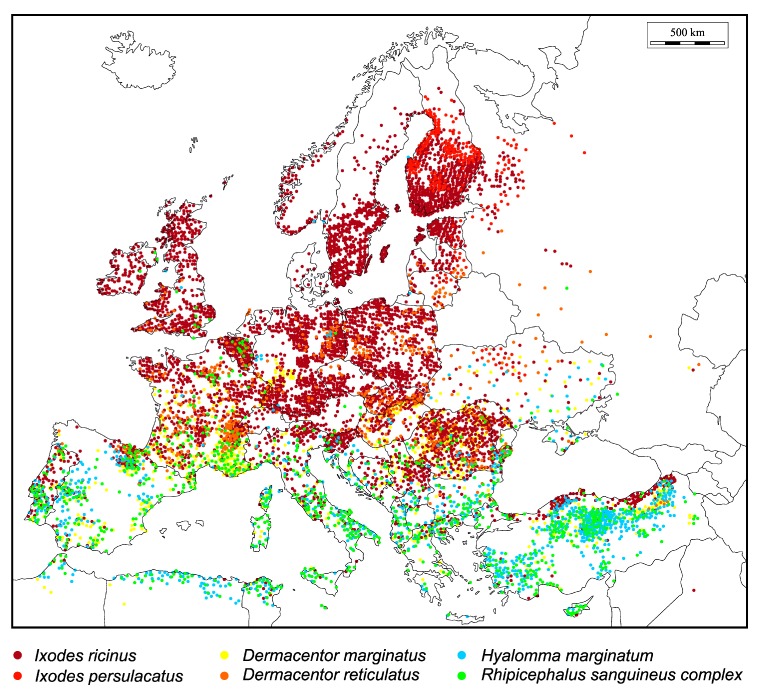
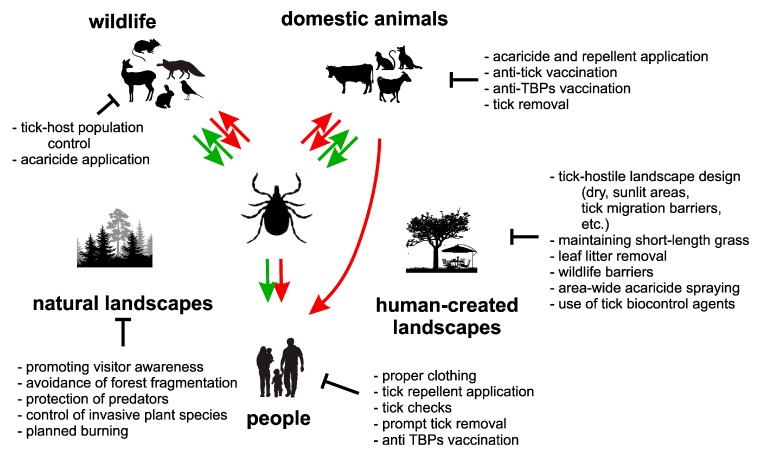
Ticks are important human and animal parasites and vectors of many infectious disease agents. Control of tick activity is an effective tool to reduce the risk of contracting tick-transmitted diseases. The castor bean tick () is the most common tick species in Europe. It is also a vector of the causative agents of Lyme borreliosis and tick-borne encephalitis, which are two of the most important arthropod-borne diseases in Europe. In recent years, increases in tick activity and incidence of tick-borne diseases have been observed in many European countries. These increases are linked to many ecological and anthropogenic factors such as landscape management, climate change, animal migration, and increased popularity of outdoor activities or changes in land usage. Tick activity is driven by many biotic and abiotic factors, some of which can be effectively managed to decrease risk of tick bites. In the USA, recommendations for landscape management, tick host control, and tick chemical control are well-defined for the applied purpose of reducing tick presence on private property. In Europe, where fewer studies have assessed tick management strategies, the similarity in ecological factors influencing vector presence suggests that approaches that work in USA may also be applicable. In this article we review key factors driving the tick exposure risk in Europe to select those most conducive to management for decreased tick-associated risk.
蜱是重要的人类和动物寄生虫,也是许多传染病病原体的传播媒介。控制蜱的活动是降低感染蜱传播疾病风险的有效手段。蓖麻蜱()是欧洲最常见的蜱种。它还是莱姆病和蜱传脑炎病原体的传播媒介,这两种疾病是欧洲最重要的两种虫媒病。近年来,许多欧洲国家的蜱活动和蜱传疾病的发病率都有所增加。这些增加与许多生态和人为因素有关,如景观管理、气候变化、动物迁徙以及户外活动的普及或土地使用的变化。蜱的活动受到许多生物和非生物因素的驱动,其中一些因素可以通过有效的管理来降低蜱叮咬的风险。在美国,为了减少私人财产上蜱的存在,已经为景观管理、蜱宿主控制和蜱化学控制制定了明确的建议,用于特定目的。在欧洲,由于评估蜱管理策略的研究较少,影响媒介存在的生态因素相似,因此在美国有效的方法也可能适用。本文综述了影响欧洲蜱暴露风险的关键因素,以选择那些最有利于管理、降低与蜱相关的风险的因素。