Wound Healing and Cell Biology Laboratory, Institute of Basic Medical Sciences, General Hospital of PLA, Beijing 100853, P. R. China.
Key Laboratory of Tissue Repair and Regeneration of PLA and Beijing Key Research Laboratory of Skin Injury, Repair and Regeneration, First Affiliated Hospital of PLA General Hospital, Beijing 100048, P.R. China.
Sci Adv. 2020 Mar 4;6(10):eaaz1094. doi: 10.1126/sciadv.aaz1094. eCollection 2020 Mar.
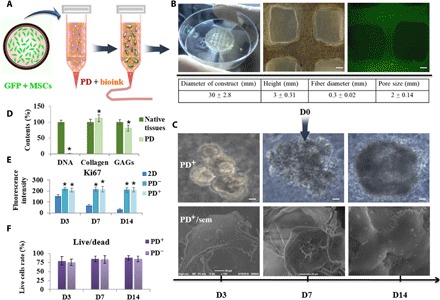
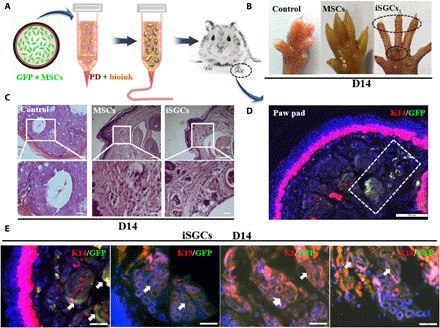
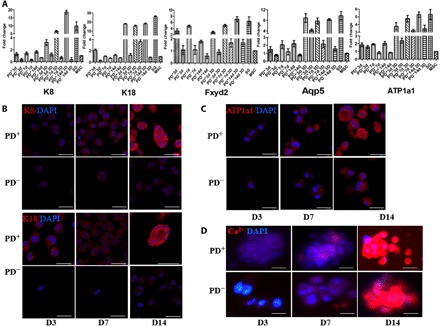
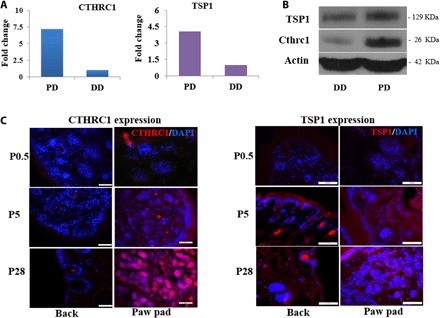
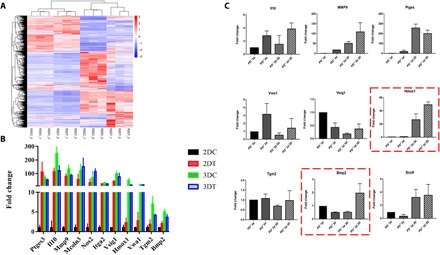
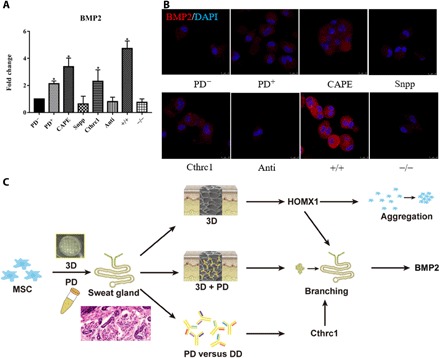
Mesenchymal stem cells (MSCs) encapsulation by three-dimensionally (3D) printed matrices were believed to provide a biomimetic microenvironment to drive differentiation into tissue-specific progeny, which made them a great therapeutic potential for regenerative medicine. Despite this potential, the underlying mechanisms of controlling cell fate in 3D microenvironments remained relatively unexplored. Here, we bioprinted a sweat gland (SG)-like matrix to direct the conversion of MSC into functional SGs and facilitated SGs recovery in mice. By extracellular matrix differential protein expression analysis, we identified that CTHRC1 was a critical biochemical regulator for SG specification. Our findings showed that could respond to the 3D structure activation and also be involved in MSC differentiation. Using inhibition and activation assay, CTHRC1 and synergistically boosted SG gene expression profile. Together, these findings indicated that biochemical and structural cues served as two critical impacts of 3D-printed matrix on MSC fate decision into the glandular lineage and functional SG recovery.
间质干细胞(MSCs)的三维(3D)打印基质包封被认为为细胞分化为组织特异性祖细胞提供了仿生微环境,这使它们在再生医学中具有巨大的治疗潜力。尽管有这种潜力,但控制 3D 微环境中细胞命运的潜在机制仍相对未知。在这里,我们生物打印了一个类似于汗腺(SG)的基质,以指导 MSC 转化为功能性 SG 并促进小鼠 SG 的恢复。通过细胞外基质差异蛋白表达分析,我们确定 CT-HRC1 是 SG 特化的关键生化调节剂。我们的研究结果表明, 可以响应 3D 结构的激活,并且也参与 MSC 的分化。通过抑制和激活测定,CT-HRC1 和 协同增强 SG 基因表达谱。总之,这些发现表明生化和结构线索是 3D 打印基质对 MSC 命运决定进入腺体谱系和功能性 SG 恢复的两个关键影响因素。