Khan Raja Asad Ali, Najeeb Saba, Mao Zhenchuan, Ling Jian, Yang Yuhong, Li Yan, Xie Bingyan
Institute of Vegetables and Flowers, Chinese Academy of Agricultural Sciences, Beijing 100081, China.
Microorganisms. 2020 Mar 13;8(3):401. doi: 10.3390/microorganisms8030401.
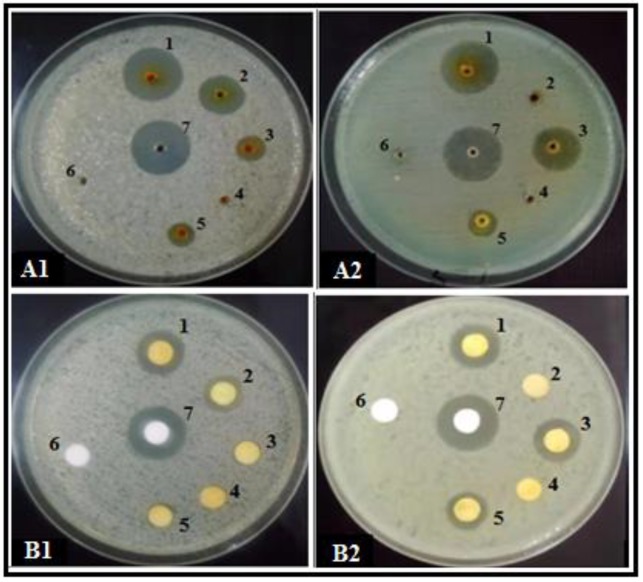
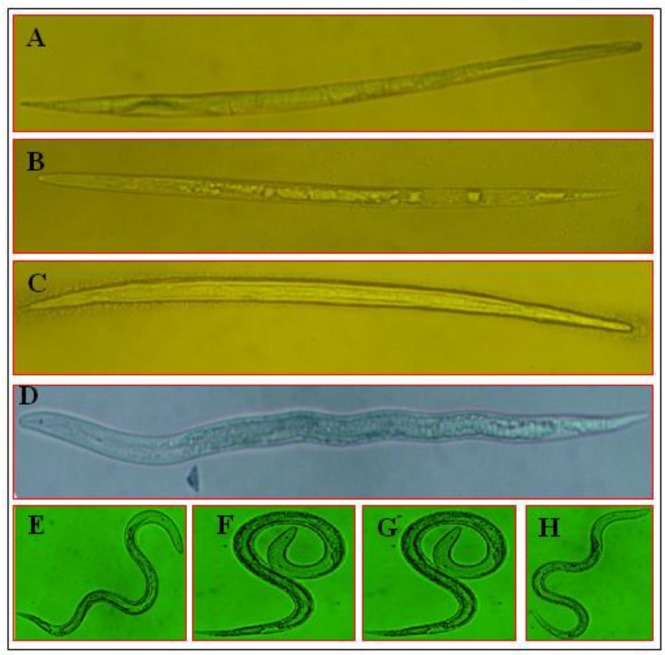
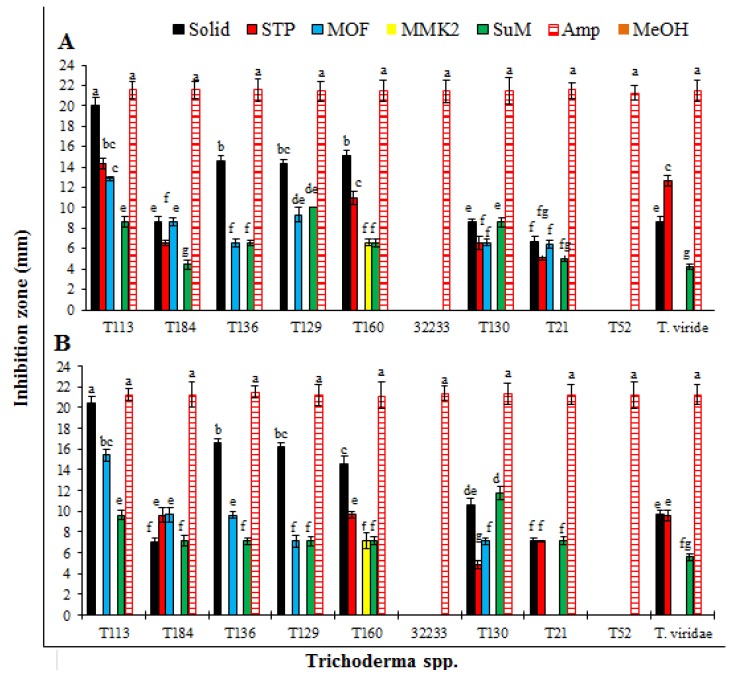
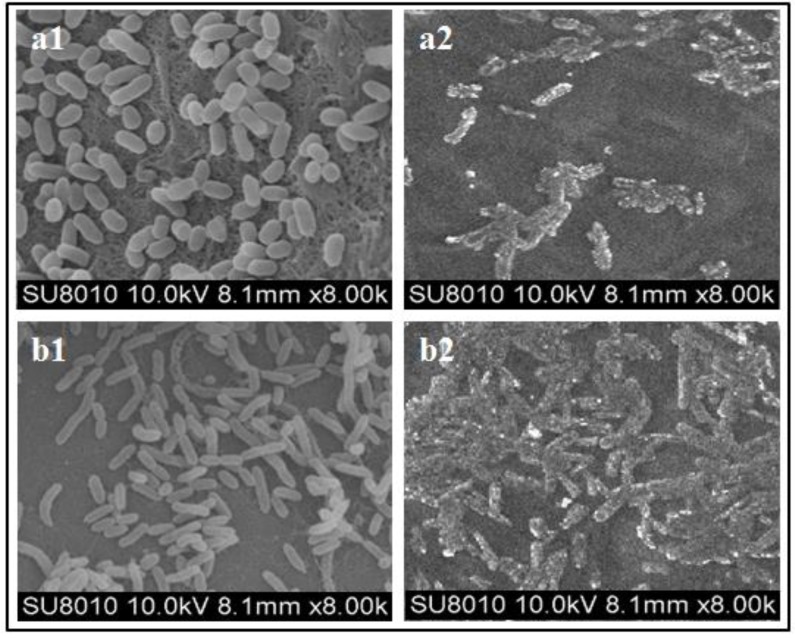
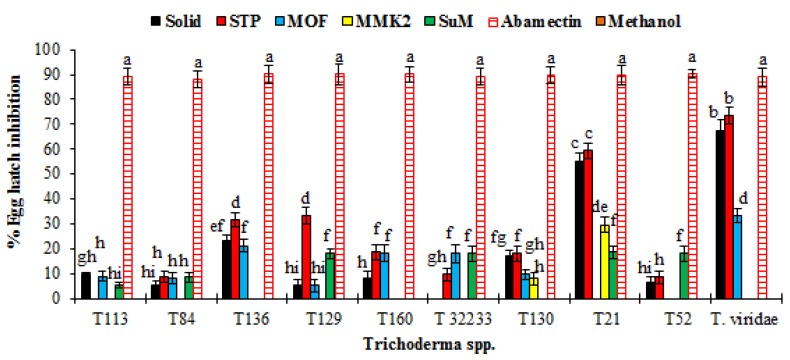
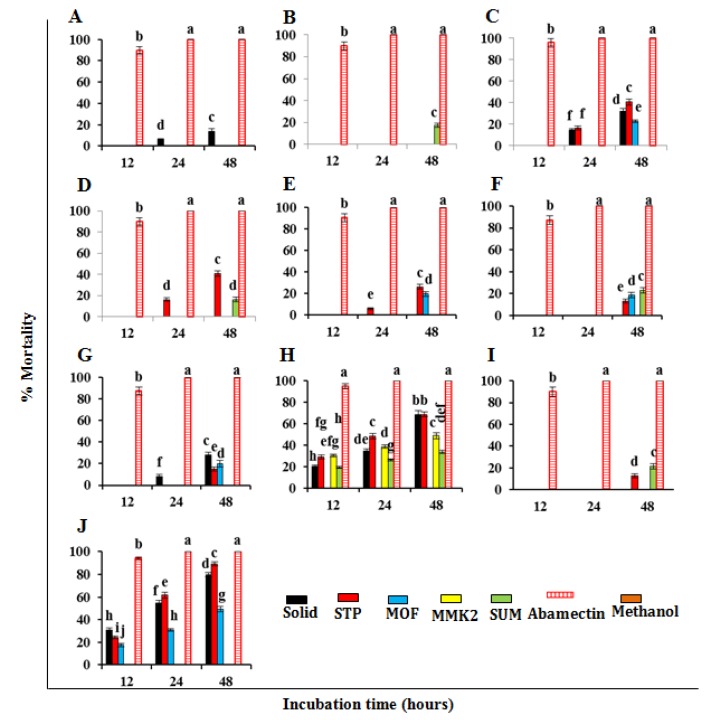
Losses in crops caused by plant pathogenic bacteria and parasitic nematode are increasing because of a decrease in efficacy of traditional management measures. There is an urgent need to develop nonchemical and ecofriendly based management to control plant diseases. A potential approach of controlling plant disease in the crops is the use of biocontrol agents and their secondary metabolites (SMs). Luckily fungi and especially the genus comprise a great number of fungal strains that are the potential producer of bioactive secondary metabolites. In this study secondary metabolites from ten spp. were evaluated for their antibacterial and nematicidal potential against phytopathogenic bacteria , and plant parasitic nematode . Five different growth media were evaluated for the production of SMs. It was shown that SMs of different spp. obtained on different growth media were different in the degree of their bioactivity. Comparison of five growth media showed that SMs produced on solid wheat and STP media gave higher antibacterial activity. SMs of (T113) obtained on solid wheat media were more effective against the studied bacteria followed by SMs from (T136), (T129) and (T160). Scanning electron microscopy (SEM) was further conducted to observe the effect of SMs on bacterial cell morphology. As evident from the SEM, SMs produced severe morphological changes, such as rupturing of the bacterial cell walls, disintegration of cell membrane and cell content leaking out. SMs from obtained on liquid STP and solid wheat media showed the highest percent of juveniles (J2s) mortality and inhibition in egg hatching of . The results of our study suggest that (T113) and could be selected as an effective candidate for SMs source against phytopathogenic bacteria and respectively.
由于传统管理措施的效力下降,植物病原细菌和寄生线虫造成的作物损失正在增加。迫切需要开发基于非化学和生态友好型的管理方法来控制植物病害。控制作物中植物病害的一种潜在方法是使用生物防治剂及其次生代谢产物(SMs)。幸运的是,真菌尤其是该属包含大量潜在产生生物活性次生代谢产物的真菌菌株。在本研究中,对十种[真菌名称]的次生代谢产物针对植物病原细菌[细菌名称]和植物寄生线虫[线虫名称]的抗菌和杀线虫潜力进行了评估。评估了五种不同的生长培养基用于次生代谢产物的生产。结果表明,在不同生长培养基上获得的不同[真菌名称]的次生代谢产物在生物活性程度上有所不同。对五种生长培养基的比较表明,在固体小麦和STP培养基上产生的次生代谢产物具有更高的抗菌活性。在固体小麦培养基上获得的[真菌名称T113]的次生代谢产物对所研究的细菌更有效,其次是来自[真菌名称T136]、[真菌名称T129]和[真菌名称T160]的次生代谢产物。进一步进行扫描电子显微镜(SEM)观察次生代谢产物对细菌细胞形态的影响。从扫描电子显微镜可以明显看出,次生代谢产物引起了严重的形态变化,如细菌细胞壁破裂、细胞膜解体和细胞内容物泄漏。在液体STP和固体小麦培养基上获得来自[真菌名称]的次生代谢产物对[线虫名称]的二龄幼虫(J2s)死亡率和卵孵化抑制率最高。我们的研究结果表明,[真菌名称T113]和[真菌名称]可分别被选为针对植物病原细菌和[线虫名称]的次生代谢产物来源的有效候选者。