CAS Key Laboratory of Standardization and Measurement for Nanotechnology, CAS Center for Excellence in Nanoscience, National Center for Nanoscience and Technology, Beijing 100190, People's Republic of China.
CAS Key Laboratory for Biomedical Effects of Nanomaterials and Nanosafety, CAS Center for Excellence in Nanoscience, National Center for Nanoscience and Technology, Beijing 100190, People's Republic of China.
Int J Nanomedicine. 2020 Mar 6;15:1481-1498. doi: 10.2147/IJN.S220082. eCollection 2020.
It is well known that when exposed to human blood plasma, nanoparticles are predominantly coated by a layer of proteins, forming a corona that will mediate the subsequent cell interactions. Magnetosomes are protein-rich membrane nanoparticles which are synthesized by magnetic bacteria; these have gained a lot of attention owing to their unique magnetic and biochemical characteristics. Nevertheless, whether bacterial magnetosomes have a corona after interacting with the plasma, and how such a corona affects nanoparticle-cell interactions is yet to be elucidated. The aim of this study was to characterize corona formation around a bacterial magnetosome and to assess the functional consequences.
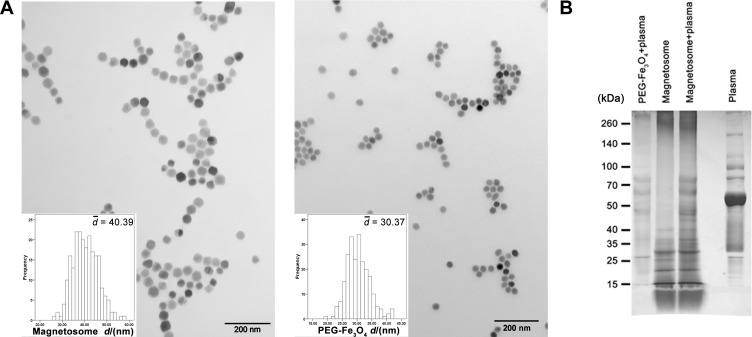
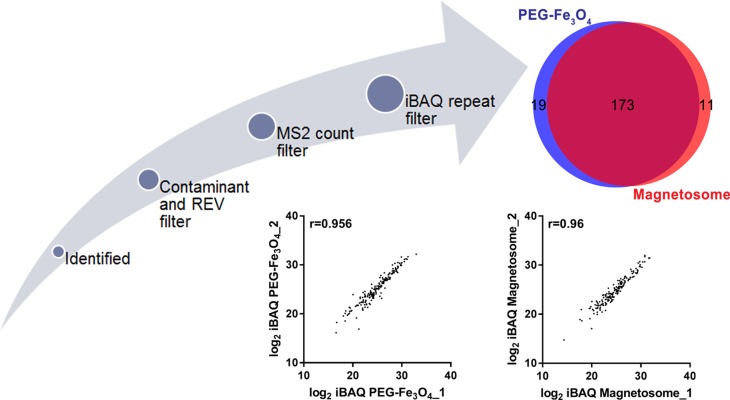
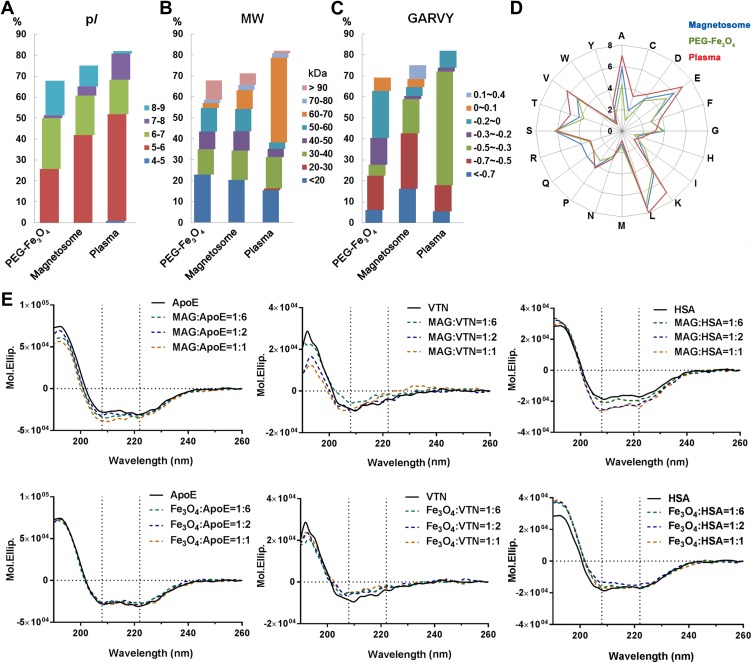
Magnetosomes were isolated from the magnetotactic bacteria, (MSR-1). Size, morphology, and zeta potential were measured by transmission electron microscopy and dynamic light scattering. A quantitative characterization of plasma corona proteins was performed using LC-MS/MS. Protein absorption was further examined by circular dichroism and the effect of the corona on cellular uptake was investigated by microscopy and spectroscopy.
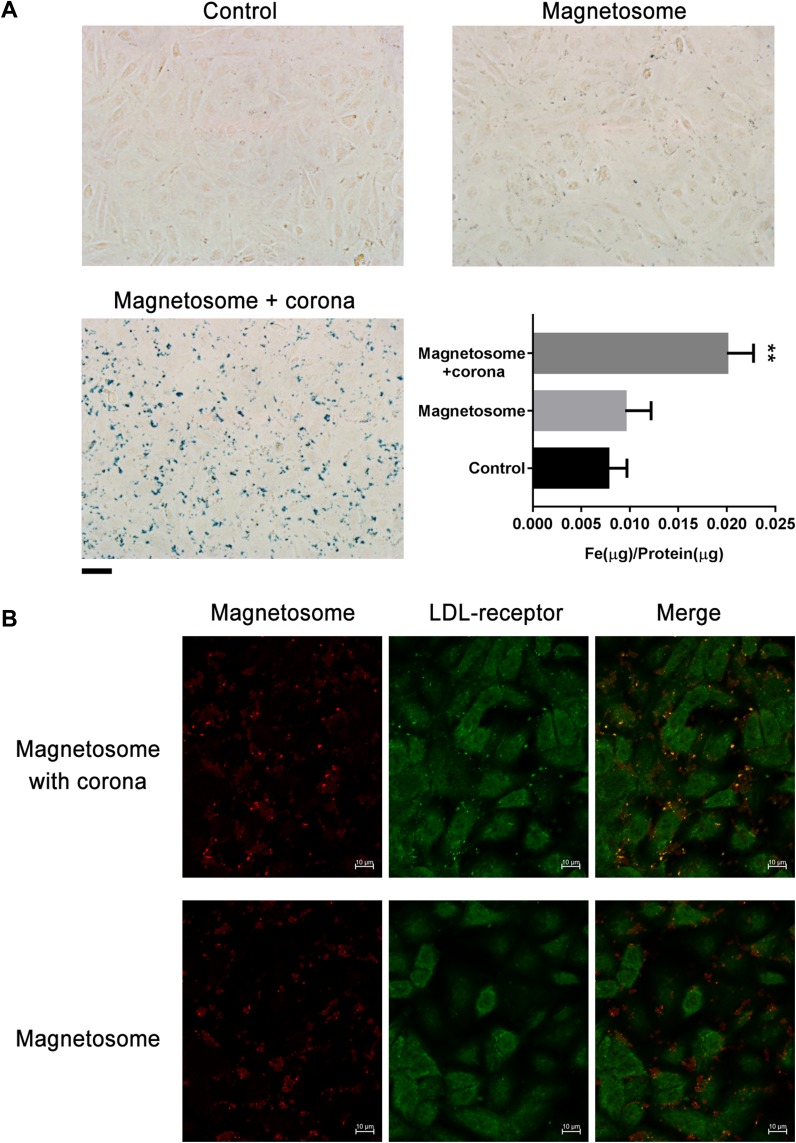
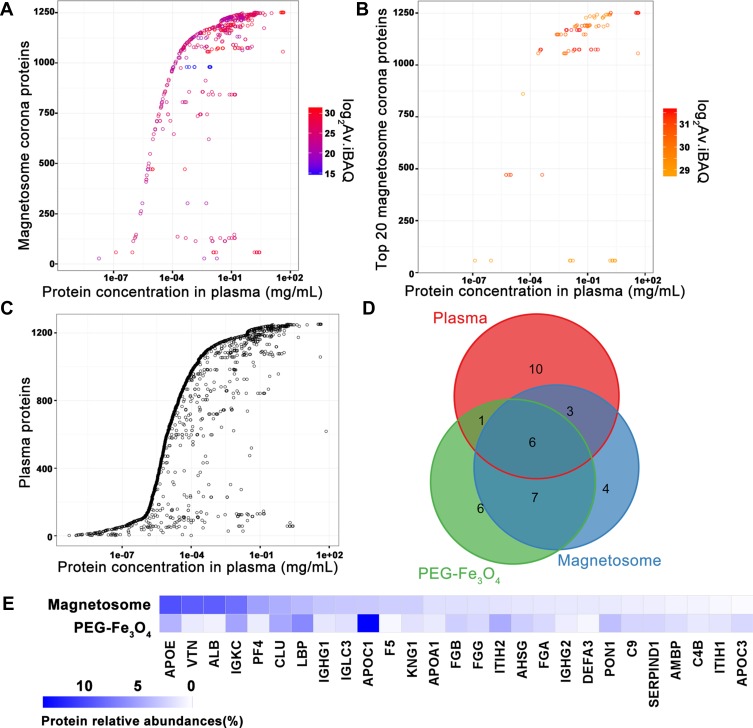
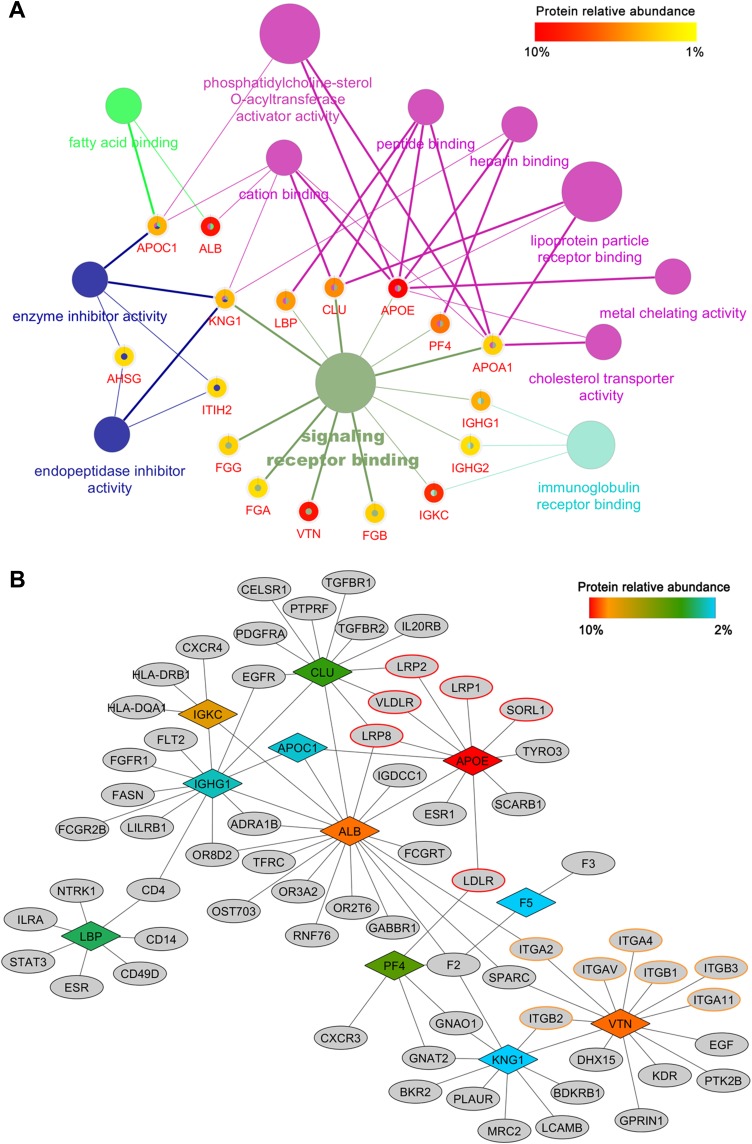
Various serum proteins were found to be selectively adsorbed on the surface of the bacterial magnetosomes following plasma exposure, forming a corona. Compared to the pristine magnetosomes, the acquired corona promoted efficient cellular uptake by human vascular endothelial cells. Using a protein-interaction prediction method, we identified cell surface receptors that could potentially associate with abundant corona components. Of these, one abundant corona protein, ApoE, may be responsible for internalization of the magnetosome-corona complex through LDL receptor-mediated internalization.
Our findings provide clues as to the physiological response to magnetosomes and also reveal the corona composition of this membrane-coated nanomaterial after exposure to blood plasma.
众所周知,当纳米颗粒暴露于人类血浆中时,主要会被一层蛋白质所覆盖,形成一个会介导后续细胞相互作用的“冠”。磁小体是由磁性细菌合成的富含蛋白质的膜纳米颗粒,由于其独特的磁学和生化特性而备受关注。然而,磁小体与血浆相互作用后是否会形成“冠”,以及这种“冠”如何影响纳米颗粒与细胞的相互作用,目前仍不清楚。本研究旨在对细菌磁小体周围“冠”的形成进行表征,并评估其功能后果。
从趋磁细菌(MSR-1)中分离出磁小体。通过透射电子显微镜和动态光散射测量其大小、形态和zeta 电位。使用 LC-MS/MS 对血浆“冠”蛋白进行定量表征。通过圆二色性进一步研究蛋白质的吸附,通过显微镜和光谱学研究“冠”对细胞摄取的影响。
暴露于血浆后,发现各种血清蛋白会选择性地吸附在细菌磁小体的表面,形成“冠”。与原始磁小体相比,获得的“冠”促进了人血管内皮细胞的有效摄取。使用蛋白质相互作用预测方法,我们鉴定出可能与丰富的“冠”成分相关的细胞表面受体。在这些受体中,一种丰富的“冠”蛋白 ApoE 可能通过 LDL 受体介导的内吞作用,负责内吞磁小体-“冠”复合物。
我们的发现为磁小体的生理反应提供了线索,并揭示了暴露于血浆后这种膜包裹纳米材料的“冠”组成。