Meng Xianglong, Ma Junnan, Kang Seok Yong, Jung Hyo Won, Park Yong-Ki
1Department of Herbology, College of Korean Medicine, Dongguk University, Gyeongju, 38066 Korea.
Experimental Teaching Center, College of Chinese Materia Medica, Shanxi University of Chinese Medicine, Jinzhong, 030619 China.
Chin Med. 2020 Mar 12;15:24. doi: 10.1186/s13020-020-00306-0. eCollection 2020.
Jowiseungki decoction (JSD) is a prescription commonly used for the treatment of diabetic complications or diabetic nephropathy (DN) in traditional medicine clinics. However, the underlying therapeutic mechanisms of JSD are still unclear.
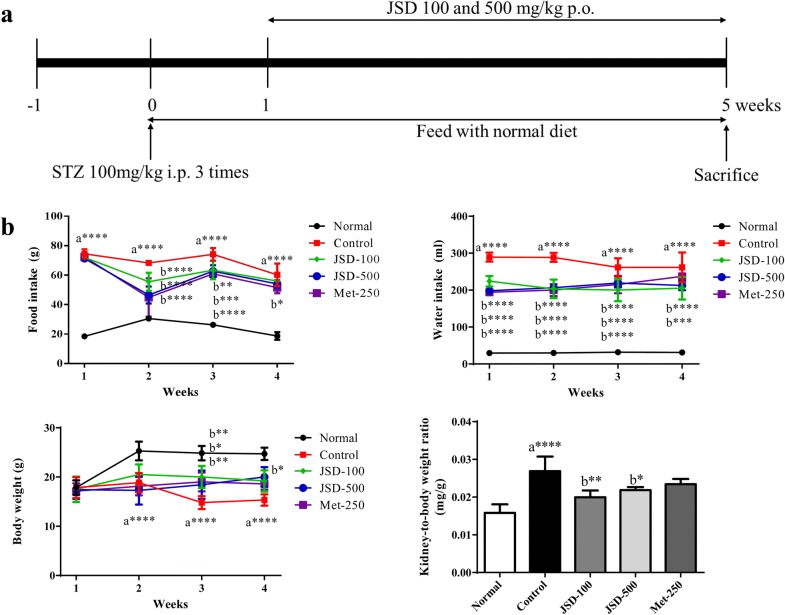
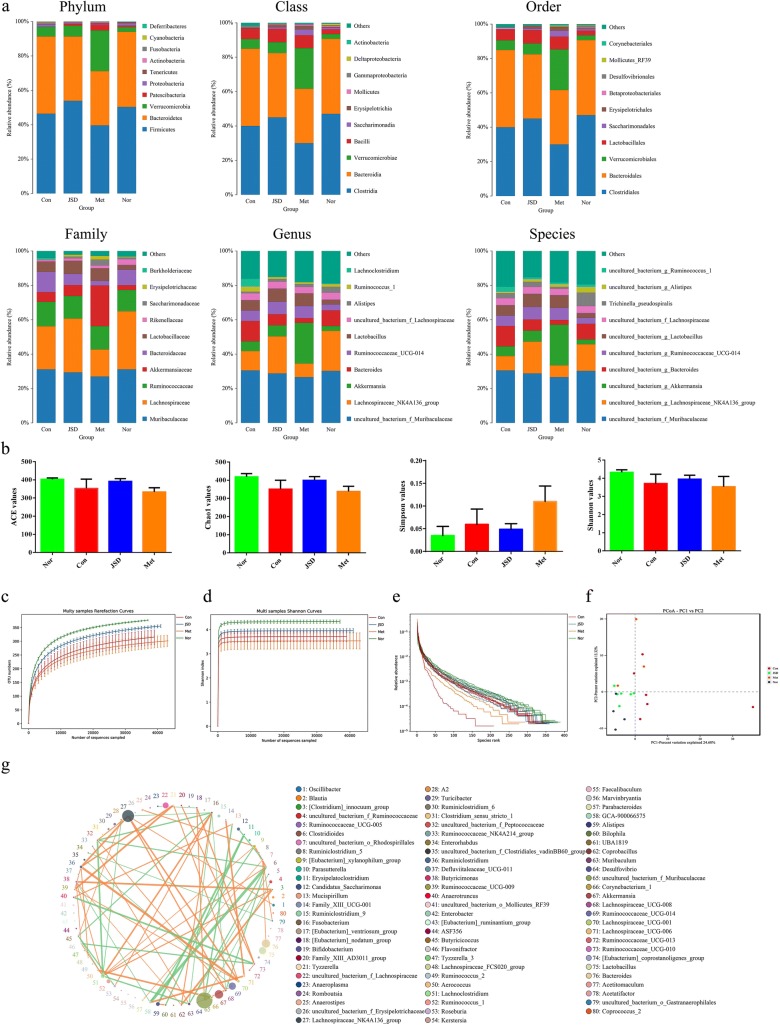
Streptozotocin (STZ)-induced DN mice were administered 100 and 500 mg/kg JSD for 4 weeks, and the therapeutic mechanisms and targets of JSD were analyzed by network pharmacology and gut microbiota analyses.
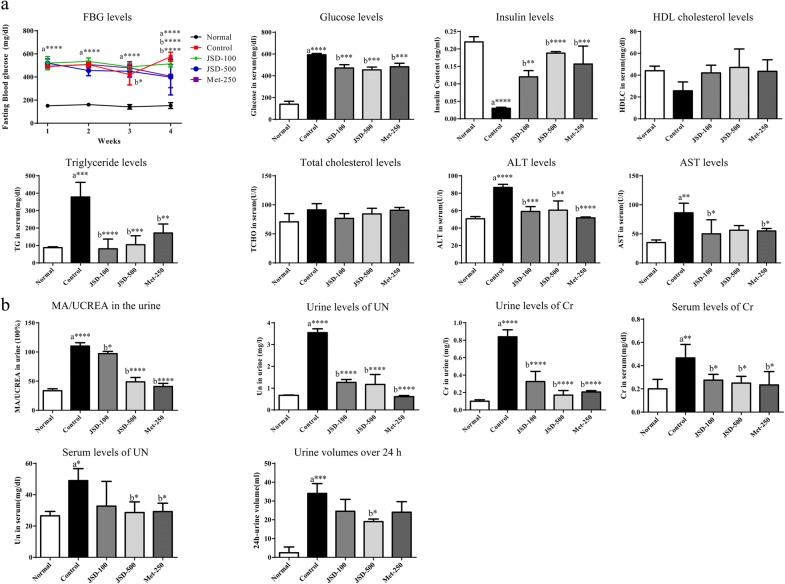
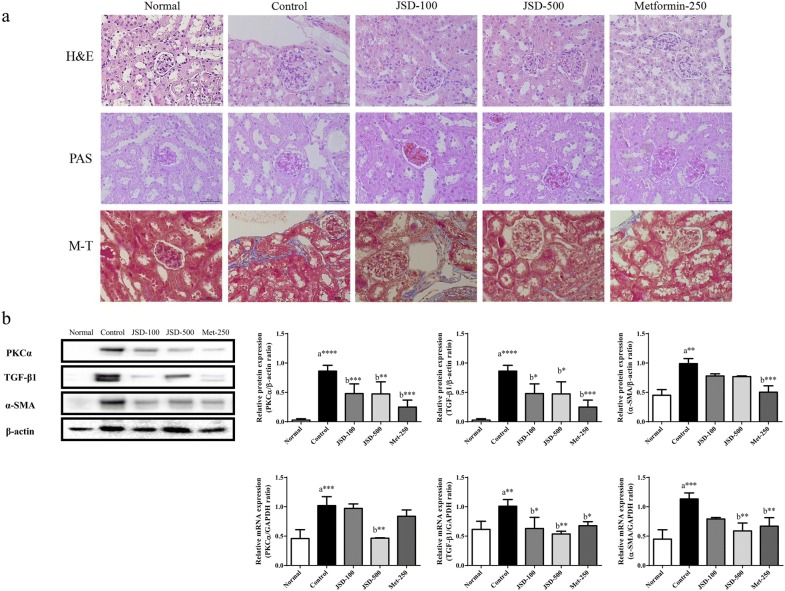
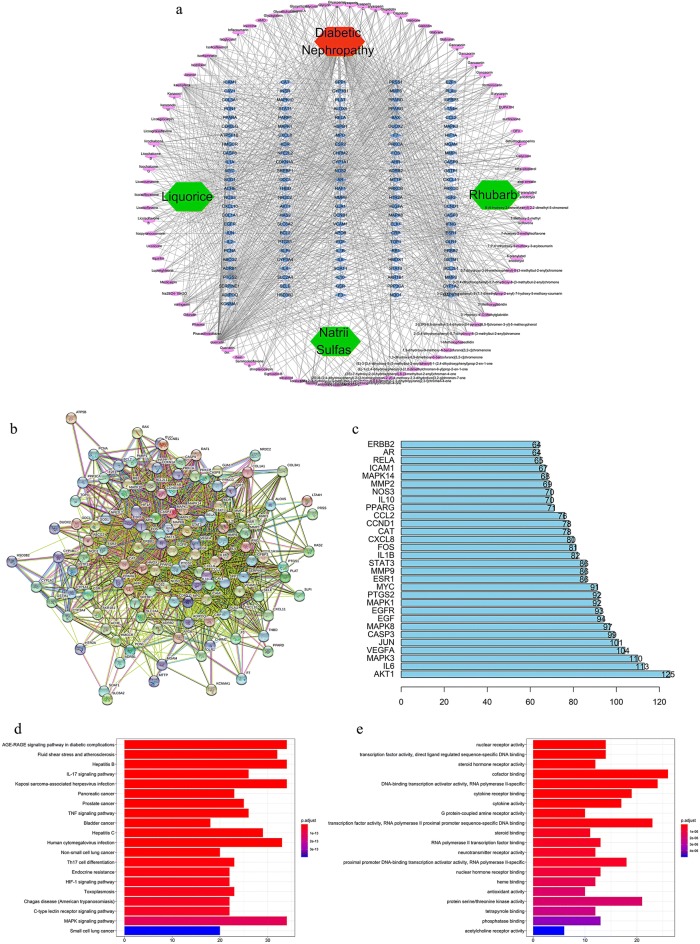
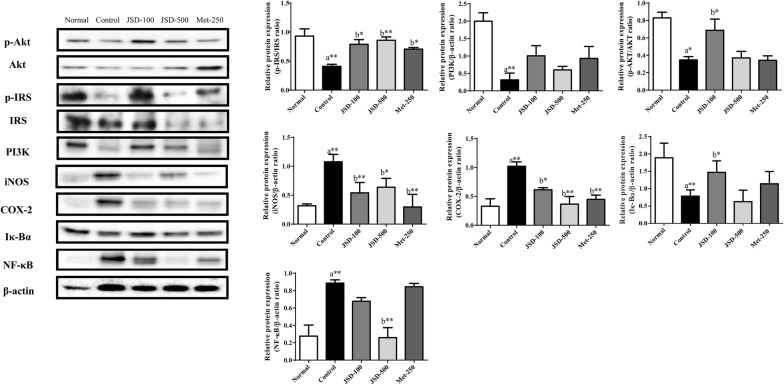
JSD significantly decreased the increase in food and water intake, urine volume, fasting blood glucose, serum glucose and triglyceride levels, and urinary albumin excretion. JSD administration significantly increased the decrease in insulin secretion and creatinine clearance and reduced the structural damage to the kidney tissues. Moreover, JSD administration significantly inhibited the expression of protein kinase C-alpha (PKC-α), transforming growth factor beta-1 (TGF-β1), α-smooth muscle actin (α-SMA), nuclear factor-κB (NF-κB), inducible nitric oxide synthase (iNOS), and cyclooxygenase-2 (COX-2) in the kidney tissues of DN mice, while it significantly increased the phosphorylation of insulin receptor substrate 1 (IRS-1), phosphatidylinositol-3-kinase (PI3K), and protein kinase B (Akt). In the network pharmacological analysis, JSD obviously influenced phosphatase binding, protein serine/threonine kinase, and mitogen-activated protein kinase (MAPK)-related signaling pathways. Our data suggest that JSD can improve symptoms in STZ-induced DN mice through the inhibition of kidney dysfunction, in particular, by regulating the PKCα/PI3K/Akt and NF-κB/α-SMA signaling pathways. Gut microbiota analysis can help to discover the pharmaco-mechanisms of the influence of JSD on bacterial diversity and flora structures in DN.
JSD can improve the symptoms of DN, and the underlying mechanism of this effect is renal protection through the inhibition of fibrosis and inflammation. JSD can also change bacterial diversity and community structures in DN.
乔味升奇汤(JSD)是传统医学诊所中常用于治疗糖尿病并发症或糖尿病肾病(DN)的方剂。然而,JSD的潜在治疗机制仍不清楚。
将链脲佐菌素(STZ)诱导的DN小鼠分别给予100和500mg/kg JSD,持续4周,并通过网络药理学和肠道微生物群分析来分析JSD的治疗机制和靶点。
JSD显著降低了食物和水摄入量、尿量、空腹血糖、血清葡萄糖和甘油三酯水平以及尿白蛋白排泄量的增加。给予JSD显著增加了胰岛素分泌和肌酐清除率的降低,并减少了肾组织的结构损伤。此外,给予JSD显著抑制了DN小鼠肾组织中蛋白激酶C-α(PKC-α)、转化生长因子β-1(TGF-β1)、α-平滑肌肌动蛋白(α-SMA)、核因子-κB(NF-κB)、诱导型一氧化氮合酶(iNOS)和环氧化酶-2(COX-2)的表达,同时显著增加了胰岛素受体底物1(IRS-1)、磷脂酰肌醇-3-激酶(PI3K)和蛋白激酶B(Akt)的磷酸化。在网络药理学分析中,JSD明显影响磷酸酶结合、蛋白丝氨酸/苏氨酸激酶和丝裂原活化蛋白激酶(MAPK)相关信号通路。我们的数据表明,JSD可以通过抑制肾功能障碍,特别是通过调节PKCα/PI3K/Akt和NF-κB/α-SMA信号通路来改善STZ诱导的DN小鼠的症状。肠道微生物群分析有助于发现JSD对DN中细菌多样性和菌群结构影响的药理机制。
JSD可以改善DN的症状,其潜在机制是通过抑制纤维化和炎症来实现肾脏保护。JSD还可以改变DN中的细菌多样性和群落结构。