Forte Nafsika, Benni Irene, Karu Kersti, Chudasama Vijay, Baker James R
Department of Chemistry , University College London , 20 Gordon Street , London , WC1H 0AJ , UK . Email:
Research Institute for Medicines (iMed.ULisboa) , Faculty of Pharmacy , Universidade de Lisboa , Lisbon , Portugal.
Chem Sci. 2019 Oct 11;10(47):10919-10924. doi: 10.1039/c9sc03825f. eCollection 2019 Dec 21.
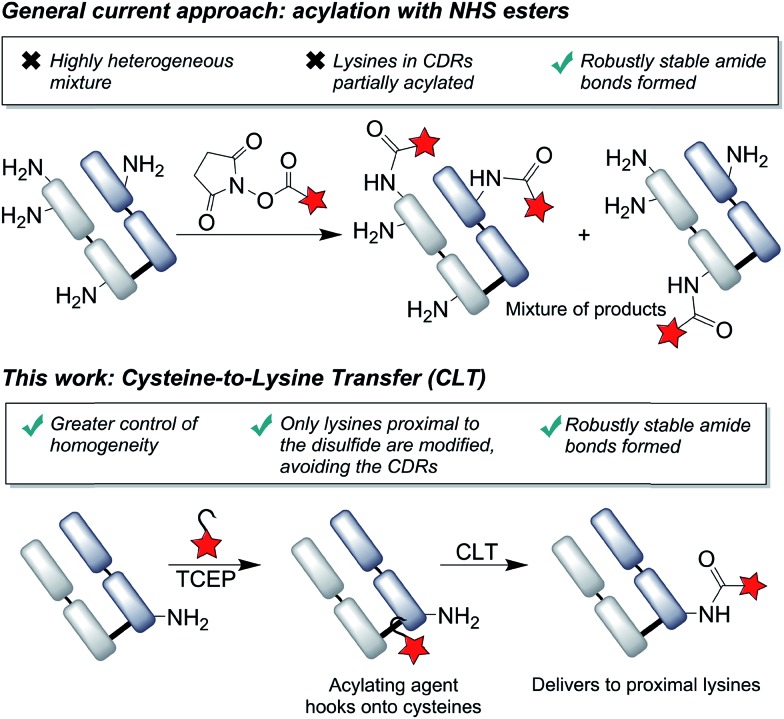
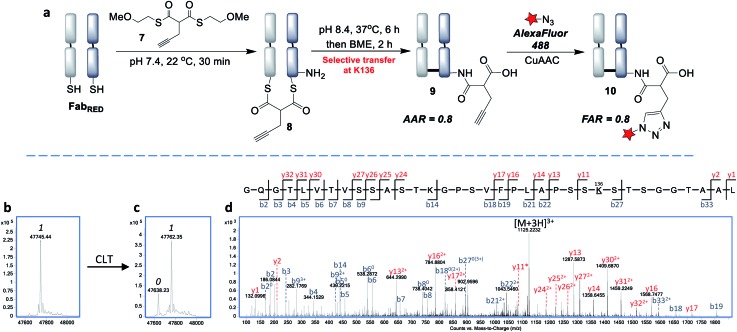
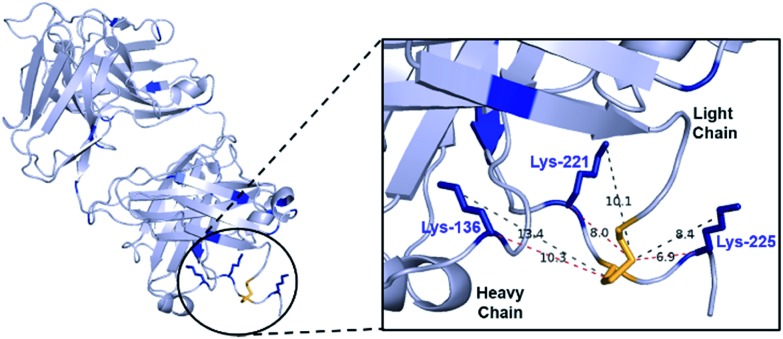
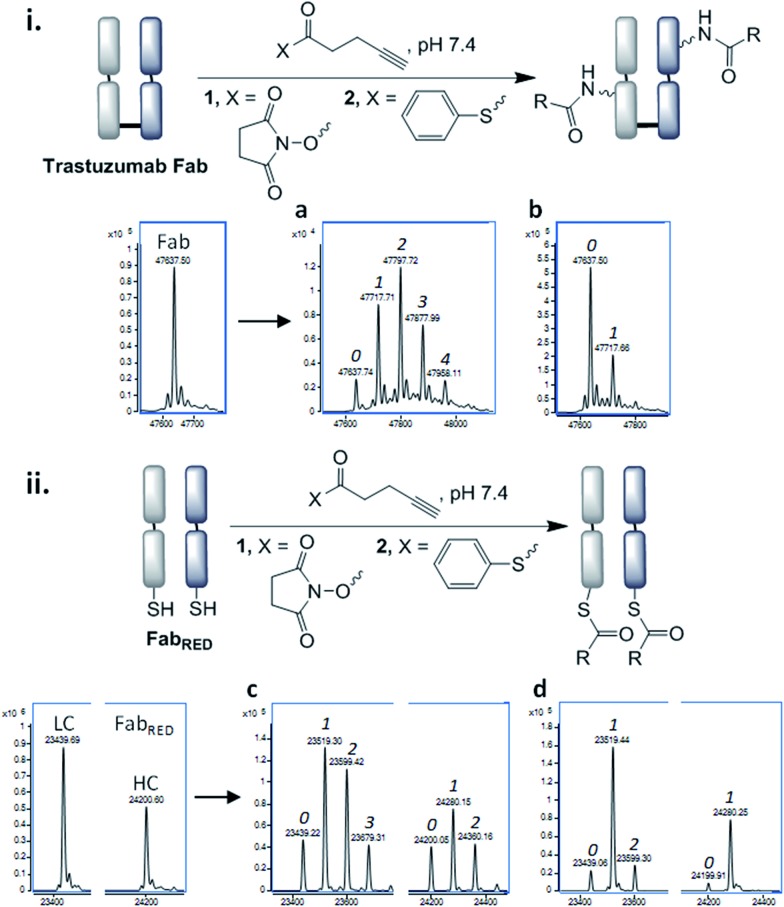
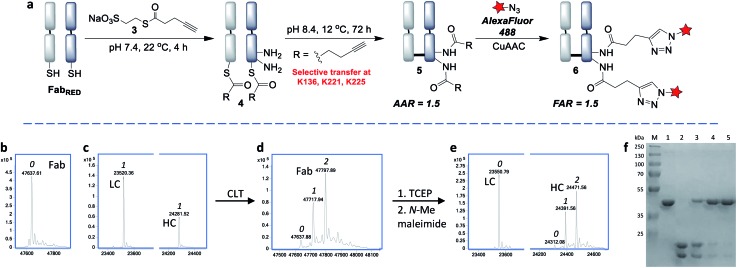
The modification of lysine residues with acylating agents has represented a ubiquitous approach to the construction of antibody conjugates, with the resulting amide bonds being robustly stable and clinically validated. However, the conjugates are highly heterogeneous, due to the presence of numerous lysines on the surface of the protein, and greater control of the sites of conjugation are keenly sought. Here we present a novel approach to achieve the targeted modification of lysines distal to an antibody fragment's binding site, using a disulfide bond as a temporary 'hook' to deliver the acylating agent. This cysteine-to-lysine transfer (CLT) methodology offers greatly improved homogeneity of lysine conjugates, whilst retaining the advantages offered by the formation of amide linkages.
用酰化剂修饰赖氨酸残基一直是构建抗体偶联物的常用方法,所形成的酰胺键具有很强的稳定性且已得到临床验证。然而,由于蛋白质表面存在大量赖氨酸,偶联物具有高度的异质性,因此人们迫切希望能更好地控制偶联位点。在此,我们提出一种新颖的方法,利用二硫键作为临时“钩子”来递送酰化剂,从而实现对抗体片段结合位点远端赖氨酸的靶向修饰。这种半胱氨酸到赖氨酸转移(CLT)方法大大提高了赖氨酸偶联物的同质性,同时保留了形成酰胺键所带来的优势。