Menzies Centre for Health Policy, Sydney School of Public Health, University of Sydney, Sydney, Australia.
The Australian Prevention Partnership Centre, Sydney, Australia.
BMC Public Health. 2020 Mar 20;20(1):364. doi: 10.1186/s12889-020-8365-x.
Chronic, non-communicable diseases are a significant public health priority, requiring action at individual, community and population levels, and public and political will for such action. Exposure to media, including news, entertainment, and advertising media, is likely to influence both individual behaviours, and attitudes towards preventive actions at the population level. In recent years there has been a proliferation of research exploring how chronic diseases and their risk factors are portrayed across various forms of media. This scoping review aims to map the literature in this area to identify key themes, gaps, and opportunities for future research in this area.
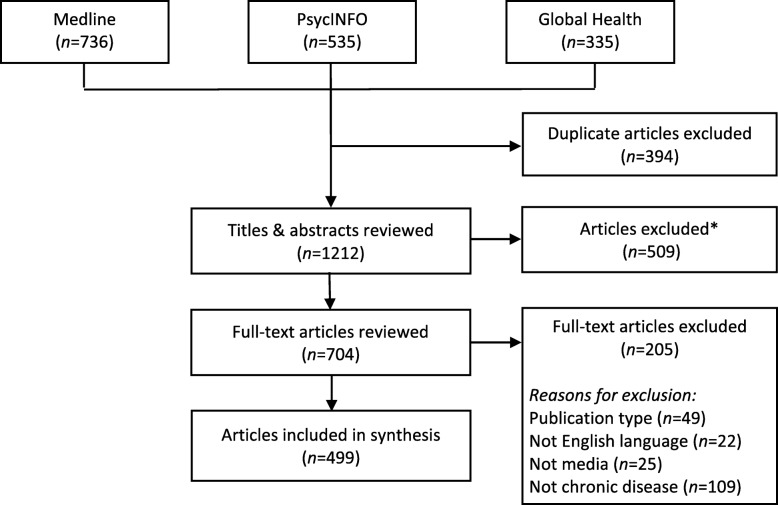
We searched three databases (Medline, PsycINFO and Global Health) in July 2016 and identified 499 original research articles meeting inclusion criteria: original research article, published in English, focusing on media representations of chronic disease (including how issues are framed in media, impact or effect of media representations, and factors that influence media representations). We extracted key data from included articles and examined the health topics, media channels and methods of included studies, and synthesised key themes across studies.
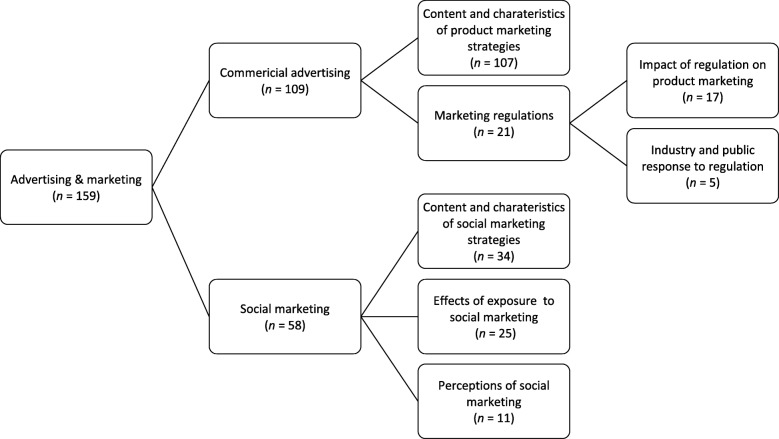
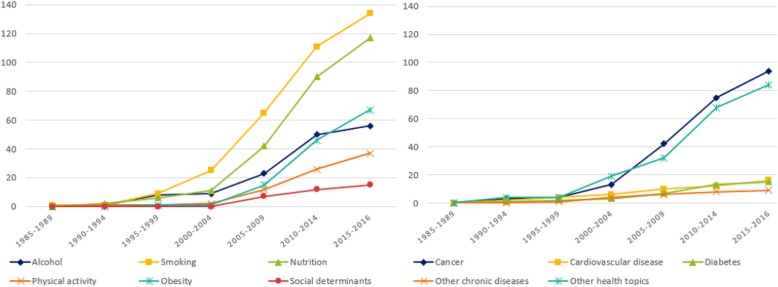
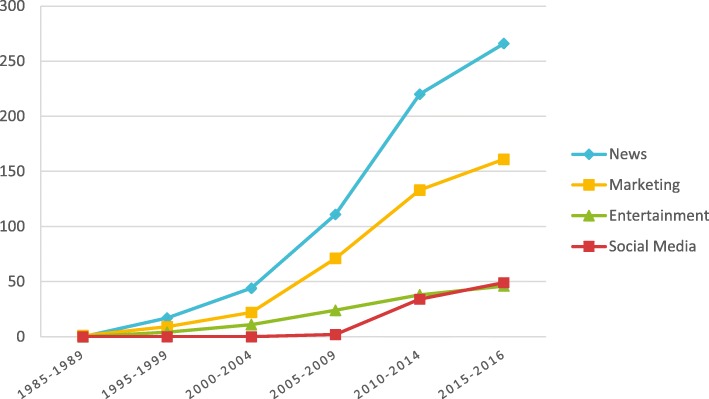
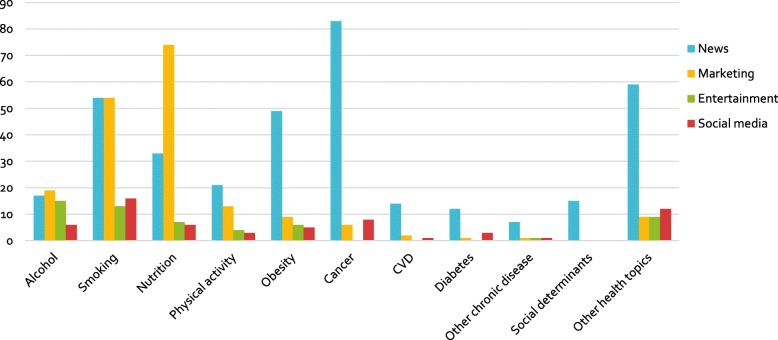
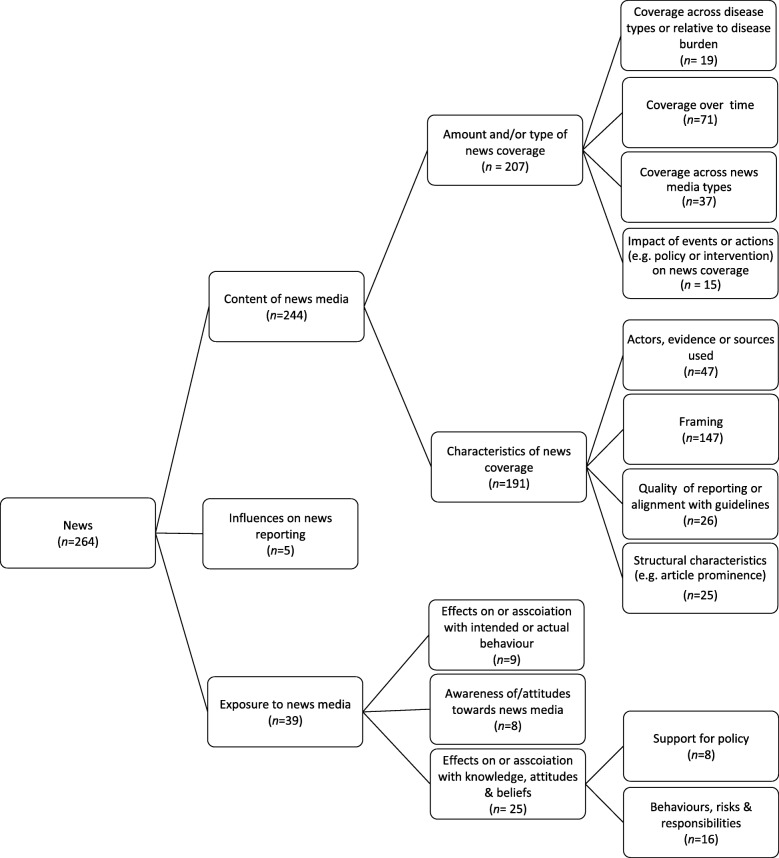
Our findings show that research on media portrayals of chronic disease increased substantially between 1985 and 2016. Smoking and nutrition were the most frequent health topics, and television and print were the most common forms of media examined, although, as expected, research on online and social media channels has increased in recent years. The majority of studies focused on the amount and type of media coverage, including how issues are framed, typically using content analysis approaches. In comparison, there was much less research on the influences on and consequences of media coverage related to chronic disease, suggesting an important direction for future work.
The results highlight key themes across media research of relevance to chronic disease. More in-depth syntheses of studies within the identified themes will allow us to draw out the key patterns and learnings across the literature.
慢性非传染性疾病是一个重大的公共卫生重点,需要在个人、社区和人群层面采取行动,并且需要公众和政治意愿来采取此类行动。接触媒体,包括新闻、娱乐和广告媒体,可能会影响个人行为以及人群层面预防措施的态度。近年来,探索慢性疾病及其风险因素如何在各种形式的媒体中呈现的研究大量涌现。本范围界定审查旨在绘制该领域的文献图,以确定该领域的关键主题、差距和未来研究的机会。
我们于 2016 年 7 月在三个数据库(Medline、PsycINFO 和 Global Health)中进行了搜索,并确定了符合纳入标准的 499 篇原始研究文章:原始研究文章,用英文发表,重点关注慢性疾病的媒体表现(包括媒体如何框定问题、媒体表现的影响或效果以及影响媒体表现的因素)。我们从纳入的文章中提取了关键数据,并检查了纳入研究的健康主题、媒体渠道和方法,并对研究进行了综合分析。
我们的研究结果表明,1985 年至 2016 年期间,关于媒体对慢性疾病描述的研究大幅增加。吸烟和营养是最常见的健康主题,电视和印刷是最常见的媒体形式,但正如预期的那样,近年来关于在线和社交媒体渠道的研究有所增加。大多数研究都集中在媒体报道的数量和类型上,包括问题的框定方式,通常使用内容分析方法。相比之下,关于与慢性疾病相关的媒体报道的影响和后果的研究要少得多,这表明未来工作的一个重要方向。
这些结果突出了与慢性疾病相关的媒体研究的关键主题。对已确定主题内的研究进行更深入的综合分析将使我们能够在文献中得出关键模式和经验教训。