Department of Parasitology, School of Basic Medicine, Tongji Medical College, Huazhong University of Science and Technology, Wuhan, China.
Parasit Vectors. 2020 Mar 20;13(1):147. doi: 10.1186/s13071-020-04015-3.
The increased activity of regulatory B cells (Breg) is known to be involved in immunosuppression during helminth infection, which is characterized by inducing IL-10-producing Breg cells. However, the current knowledge of B cell subsets differentiation and IL-10-independent immunoregulatory mechanisms of B cells in schistosomiasis is insufficient.
BALB/c mice were percutaneously infected with cercariae for investigating the profile of B cell subsets during Schistosoma japonicum infection. B cells isolated from the spleen or peritoneal cavity were analyzed for the regulatory phenotype after stimulation with soluble egg antigens (SEA) in vitro. CD4 T cells were then cocultured with B cells pretreated with or without anti-PD-L1 antibody for investigating the role of B cells from infected mice on regulating CD4 T cells. Furthermore, the in vivo administration of anti-PD-L1 antibody was conducted to investigate the role of PD-L1 in regulating host immunity during infection.
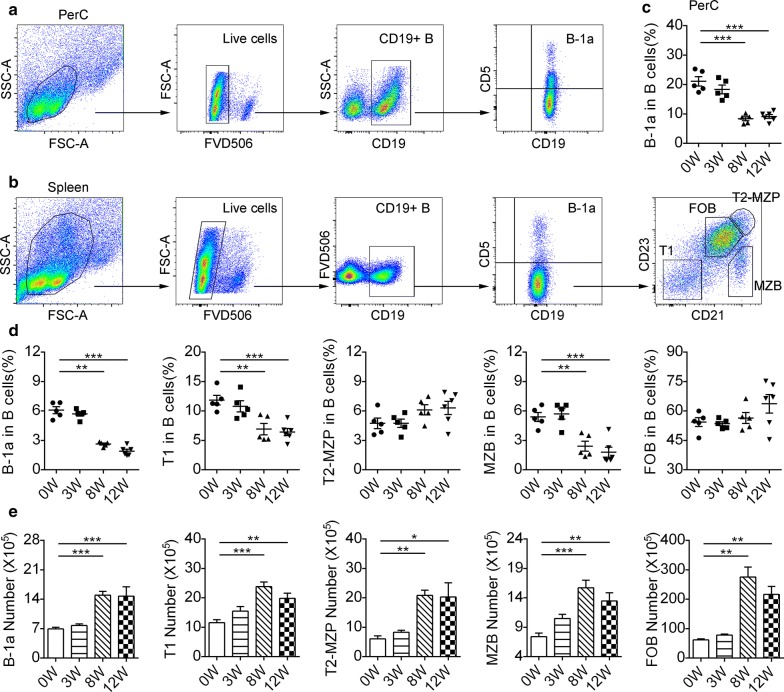
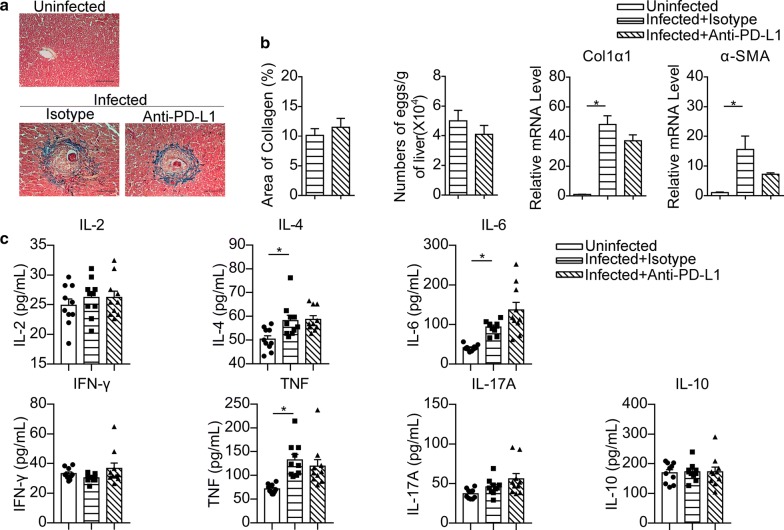
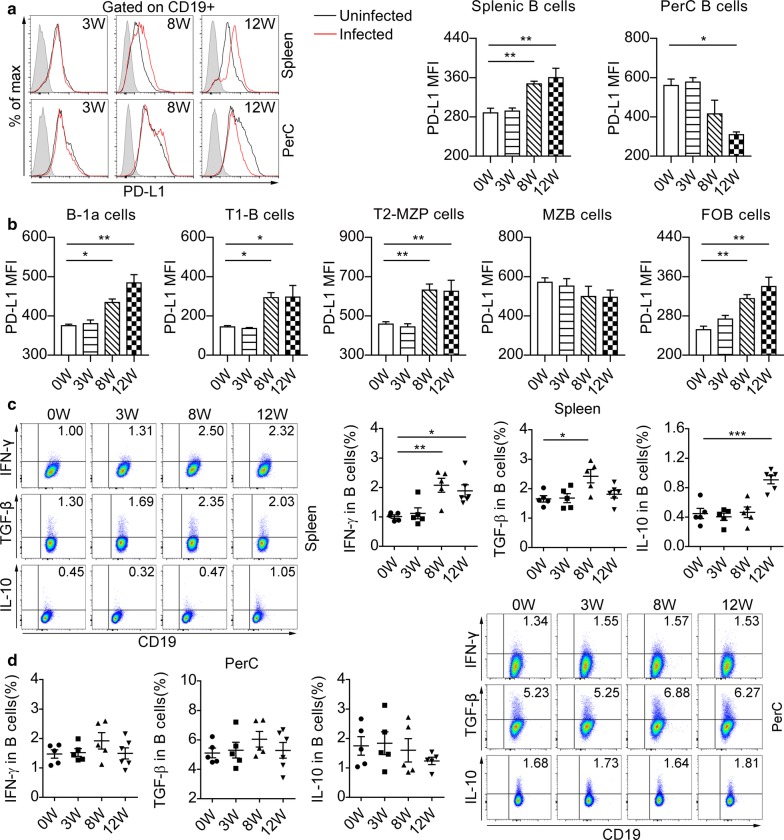
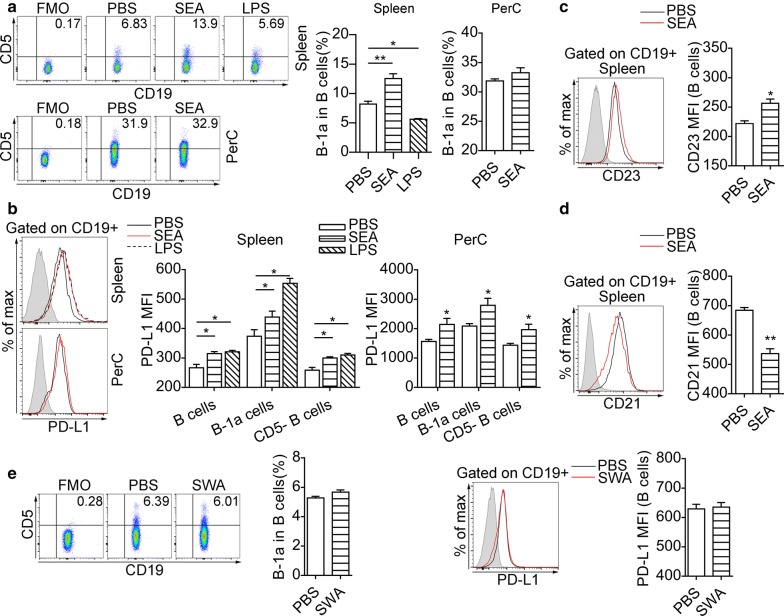
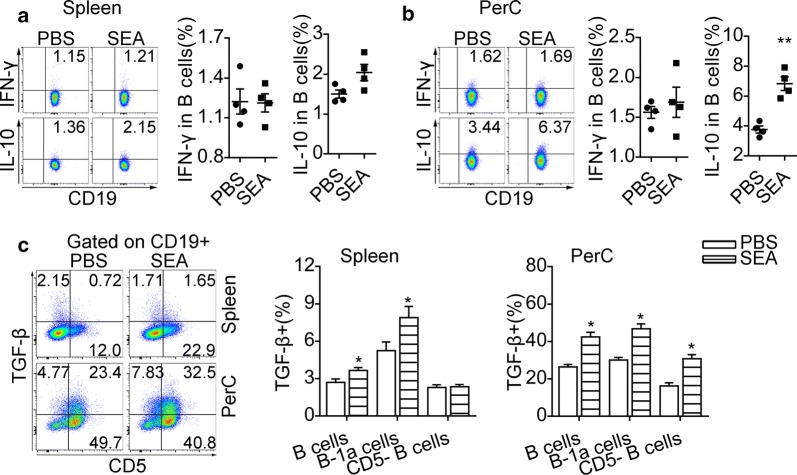
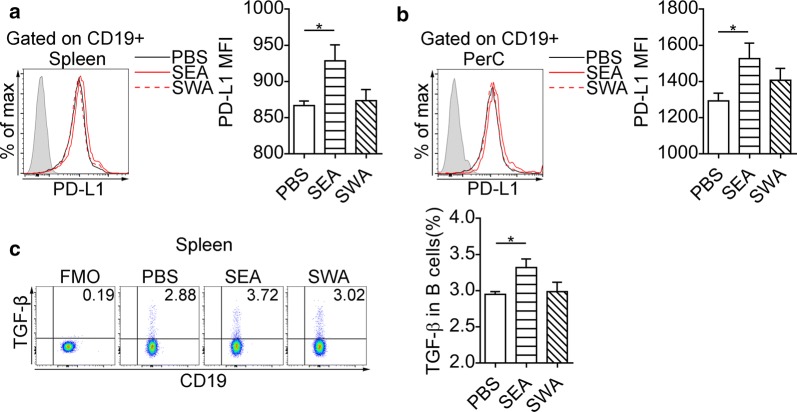
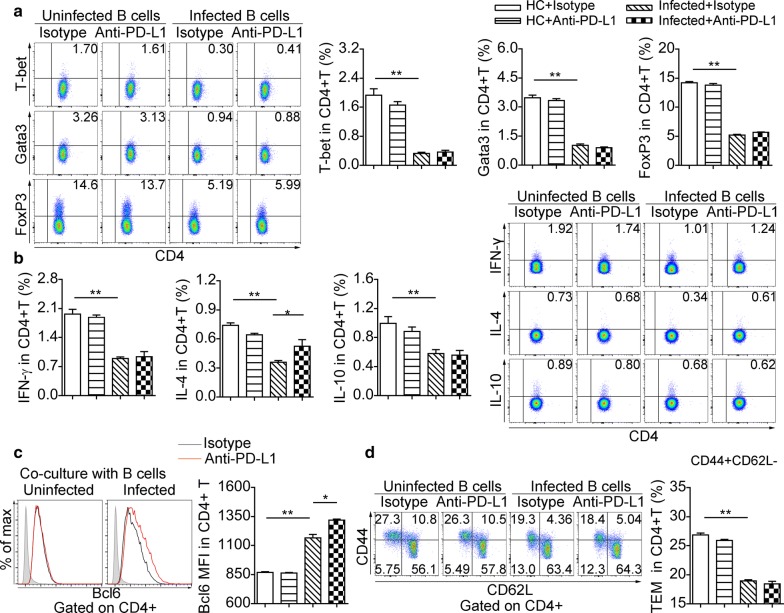
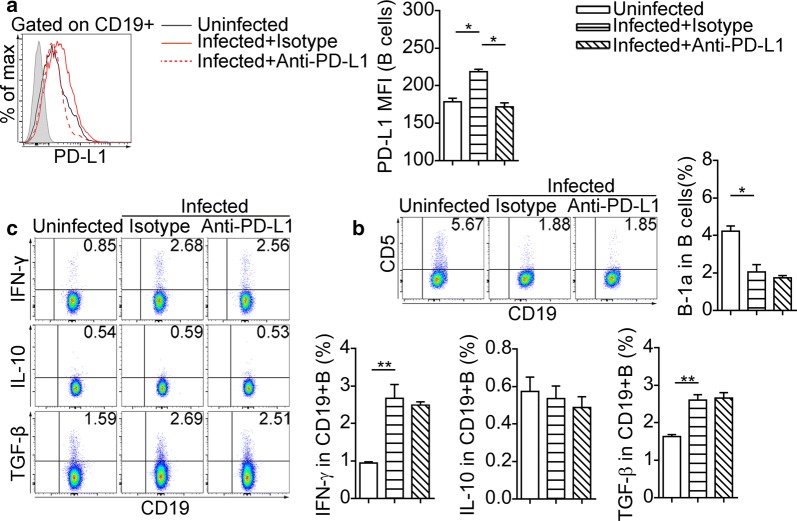
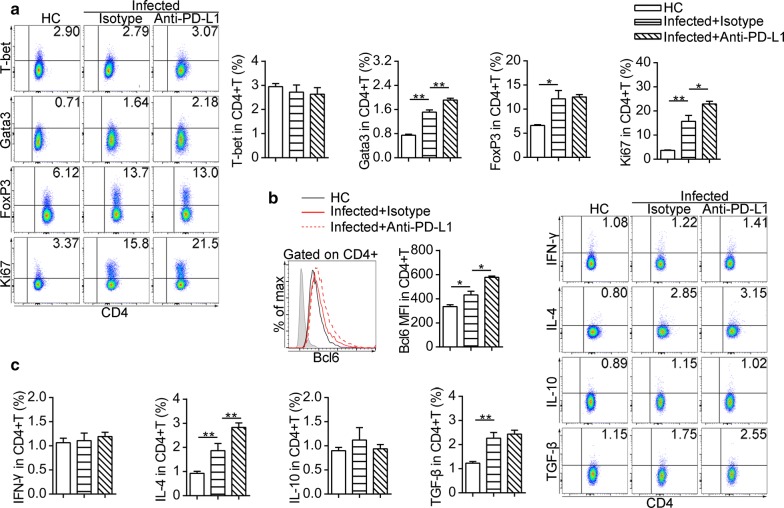
The percentages of peritoneal and splenic B-1a cells, as well as marginal zone B (MZB) cells were decreased at eight and twelve weeks after infection compared to those from uninfected mice. In splenic B cells, TGF-β expression was increased at eight weeks but declined at twelve weeks of infection, and PD-L1 expression was elevated at both eight and twelve weeks of infection. In addition, SEA stimulation in vitro significantly promoted the expression of IL-10 in peritoneal B cells and CD5 in splenic B cells, and the SEA-stimulated splenic and peritoneal B cells preferentially expressed PD-L1 and TGF-β. The splenic B cells from infected mice were able to suppress the function of Th1 and Th2 cells in vitro but to expand the expression of Tfh transcription factor Bcl6, which was further enhanced by blocking PD-L1 of B cells before co-cultivation. Moreover, Th2 response and Bcl6 expression in CD4 T cells were also increased in vivo by blocking PD-L1 after infection, although the hepatic pathology was slightly influenced.
Our findings revealed that S. japonicum infection modulates the differentiation of B cell subsets that have the capability to affect the CD4 T cell response. This study contributes to a better understanding of B cells immune response during schistosomiasis.
已知调节性 B 细胞(Breg)的活性增加与寄生虫感染期间的免疫抑制有关,其特征是诱导产生 IL-10 的 Breg 细胞。然而,目前对血吸虫病中 B 细胞亚群分化和 IL-10 非依赖性 B 细胞免疫调节机制的了解还不够。
用尾蚴经皮感染 BALB/c 小鼠,研究日本血吸虫感染过程中 B 细胞亚群的特征。用可溶性虫卵抗原(SEA)体外刺激分离自脾或腹腔的 B 细胞,分析其调节表型。然后将 CD4 T 细胞与经或未经抗 PD-L1 抗体预处理的 B 细胞共培养,研究感染小鼠来源的 B 细胞对调节 CD4 T 细胞的作用。此外,还进行了体内给予抗 PD-L1 抗体的实验,以研究 PD-L1 在感染期间调节宿主免疫中的作用。
与未感染的小鼠相比,感染后 8 周和 12 周时,腹腔和脾 B-1a 细胞以及边缘区 B(MZB)细胞的百分比降低。在脾 B 细胞中,TGF-β的表达在感染后 8 周增加,但在 12 周时下降,PD-L1 的表达在感染后 8 周和 12 周均升高。此外,SEA 体外刺激显著促进了腹腔 B 细胞中 IL-10 的表达和脾 B 细胞中 CD5 的表达,SEA 刺激的脾和腹腔 B 细胞优先表达 PD-L1 和 TGF-β。感染小鼠的脾 B 细胞能够体外抑制 Th1 和 Th2 细胞的功能,但在共培养前阻断 B 细胞的 PD-L1 可进一步增强其对 Tfh 转录因子 Bcl6 的表达。此外,感染后阻断 PD-L1 也可增加体内 Th2 反应和 CD4 T 细胞中 Bcl6 的表达,尽管肝病理学稍有影响。
我们的研究结果表明,日本血吸虫感染调节了 B 细胞亚群的分化,这些亚群具有影响 CD4 T 细胞反应的能力。本研究有助于更好地了解血吸虫病期间 B 细胞的免疫反应。