Liu Jiyun, Hefni Mohammed E, Witthöft Cornelia M
Department of Chemistry and Biomedical Sciences, Faculty of Health and Life Sciences, Linnaeus University, Kalmar 392 31, Sweden.
Food Industries Department, Faculty of Agriculture, Mansoura University, P.O. Box 46, Mansoura 35516, Egypt.
Foods. 2020 Mar 19;9(3):358. doi: 10.3390/foods9030358.
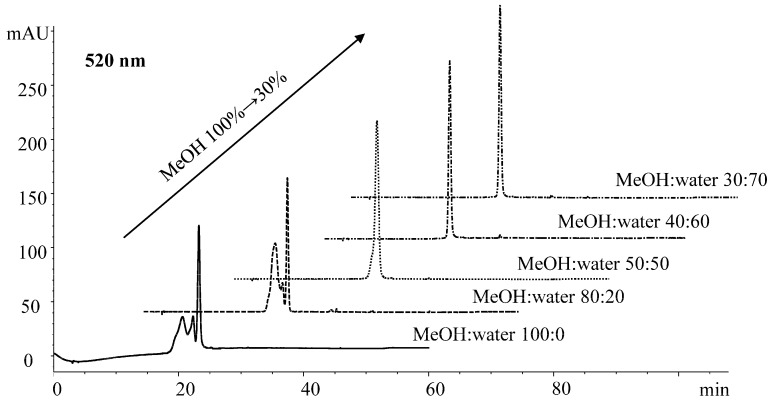
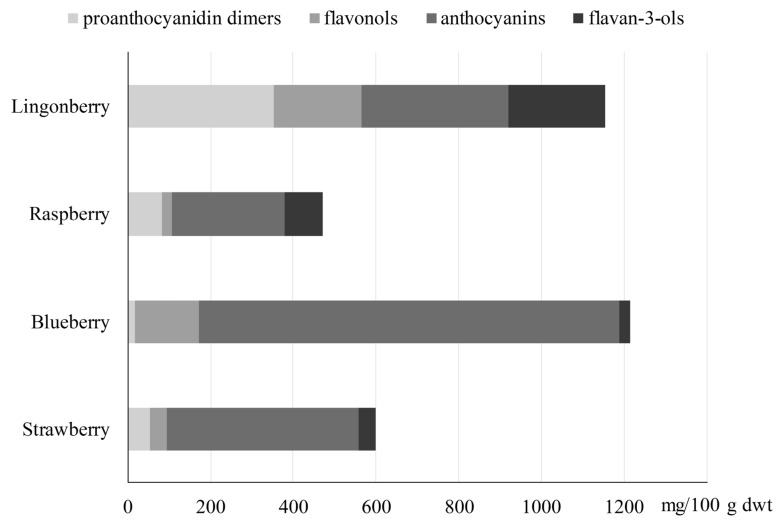
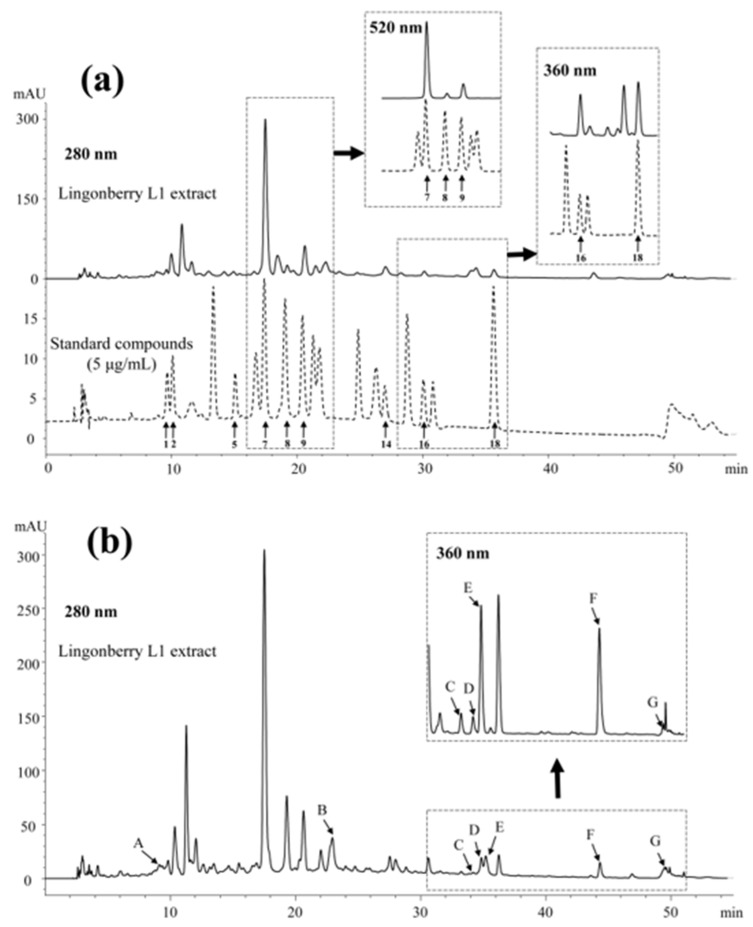
Berries are considered an ideal source of polyphenols, especially from the flavonoid group. In this study, we examined the flavonoid content in 16 varieties of Swedish lingonberry, raspberry, blueberry, and strawberry. Nineteen flavonoids were simultaneously quantified using external standards. An additional 29 flavonoids were tentatively identified using MS as no standards were available. Quantification was done using HPLC-UV after optimization of chromatographic and extraction procedures. The method showed high linearity within the range of 2-100 μg/mL (correlation co-efficient >0.999), intra- and inter-day precision of 1.7-7.3% and average recovery above 84% for all compounds. Blueberries and lingonberries were found to contain higher contents of flavonoids (1100 mg/100 g dry weight) than raspberries and strawberries (500 mg/100 g dry weight). Anthocyanins were the dominant flavonoids in all berries. The tentatively characterized compounds contribute 18%, 29%, 61%, and 67% of the total flavonoid content in strawberries, lingonberries, raspberries, and blueberries, respectively. Overall, Swedish berries were shown to be good sources of polyphenols.
浆果被认为是多酚的理想来源,尤其是黄酮类化合物。在本研究中,我们检测了16个瑞典品种的越橘、树莓、蓝莓和草莓中的黄酮含量。使用外标法同时对19种黄酮进行了定量。由于没有标准品,另外29种黄酮通过质谱法进行了初步鉴定。在优化色谱和提取程序后,使用高效液相色谱-紫外检测法进行定量。该方法在2-100μg/mL范围内显示出高线性(相关系数>0.999),所有化合物的日内和日间精密度为1.7-7.3%,平均回收率高于84%。发现蓝莓和越橘中的黄酮含量(1100mg/100g干重)高于树莓和草莓(500mg/100g干重)。花青素是所有浆果中主要的黄酮类化合物。初步鉴定的化合物分别占草莓、越橘、树莓和蓝莓总黄酮含量的18%、29%、61%和67%。总体而言,瑞典浆果被证明是多酚的良好来源。