Otieno Nancy A, Otiato Fredrick, Nyawanda Bryan, Adero Maxwel, Wairimu Winnie N, Ouma Dominic, Atito Raphael, Wilson Andrew, Gonzalez-Casanova Ines, Malik Fauzia A, Widdowson Marc-Alain, Omer Saad B, Chaves Sandra S, Verani Jennifer R
Center for Global Health Research, Kenya Medical Research Institute , Kisumu, Kenya.
Rollins School of Public Health, Hubert Department of Global Health, Emory University , Atlanta, GA, USA.
Hum Vaccin Immunother. 2020 Oct 2;16(10):2429-2437. doi: 10.1080/21645515.2020.1723364. Epub 2020 Mar 25.
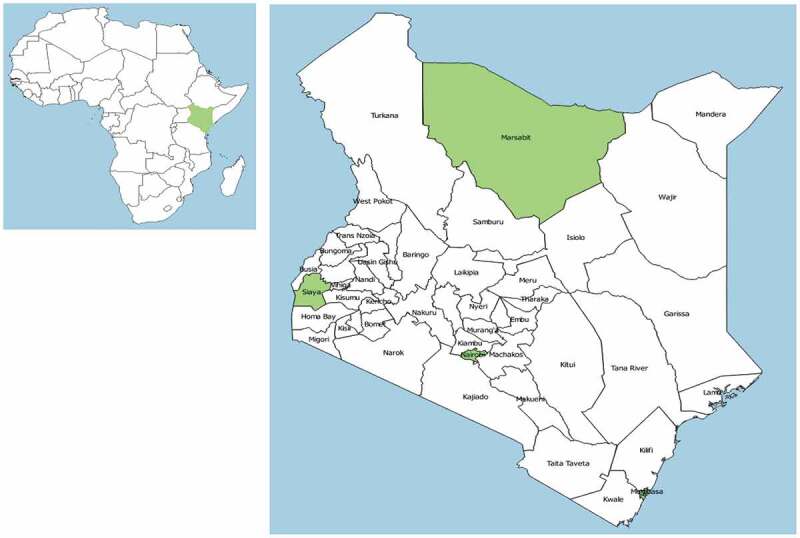
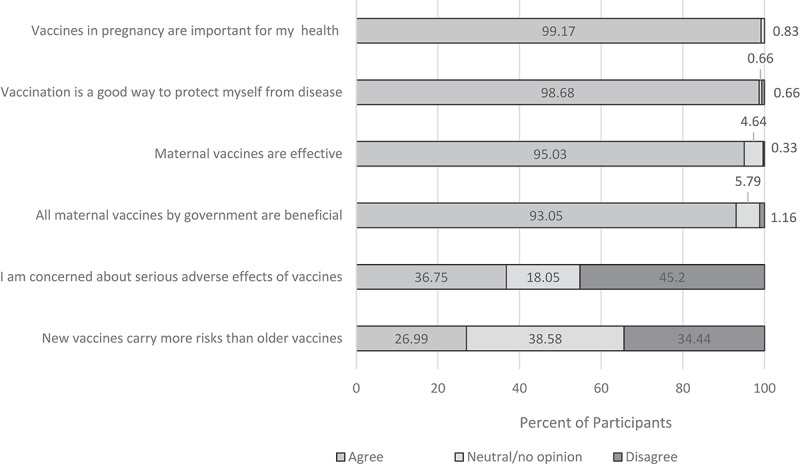
Maternal vaccination coverage remains suboptimal globally and is lowest in low- and middle-income countries. Attitudes toward maternal vaccines have been characterized in middle-high income settings, however data from African countries are limited. We assessed drivers and barriers of vaccine acceptance among pregnant women in Kenya. We conducted a cross-sectional survey among pregnant women aged 15-49 y. We enrolled a convenience sample of women presenting for antenatal care at seven health-care facilities in four diverse counties (Nairobi, Mombasa, Marsabit, Siaya) of Kenya and from the community in two counties (Nairobi, Siaya). We described frequencies of socio-demographic characteristics of participants and their knowledge, attitudes, and beliefs regarding maternal vaccination. We enrolled 604 pregnant women with a median age of 26.5 y, of whom 48.2% had primary education or less. More than 95% agreed that maternal vaccines are "important for my health" and that getting vaccinated is "a good way to protect myself from disease". The most commonly cited reason in favor of maternal vaccination was disease prevention (53.2%). Fear of side effects to mother/baby (15.1%) was the most frequently reported potential barrier. Influenza vaccine is not in routine use in Kenya; however, 77.8% reported willingness to accept influenza vaccination during pregnancy. Maternal vaccination is well accepted among Kenyan pregnant women. We identified the provision of adequate vaccine information and addressing safety concerns as opportunities to improve maternal vaccine uptake. The expressed willingness to receive a vaccine not currently in routine use bodes well for implementation of new maternal vaccines in Kenya.
全球孕产妇疫苗接种覆盖率仍未达到最佳水平,在低收入和中等收入国家最低。在中高收入环境中,人们对孕产妇疫苗的态度已有相关描述,然而来自非洲国家的数据有限。我们评估了肯尼亚孕妇接受疫苗接种的驱动因素和障碍。我们对15至49岁的孕妇进行了一项横断面调查。我们在肯尼亚四个不同县(内罗毕、蒙巴萨、马萨比特、锡亚)的七家医疗机构以及两个县(内罗毕、锡亚)的社区中,选取了前来接受产前护理的孕妇作为便利样本。我们描述了参与者的社会人口学特征频率,以及他们对孕产妇疫苗接种的知识、态度和信念。我们招募了604名孕妇,中位年龄为26.5岁,其中48.2%接受过小学及以下教育。超过95%的人同意孕产妇疫苗“对我的健康很重要”,并且接种疫苗是“保护自己免受疾病侵害的好方法”。支持孕产妇疫苗接种最常被提及的原因是疾病预防(53.2%)。对母亲/婴儿副作用的恐惧(15.1%)是最常报告的潜在障碍。流感疫苗在肯尼亚并非常规使用;然而,77.8%的人表示愿意在孕期接受流感疫苗接种。肯尼亚孕妇对孕产妇疫苗接种接受度良好。我们确定提供充分的疫苗信息和解决安全担忧是提高孕产妇疫苗接种率的机会。对目前非常规使用疫苗的接受意愿表明肯尼亚实施新的孕产妇疫苗前景良好。