Division of Cell Biology and Biophysics, School of Biological Sciences, University of Missouri-Kansas City, Kansas City, Missouri, USA.
Department of Clinical Pharmacy and Translational Science, University of Tennessee Health Science Center, Memphis, Tennessee, USA.
mBio. 2020 Mar 24;11(2):e00338-20. doi: 10.1128/mBio.00338-20.
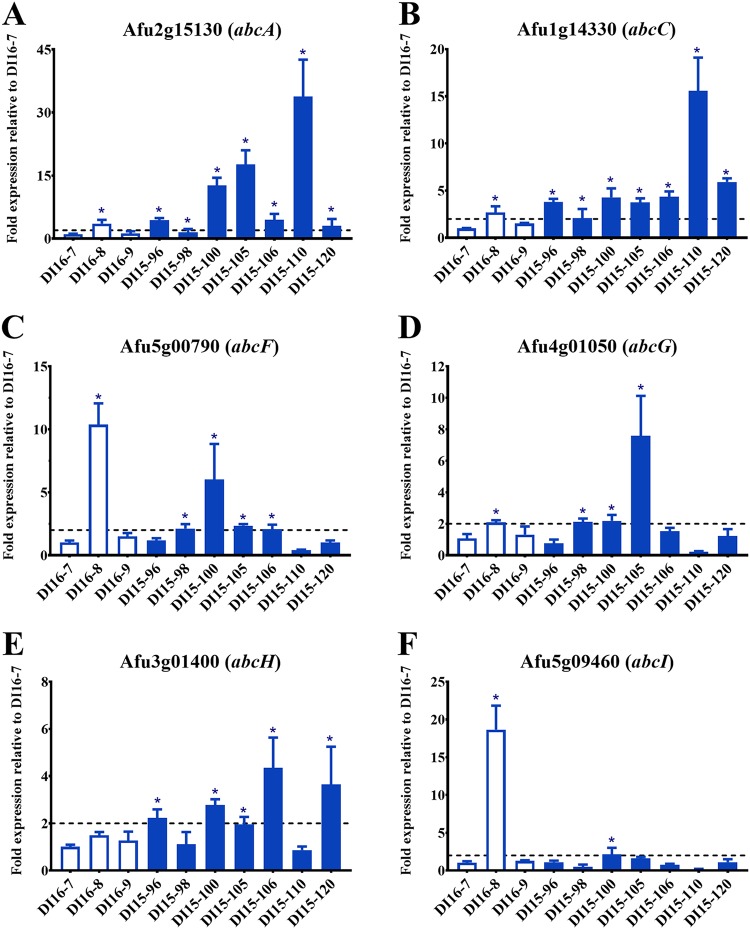
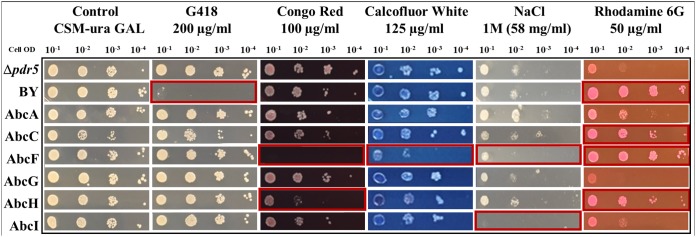
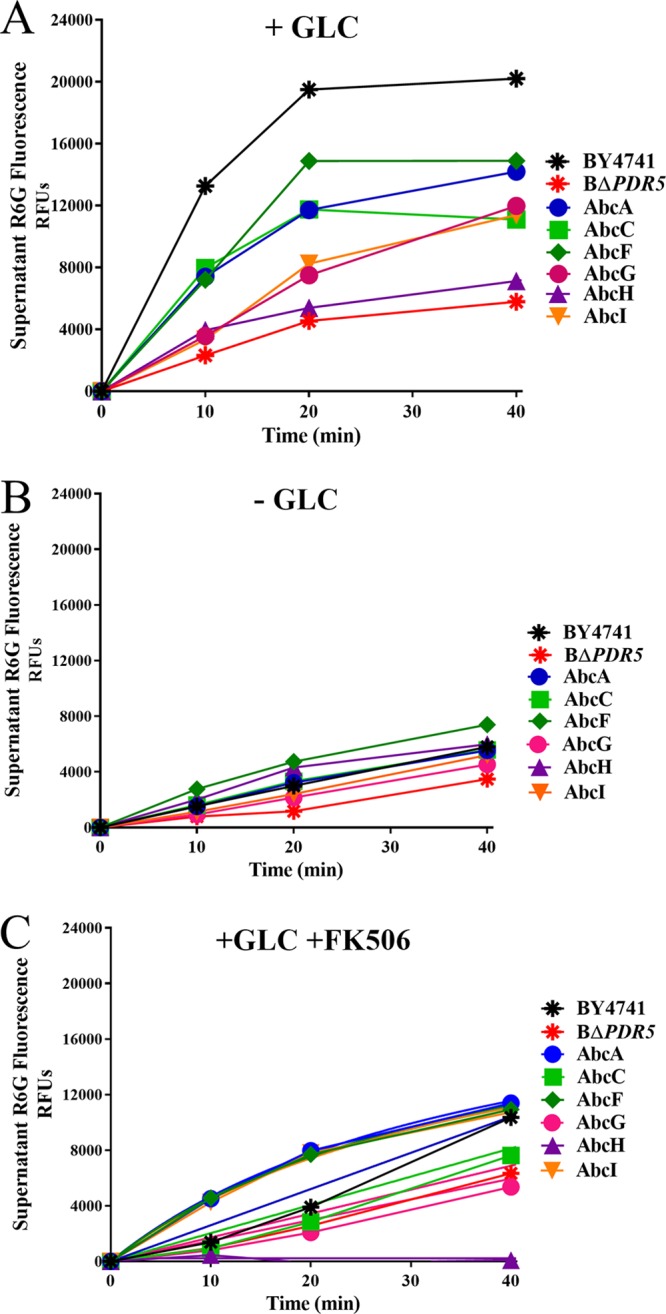
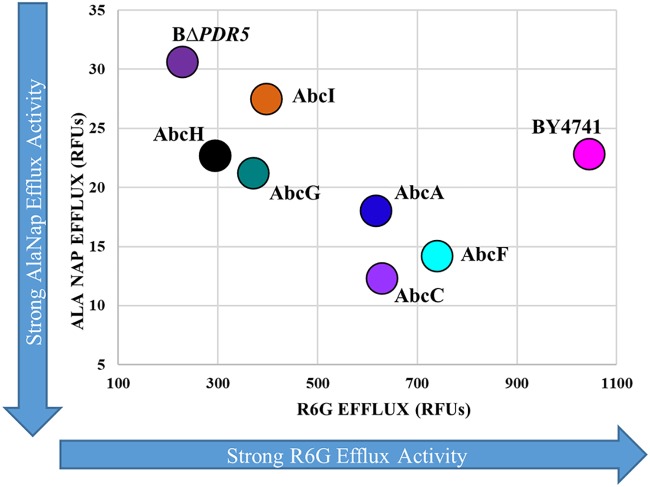
This research analyzed six genes encoding putative efflux proteins for their roles as transporters. Th genes , and were cloned into plasmids and overexpressed in a strain in which the highly active endogenous ABC transporter gene was deleted. The activity of each transporter was measured by efflux of rhodamine 6G and accumulation of alanine β-naphthylamide. The transporters AbcA, AbcC, and AbcF had the strongest efflux activities of these compounds. All of the strains with plasmid-expressed transporters had more efflux activity than did the -deleted background strain. We performed broth microdilution drug susceptibility testing and agar spot assays using an array of compounds and antifungal drugs to determine the transporter specificity and drug susceptibility of the strains. The transporters AbcC and AbcF showed the broadest range of substrate specificity, while AbcG and AbcH had the narrowest range of substrates. Strains expressing the AbcA, AbcC, AbcF, or AbcI transporter were more resistant to fluconazole than was the -deleted background strain. Strains expressing AbcC and AbcF were additionally more resistant to clotrimazole, itraconazole, ketoconazole, and posaconazole than was the background strain. Finally, we analyzed the expression levels of the genes by reverse transcription-quantitative PCR (RT-qPCR) in triazole-susceptible and -resistant clinical isolates. All of these transporters are expressed at a measurable level, and transporter expression varied significantly between strains, demonstrating the high degree of phenotypic variation, plasticity, and divergence of which this species is capable. One mechanism behind drug resistance is altered export out of the cell. This work is a multifaceted analysis of membrane efflux transporters in the human fungal pathogen Bioinformatics evidence infers that there is a relatively large number of genes in that encode ABC efflux transporters. However, very few of these transporters have been directly characterized and analyzed for their potential role in drug resistance.Our objective was to determine if these undercharacterized proteins function as efflux transporters and then to better define whether their efflux substrates include antifungal drugs used to treat fungal infections. We chose six potential plasma membrane ABC transporter genes for analysis and found that all six genes produced functional transporter proteins. We used two fungal systems to look for correlations between transporter function and drug resistance. These transporters have the potential to produce drug-resistant phenotypes in Continued characterization of these and other transporters may assist in the development of efflux inhibitor drugs.
本研究分析了六个编码假定外排蛋白的基因在转运中的作用。将这些基因和克隆到质粒中,并在高度活跃的内源性 ABC 转运体基因缺失的菌株中过表达。通过罗丹明 6G 的外排和丙氨酸β-萘酰胺的积累来测量每种转运体的活性。这些化合物中,AbcA、AbcC 和 AbcF 具有最强的外排活性。与缺失背景菌株相比,所有表达质粒转运体的菌株都具有更高的外排活性。我们使用一系列化合物和抗真菌药物进行肉汤微量稀释药物敏感性试验和琼脂斑点分析,以确定菌株的转运体特异性和药物敏感性。AbcC 和 AbcF 转运体表现出最广泛的底物特异性,而 AbcG 和 AbcH 具有最窄的底物范围。表达 AbcA、AbcC、AbcF 或 AbcI 转运体的菌株对氟康唑的耐药性强于缺失背景菌株。表达 AbcC 和 AbcF 的菌株对克霉唑、伊曲康唑、酮康唑和泊沙康唑的耐药性也强于背景菌株。最后,我们通过逆转录定量 PCR (RT-qPCR) 分析唑类敏感性和耐药性临床分离株中基因的表达水平。所有这些转运体都以可测量的水平表达,并且转运体的表达在菌株之间差异显著,表明该物种具有高度的表型变异性、可塑性和分化能力。耐药性的一个机制是细胞内的外排作用改变。这项工作是对人类真菌病原体中膜外排转运体的多方面分析。生物信息学证据推断,中有大量编码 ABC 外排转运体的基因。然而,这些转运体中有很少被直接表征和分析其在耐药性中的潜在作用。我们的目标是确定这些未充分描述的蛋白是否作为外排转运体发挥作用,然后更好地定义它们的外排底物是否包括用于治疗真菌感染的抗真菌药物。我们选择了六个潜在的质膜 ABC 转运体基因进行分析,发现这六个基因都产生了功能性转运蛋白。我们使用两种真菌系统来寻找转运体功能与耐药性之间的相关性。这些转运体有可能在产生耐药表型。对这些和其他转运体的进一步表征可能有助于开发外排抑制剂药物。