Masonic Cancer Center, University of Minnesota, Minneapolis, Minnesota, USA.
Department of Medicine, Division of Hematology, Oncology, and Transplantation, University of Minnesota, Minneapolis, Minnesota, USA.
J Mol Endocrinol. 2020 Jul;65(1):T35-T48. doi: 10.1530/JME-19-0274.
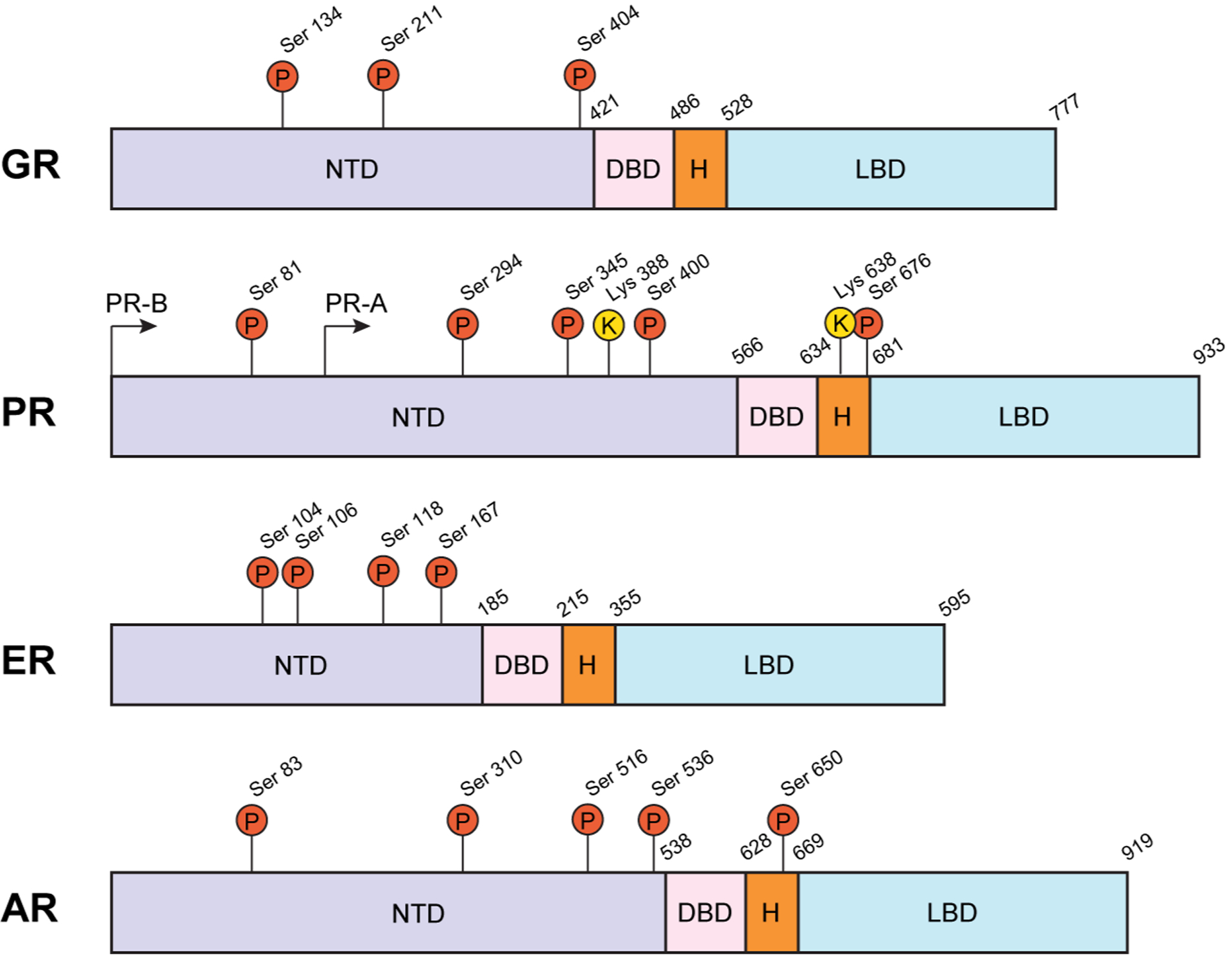
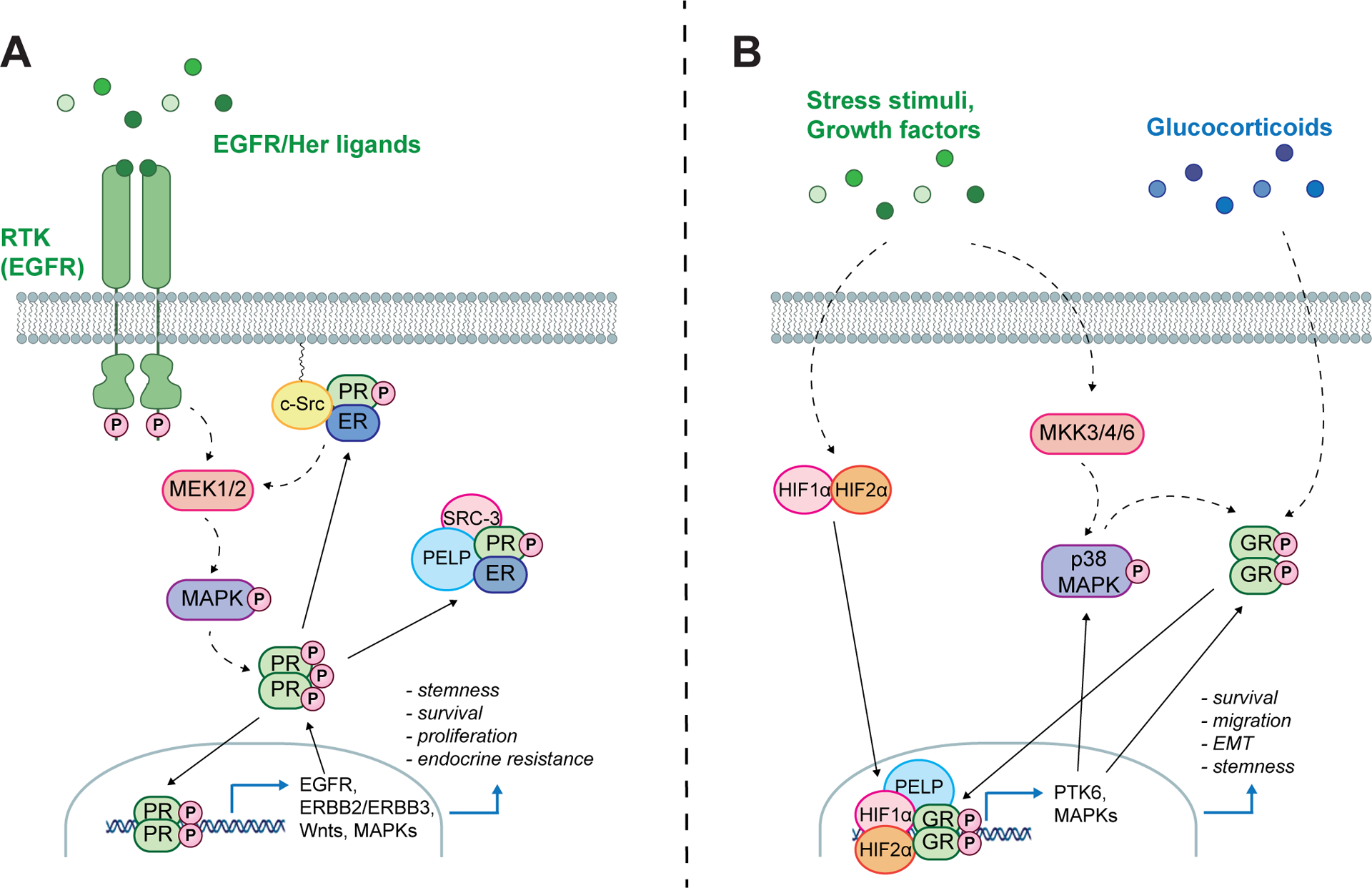
Steroid hormone receptors (SRs) are classically defined as ligand-activated transcription factors that function as master regulators of gene programs important for a wide range of processes governing adult physiology, development, and cell or tissue homeostasis. A second function of SRs includes the ability to activate cytoplasmic signaling pathways. Estrogen (ER), androgen (AR), and progesterone (PR) receptors bind directly to membrane-associated signaling molecules including mitogenic protein kinases (i.e. c-SRC and AKT), G-proteins, and ion channels to mediate context-dependent actions via rapid activation of downstream signaling pathways. In addition to making direct contact with diverse signaling molecules, SRs are further fully integrated with signaling pathways by virtue of their N-terminal phosphorylation sites that act as regulatory hot-spots capable of sensing the signaling milieu. In particular, ER, AR, PR, and closely related glucocorticoid receptors (GR) share the property of accepting (i.e. sensing) ligand-independent phosphorylation events by proline-directed kinases in the MAPK and CDK families. These signaling inputs act as a 'second ligand' that dramatically impacts cell fate. In the face of drugs that reliably target SR ligand-binding domains to block uncontrolled cancer growth, ligand-independent post-translational modifications guide changes in cell fate that confer increased survival, EMT, migration/invasion, stemness properties, and therapy resistance of non-proliferating SR+ cancer cell subpopulations. The focus of this review is on MAPK pathways in the regulation of SR+ cancer cell fate. MAPK-dependent phosphorylation of PR (Ser294) and GR (Ser134) will primarily be discussed in light of the need to target changes in breast cancer cell fate as part of modernized combination therapies.
甾体激素受体(SRs)经典地被定义为配体激活的转录因子,作为调节广泛的过程的基因程序的主调控因子,这些过程控制着成年生理学、发育以及细胞或组织的稳态。SRs 的第二个功能包括激活细胞质信号通路的能力。雌激素(ER)、雄激素(AR)和孕激素(PR)受体直接与膜相关的信号分子结合,包括有丝分裂原蛋白激酶(即 c-SRC 和 AKT)、G 蛋白和离子通道,通过快速激活下游信号通路来介导依赖于上下文的作用。除了与多种信号分子直接接触外,SRs 还通过其 N 端磷酸化位点与信号通路完全整合,这些磷酸化位点作为调节热点,能够感知信号环境。特别是,ER、AR、PR 和密切相关的糖皮质激素受体(GR)具有接受(即感知)配体非依赖性磷酸化事件的特性,这些事件由 MAPK 和 CDK 家族中的脯氨酸定向激酶介导。这些信号输入作为一种“第二配体”,显著影响细胞命运。面对能够可靠地靶向 SR 配体结合域以阻断不受控制的癌症生长的药物,配体非依赖性翻译后修饰指导细胞命运的变化,赋予非增殖性 SR+癌细胞亚群更高的生存能力、上皮间质转化、迁移/侵袭、干细胞特性和治疗耐药性。本综述的重点是调节 SR+癌细胞命运的 MAPK 途径。将主要根据需要靶向乳腺癌细胞命运的变化来讨论 PR(Ser294)和 GR(Ser134)的 MAPK 依赖性磷酸化,作为现代联合治疗的一部分。