Cheng Yulin, Lin Yunlong, Cao Haohao, Li Zhengguo
Key Laboratory of Plant Hormones and Development Regulation of Chongqing, School of Life Sciences, Chongqing University, Chongqing 401331, China.
Center of Plant Functional Genomics, Institute of Advanced Interdisciplinary Studies, Chongqing University, Chongqing 401331, China.
Microorganisms. 2020 Mar 23;8(3):449. doi: 10.3390/microorganisms8030449.
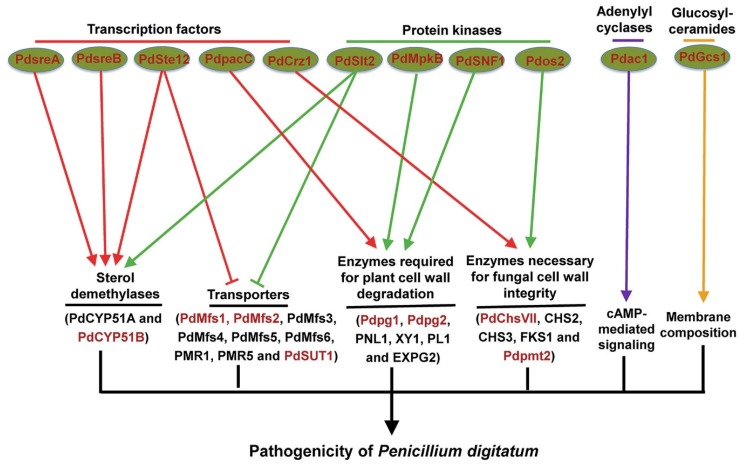
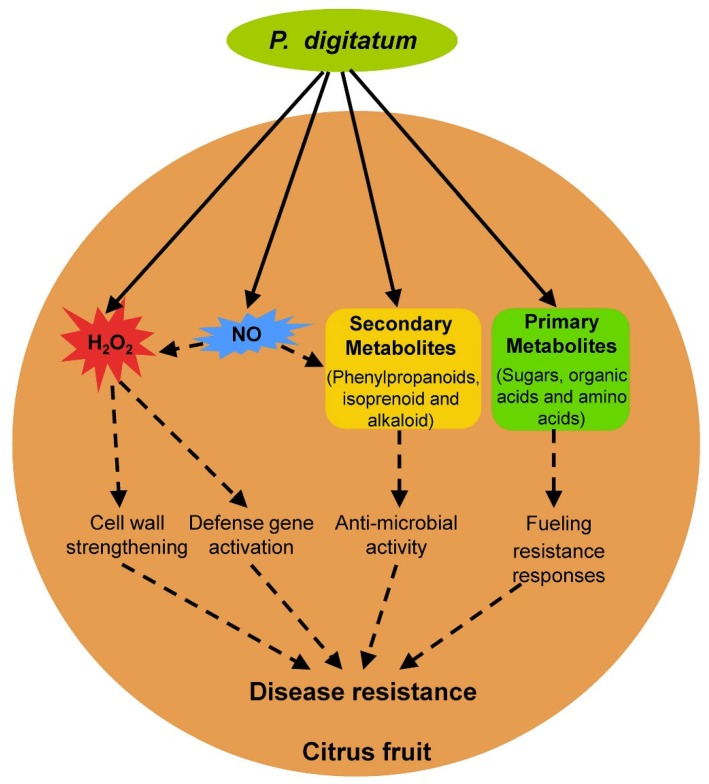
As the major postharvest disease of citrus fruit, postharvest green mold is caused by the necrotrophic fungus (), which leads to huge economic losses worldwide. Fungicides are still the main method currently used to control postharvest green mold in citrus fruit storage. Investigating molecular mechanisms of plant-pathogen interactions, including pathogenicity and plant resistance, is crucial for developing novel and safer strategies for effectively controlling plant diseases. Despite fruit-pathogen interactions remaining relatively unexplored compared with well-studied leaf-pathogen interactions, progress has occurred in the citrus fruit- interaction in recent years, mainly due to their genome sequencing and establishment or optimization of their genetic transformation systems. Recent advances in pathogenicity on citrus fruit and fruit resistance against infection are summarized in this review.
作为柑橘类水果采后的主要病害,采后绿霉病由坏死营养型真菌()引起,在全球范围内造成巨大经济损失。杀菌剂仍是目前柑橘类水果贮藏期控制采后绿霉病的主要方法。研究植物与病原体相互作用的分子机制,包括致病性和植物抗性,对于开发有效控制植物病害的新型安全策略至关重要。尽管与研究充分的叶片与病原体相互作用相比,果实与病原体的相互作用研究相对较少,但近年来柑橘果实相互作用方面已取得进展,这主要归功于其基因组测序以及遗传转化系统的建立或优化。本文综述了柑橘果实致病性及果实对感染的抗性方面的最新进展。