Kubelick Kelsey P, Emelianov Stanislav Y
Wallace H. Coulter Department of Biomedical Engineering, Georgia Institute of Technology and Emory University School of Medicine, 313 Ferst Dr NW, Atlanta, GA, 30332, USA.
School of Electrical and Computer Engineering, Georgia Institute of Technology, 777 Atlantic Drive, Atlanta, GA, 30332, USA.
Photoacoustics. 2020 Mar 10;18:100166. doi: 10.1016/j.pacs.2020.100166. eCollection 2020 Jun.
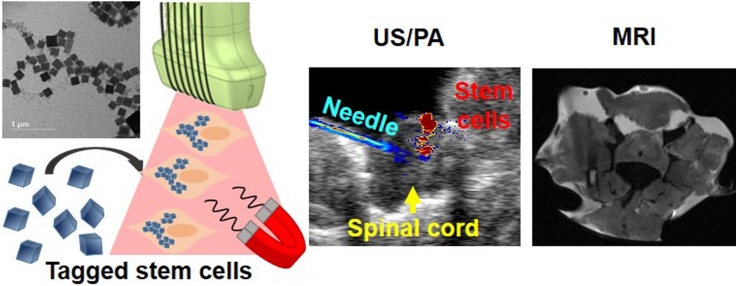
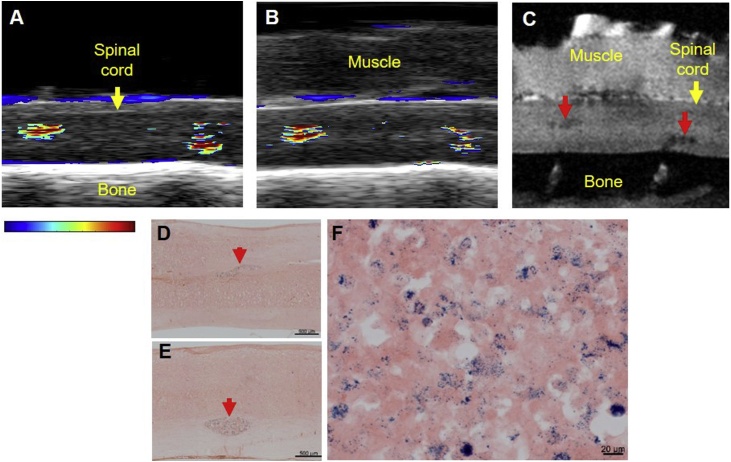
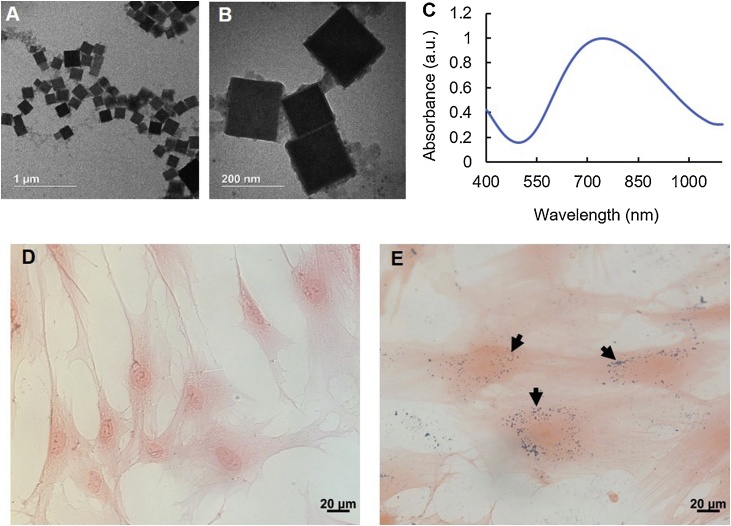
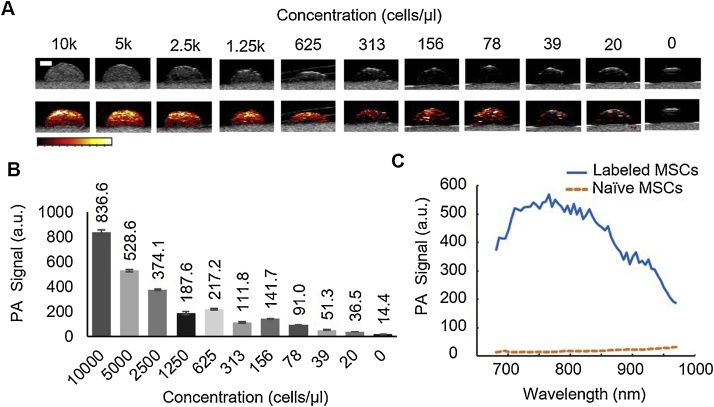
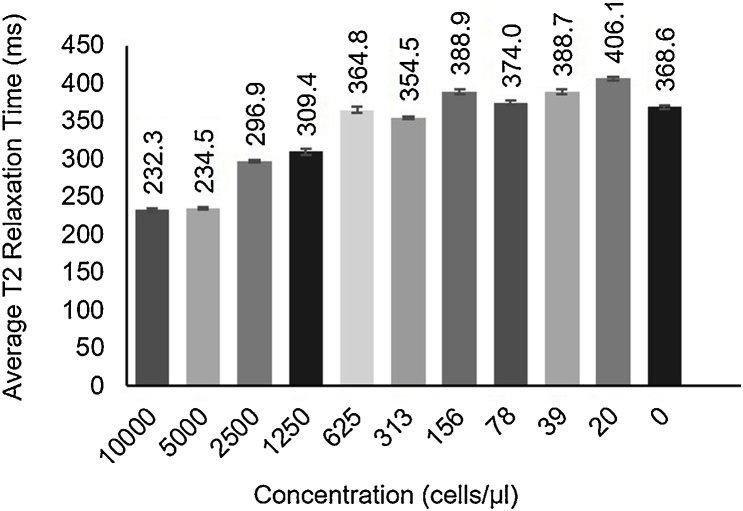
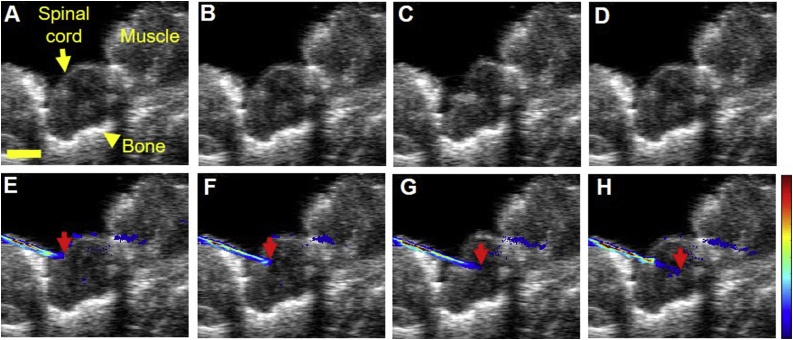
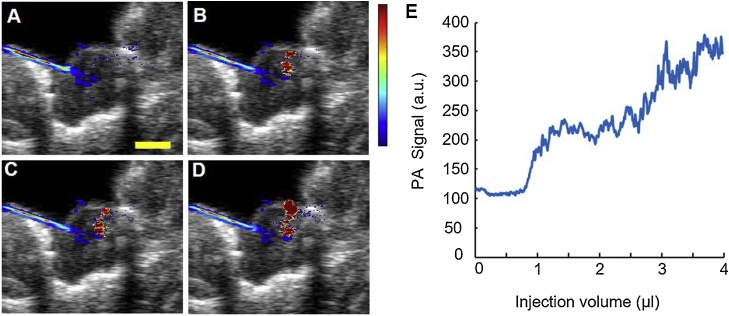
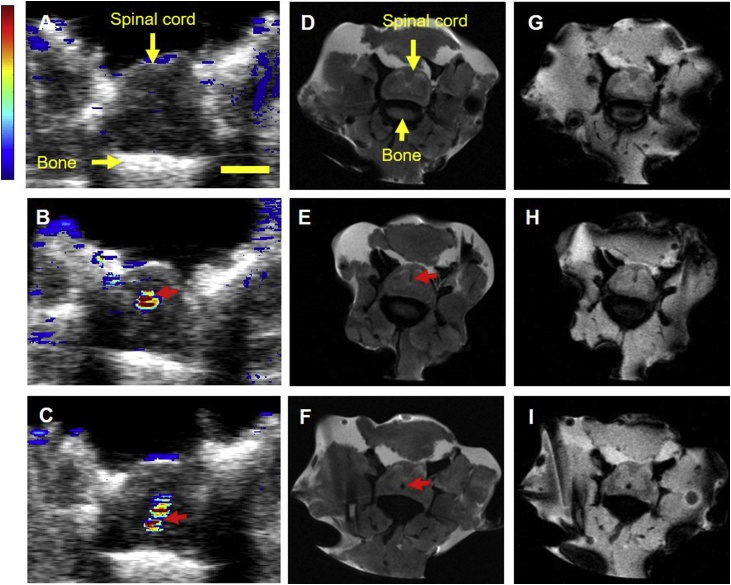
Translation of stem cell therapies to treat injuries and diseases of the spinal cord is hindered by lack of real-time monitoring techniques to guide regenerative therapies intra- and postoperatively. Thus, we developed an ultrasound (US), photoacoustic (PA), and magnetic resonance (MR) imaging approach augmented with Prussian blue nanocubes (PBNCs) to guide stem cell injections intraoperatively and monitor stem cell therapies in the spinal cord postoperatively. Per the clinical procedure, a multi-level laminectomy was performed in rats , and PBNC-labeled stem cells were injected directly into the spinal cord while US/PA images were acquired. US/PA/MR images were also acquired post-surgery. Several features of the imaging approach were demonstrated including detection of low stem cell concentrations, real-time needle guidance and feedback on stem cell delivery, and good agreement between US/PA/MR images. These benefits span intra- and postoperative environments to support future development of this imaging tool.
将干细胞疗法用于治疗脊髓损伤和疾病受到阻碍,原因是缺乏实时监测技术来在手术中和术后指导再生治疗。因此,我们开发了一种超声(US)、光声(PA)和磁共振(MR)成像方法,并结合普鲁士蓝纳米立方体(PBNC),以在术中指导干细胞注射,并在术后监测脊髓中的干细胞治疗。按照临床程序,在大鼠身上进行了多级椎板切除术,在获取US/PA图像的同时将PBNC标记的干细胞直接注入脊髓。术后也获取了US/PA/MR图像。该成像方法的几个特点得到了证实,包括检测低浓度干细胞、实时针引导和关于干细胞递送的反馈,以及US/PA/MR图像之间的良好一致性。这些优势涵盖了术中和术后环境,以支持这种成像工具的未来发展。