David Geffen School of Medicine at UCLA, Los Angeles, CA, USA.
Department of Medicine, David Geffen School of Medicine at UCLA, Los Angeles, CA, USA.
Clin Auton Res. 2020 Dec;30(6):507-519. doi: 10.1007/s10286-020-00683-4. Epub 2020 Mar 26.
Electronic cigarettes (ECs) are the fastest growing tobacco product in the USA, and ECs, like tobacco cigarettes (TCs), have effects on the cardiovascular autonomic nervous system, with clinical implications. The purpose of this review was to collect and synthesize available studies that have investigated the autonomic cardiovascular effects of EC use in humans. Special attention is paid to the acute and chronic effects of ECs, the relative contributions of the nicotine versus non-nicotine constituents in EC emissions and the relative effects of ECs compared to TCs.
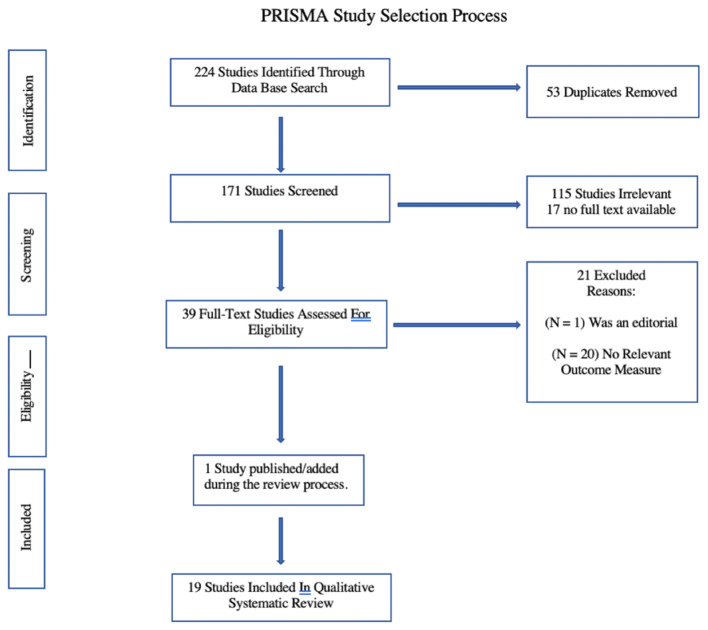
Using the methodology described in the Preferred Reporting Items for Systematic Reviews and Meta-Analysis (PRISMA) statement, we conducted a literature search of the Ovid PubMed and Embase databases on 6 December 2019 using keywords in titles and abstracts of published literature. Acute (minutes to hours) and chronic (days or longer) changes in heart rate variability (HRV), heart rate (HR) and blood pressure (BP) were used as estimates of cardiovascular autonomic effects.
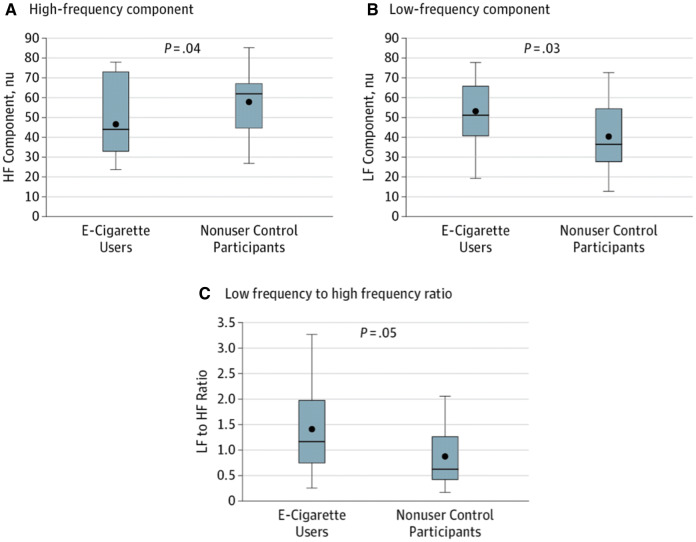
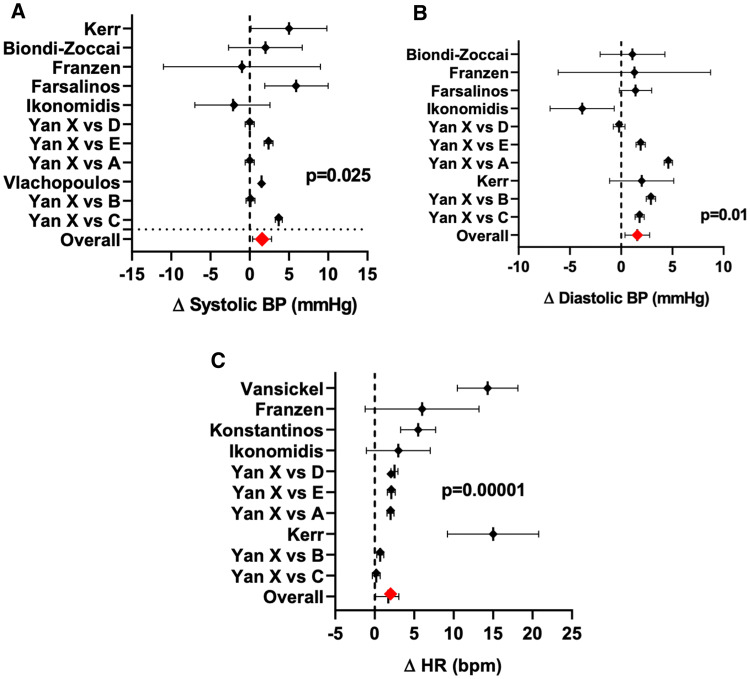
Nineteen studies were included in this systematic review, all of which used earlier generation EC devices. Acute EC vaping increased HR and BP less than acute TC smoking. Nicotine but not non-nicotine constituents in EC aerosol were responsible for the sympathoexcitatory effects. The results of chronic EC vaping studies were consistent with a chronic sympathoexcitatory effect as estimated by HRV, but this did not translate into chronic increases in HR or BP.
Electronic cigarettes are sympathoexcitatory. Cardiac sympathoexcitatory effects are less when vaping using the earlier generation ECs than when smoking TCs. Additional studies of the latest pod-like EC devices, which deliver nicotine similarly to a TC, are necessary.
电子烟(ECs)是美国增长最快的烟草产品,与传统香烟(TCs)一样,ECs 对心血管自主神经系统有影响,具有临床意义。本综述的目的是收集和综合已发表的研究,这些研究调查了人类使用 EC 对心血管自主神经的影响。特别关注 EC 使用的急性和慢性影响、EC 排放中尼古丁与非尼古丁成分的相对贡献,以及与 TCs 相比 ECs 的相对影响。
使用系统评价和荟萃分析(PRISMA)声明中描述的方法,我们于 2019 年 12 月 6 日在 Ovid PubMed 和 Embase 数据库中进行了文献检索,使用标题和摘要中发表文献的关键词。心率变异性(HRV)、心率(HR)和血压(BP)的急性(数分钟至数小时)和慢性(数天或更长时间)变化被用作心血管自主神经影响的估计。
本系统评价共纳入 19 项研究,均使用早期一代 EC 设备。急性 EC 蒸气吸入对 HR 和 BP 的增加小于急性 TC 吸烟。EC 气溶胶中的尼古丁而不是非尼古丁成分是引起交感神经兴奋的原因。EC 蒸气吸入慢性研究的结果与 HRV 估计的慢性交感神经兴奋一致,但这并没有转化为 HR 或 BP 的慢性升高。
电子烟具有交感神经兴奋作用。与吸 TC 相比,使用早期一代 EC 蒸气吸入时,心脏交感神经兴奋的作用较小。需要对最新的类似 pod 样 EC 设备进行更多研究,这些设备类似 TC 一样输送尼古丁。