Tang Liping, Li Yimeng, Srivathsan Amrita, Gao Yunyun, Li Kai, Hu Defu, Zhang Dong
School of Nature Conservation, Beijing Forestry University, Beijing, China.
Department of Biological Sciences, National University of Singapore, Singapore, Singapore.
Front Microbiol. 2020 Mar 12;11:363. doi: 10.3389/fmicb.2020.00363. eCollection 2020.
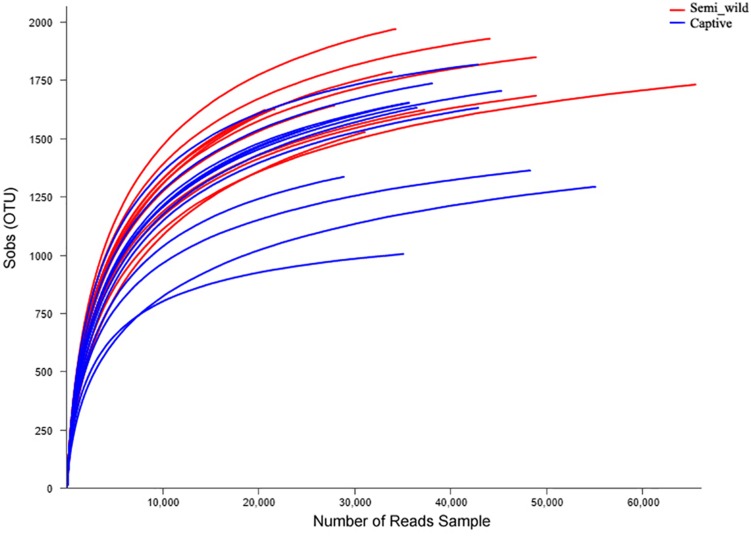
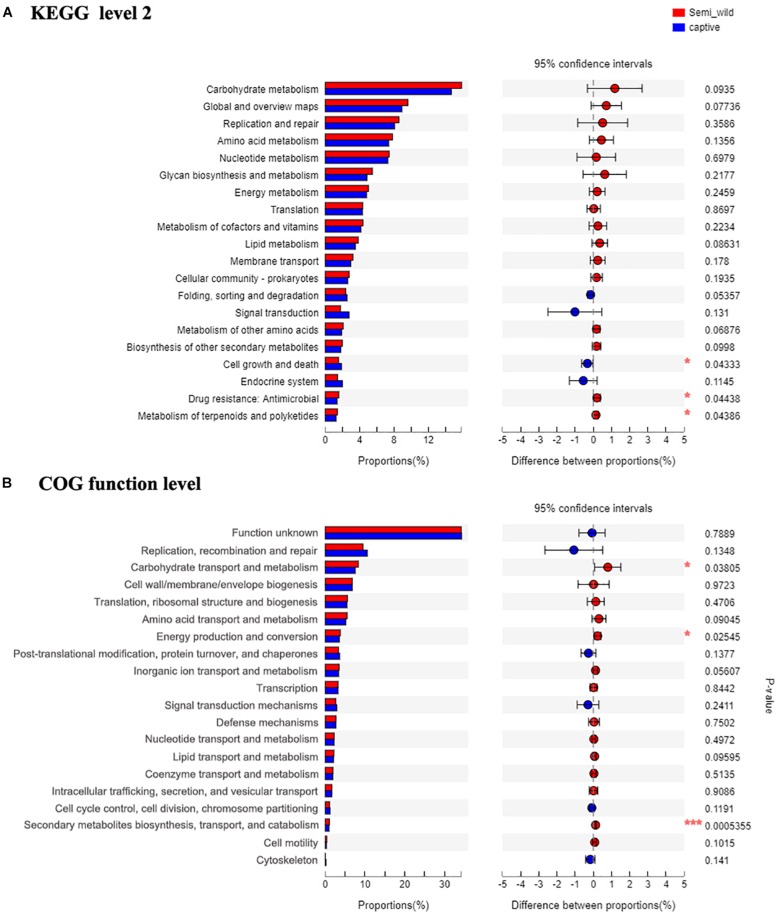
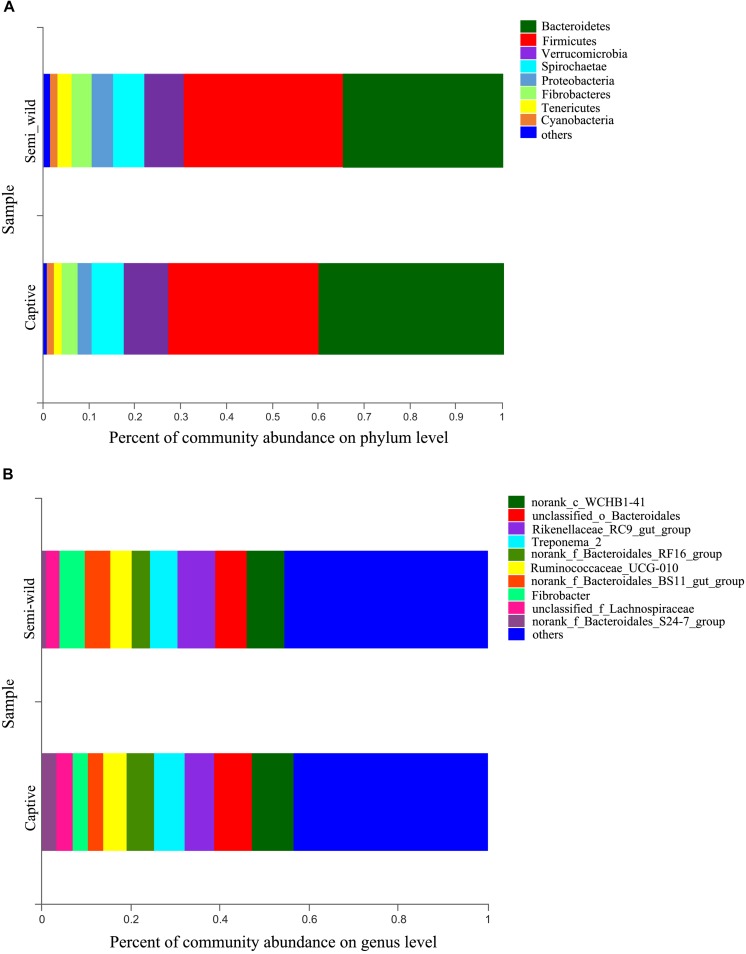
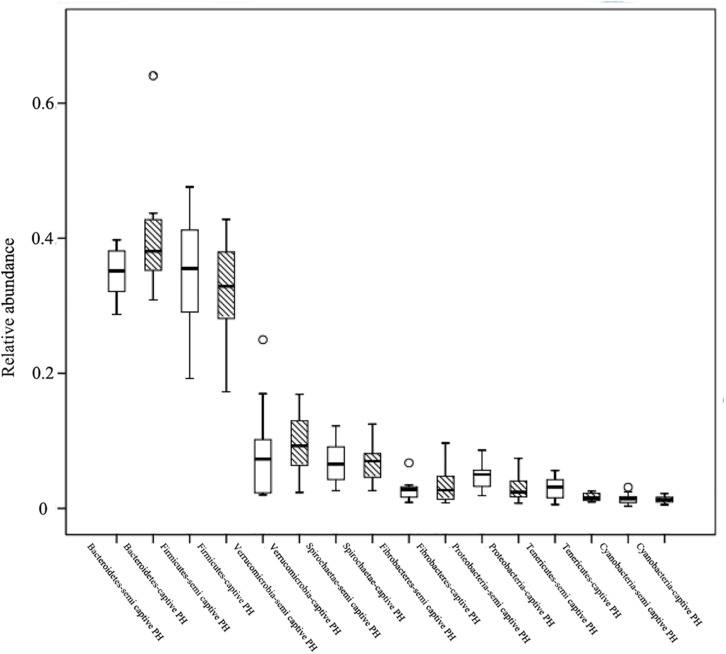
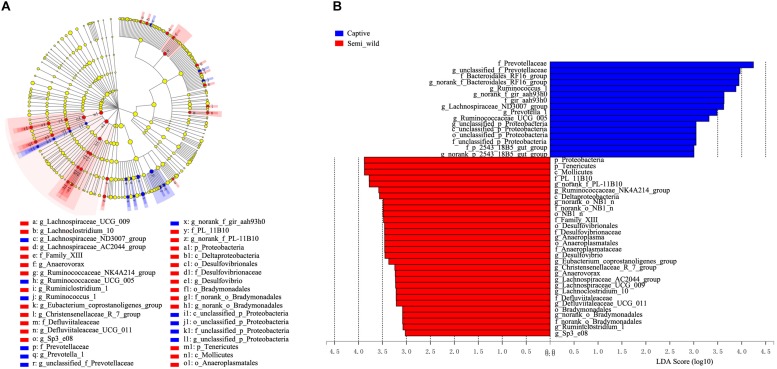
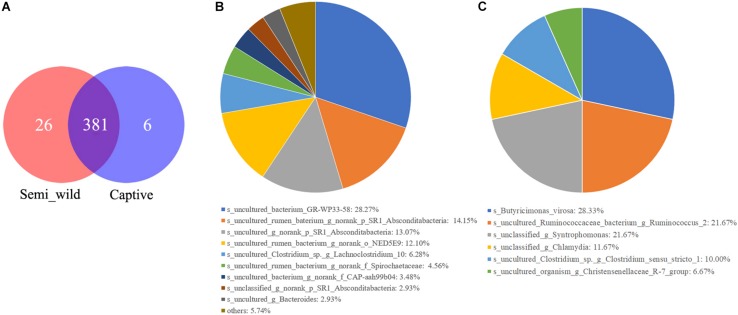
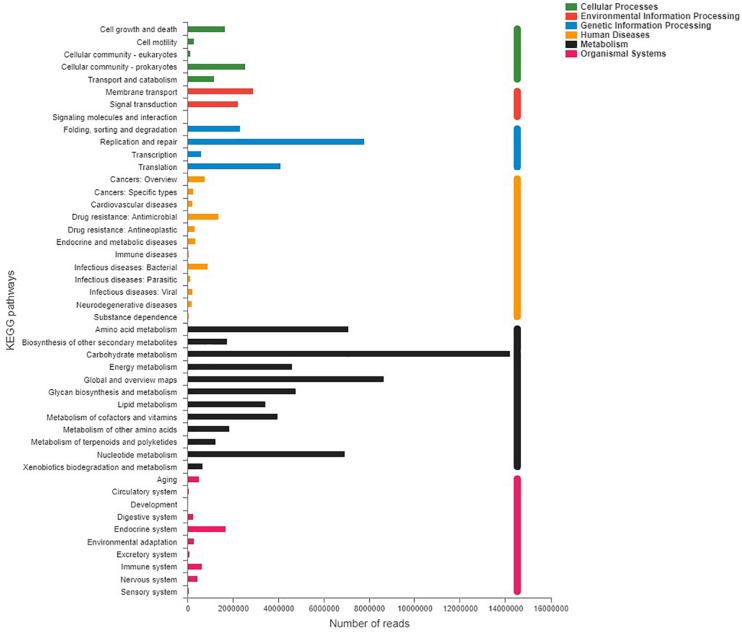
Captivity maybe the only choice for survival of many endangered vertebrates, and understanding its broad effects is important for animal management and conservation, including breeding endangered species for subsequent release. Extreme environmental changes during captivity may influence survival ability in the wild. Captivity decreases gut bacterial diversity in a wide range of animals. However, most studies directly compare animals living in captivity with those in the wild, and there is a lack of understanding of effects of gradient shift in lifestyle during species reintroduction based on the soft-release strategy, which involves a confinement period in a field enclosure. Here, we used 16S rRNA amplicon sequencing to analyze gut microbiomes of 11 captive and 12 semi-wild Przewalski's horses (PH; ) under the same captivity environment, using fecal samples. A subset of samples with abundant extracted DNA (including 3 captive and 3 semi-wild individuals) was selected for whole-genome shotgun sequencing. We found that community diversity did not differ between the semi-wild PH and captive PH, but the semi-wild PH had significantly higher bacterial richness than those in captivity. Relative abundances of all dominant phyla were similar across the semi-wild or captive horses, while those of the non-dominant phyla Tenericutes and Proteobacteria were significantly higher in semi-wild PH than in captive PH. Beta diversity results indicated that bacterial communities of captives and semi-wild horses were clearly separated distinct when considering only composition. Functional profiling of the microbiomes revealed that the semi-wild and captive gut microbiomes were largely similar. However, semi-wild horse microbiomes had higher abundance of bacterial genes related to core metabolic processes, such as carbohydrates, amino acids, and nucleic acid metabolism. The study revealed that semi-wild PH could retain specific non-dominant bacteria and harbor a more diverse microbiome than the captive counterpart, and thus have higher metabolic potential to utilize the complex plants efficiently. These results indicate that change in host lifestyle may play a role in microbiome differentiation in the process of reintroduction, suggesting that a short period of time in captivity is acceptable for PH from the perspective of maintaining the richness of intestinal bacterial flora to some extent.
圈养可能是许多濒危脊椎动物生存的唯一选择,了解其广泛影响对于动物管理和保护至关重要,包括繁殖濒危物种以便随后放归自然。圈养期间的极端环境变化可能会影响野生动物的生存能力。圈养会降低多种动物的肠道细菌多样性。然而,大多数研究直接将圈养动物与野生动物进行比较,对于基于软放归策略的物种再引入过程中生活方式梯度变化的影响缺乏了解,软放归策略包括在野外围栏中设置一个禁闭期。在此,我们使用16S rRNA扩增子测序,通过粪便样本分析了在相同圈养环境下11匹圈养普氏野马和12匹半野生普氏野马的肠道微生物群。选择了一部分DNA提取量丰富的样本(包括3匹圈养和3匹半野生个体)进行全基因组鸟枪法测序。我们发现,半野生普氏野马和圈养普氏野马的群落多样性没有差异,但半野生普氏野马的细菌丰富度显著高于圈养普氏野马。在半野生或圈养的马匹中,所有优势菌门的相对丰度相似,而非优势菌门柔膜菌门和变形菌门在半野生普氏野马中的相对丰度显著高于圈养普氏野马。β多样性结果表明,仅考虑组成时,圈养和半野生马匹的细菌群落明显分开。微生物群的功能分析表明,半野生和圈养的肠道微生物群在很大程度上相似。然而,半野生马的微生物群中与核心代谢过程相关的细菌基因丰度更高,如碳水化合物、氨基酸和核酸代谢。该研究表明,半野生普氏野马能够保留特定的非优势细菌,并且拥有比圈养普氏野马更多样化的微生物群,因此具有更高的代谢潜力来有效利用复杂植物。这些结果表明,宿主生活方式的改变可能在再引入过程中微生物群分化中起作用,这表明从在一定程度上维持肠道细菌菌群丰富度的角度来看,普氏野马在圈养中短时间停留是可以接受的。