
圈养和放归普氏野马肠道微生物群的群落组成与多样性
Community Composition and Diversity of Intestinal Microbiota in Captive and Reintroduced Przewalski's Horse ().
作者信息
Li Yimeng, Zhang Ke, Liu Yang, Li Kai, Hu Defu, Wronski Torsten
机构信息
College of Nature Conservation, Beijing Forestry University, Beijing, China.
School of Natural Sciences and Psychology, Liverpool John Moores University, Liverpool, United Kingdom.
出版信息
Front Microbiol. 2019 Aug 7;10:1821. doi: 10.3389/fmicb.2019.01821. eCollection 2019.
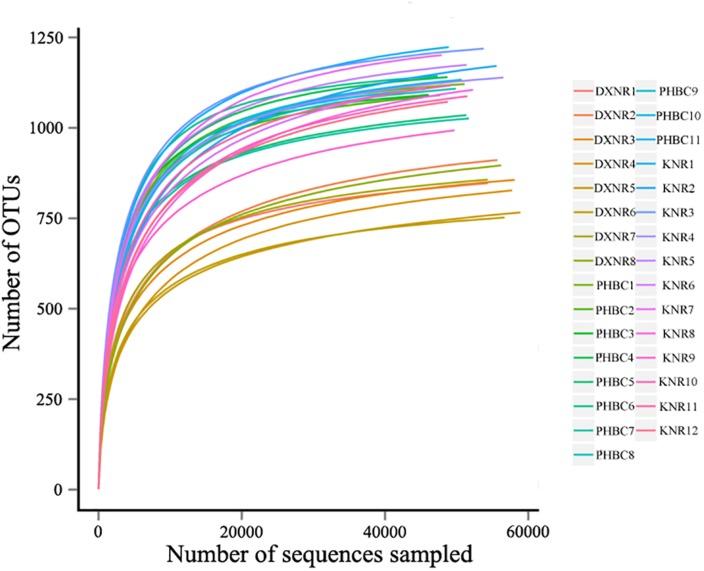
Large and complex intestinal microbiota communities in hosts have profound effects on digestion and metabolism. To better understand the community structure of intestinal microbiota in Przewalski's horse () under different feeding regimes, we compared bacterial diversity and composition between captive and reintroduced Przewalski's horses, using high-throughput 16S-rRNA gene sequencing for identification. Reintroduced Przewalski's horses were sampled in two Chinese nature reserves, i.e., Dunhuang Xihu Nature Reserve (DXNR; = 8) in Gansu Province and Kalamaili Nature Reserve (KNR; = 12) in Xinjiang Province, and compared to a captive population at the Przewalski's Horse Breeding Center in Xinjiang (PHBC; = 11). The composition of intestinal microbiota in Przewalski's horses was significantly different at the three study sites. Observed species was lowest in DXNR, but highest in KNR. Lowest Shannon diversity was observed in DXNR, while in KNR and PHBC had a moderately high diversity; Simpson diversity showed an opposite trend compared with the Shannon index. Linear Discriminant Analysis effect size was used to determine differentially distributed bacterial taxa at each study site. The most dominant phyla of intestinal microbiota were similar in all feeding regimes, including mainly Firmicutes, Bacteroidetes, Verrucomicrobia, and Spirochaetes. Differing abundances of intestinal microbiota in Przewalski's horses may be related to different food types at each study site, differences in diversity may be attributed to low quality food in DXNR. Results indicated that diet is one of the important factors that can influence the structure of intestinal microbiota communities in Przewalski's horse. These findings combined with a detailed knowledge of the available and consumed food plant species could provide guidelines for the selection of potential future reintroduction sites.
宿主体内庞大而复杂的肠道微生物群落对消化和新陈代谢有着深远影响。为了更好地了解不同饲养方式下普氏野马肠道微生物群落结构,我们利用高通量16S - rRNA基因测序进行鉴定,比较了圈养和放归普氏野马的细菌多样性和组成。放归的普氏野马在中国的两个自然保护区进行采样,即甘肃省敦煌西湖自然保护区(DXNR;n = 8)和新疆卡拉麦里自然保护区(KNR;n = 12),并与新疆普氏野马繁育中心的圈养种群(PHBC;n = 11)进行比较。在三个研究地点,普氏野马肠道微生物的组成存在显著差异。观测物种数在DXNR最低,在KNR最高。DXNR的香农多样性最低,而KNR和PHBC具有中等较高的多样性;辛普森多样性与香农指数呈现相反趋势。利用线性判别分析效应大小来确定每个研究地点差异分布的细菌类群。在所有饲养方式下,肠道微生物最主要的门类相似,主要包括厚壁菌门、拟杆菌门、疣微菌门和螺旋体门。普氏野马肠道微生物丰度的差异可能与每个研究地点不同的食物类型有关,多样性的差异可能归因于DXNR食物质量较低。结果表明,饮食是影响普氏野马肠道微生物群落结构的重要因素之一。这些发现结合对可用和食用的食物植物物种的详细了解,可为未来潜在放归地点的选择提供指导。



 Zotero 插件