Viral Zoonosis - One Health, Heinrich Pette Institute, Leibniz Institute for Experimental Virology, Hamburg, Germany.
Institut Clinique de la Souris, University of Strasbourg, Illkirch-Graffenstaden, France.
Front Immunol. 2020 Mar 13;11:450. doi: 10.3389/fimmu.2020.00450. eCollection 2020.
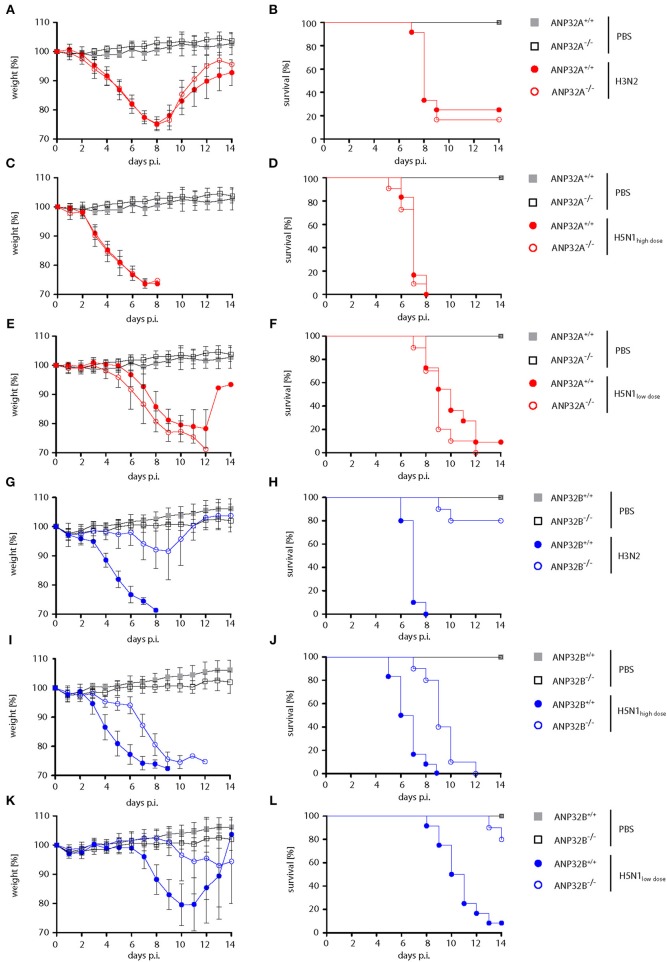
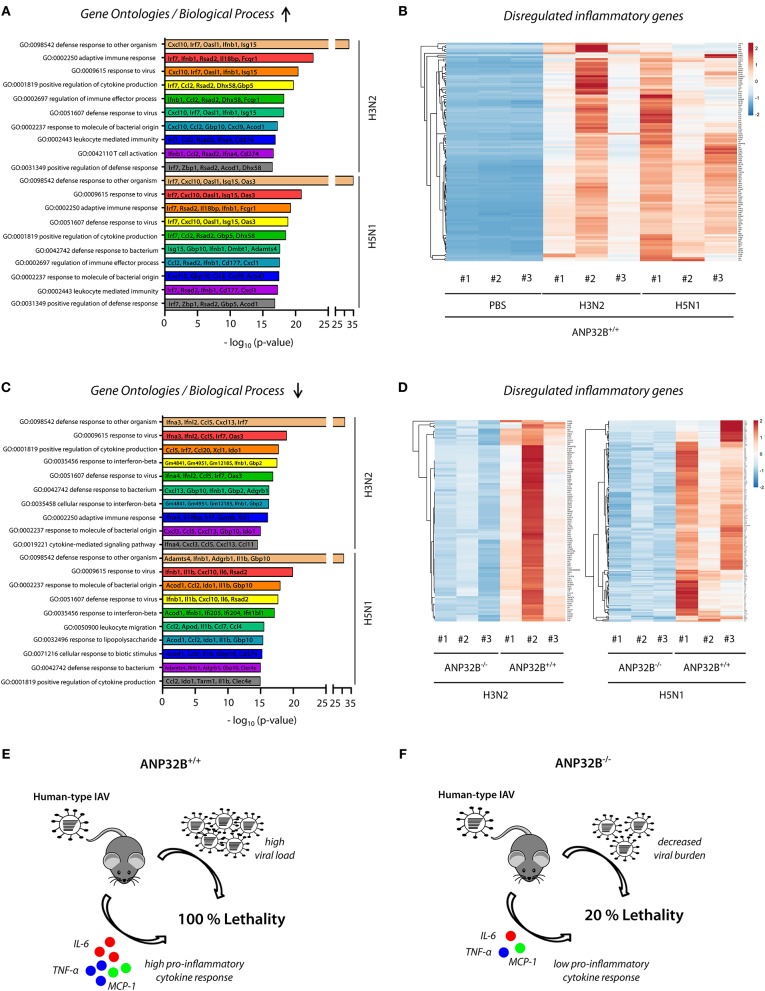
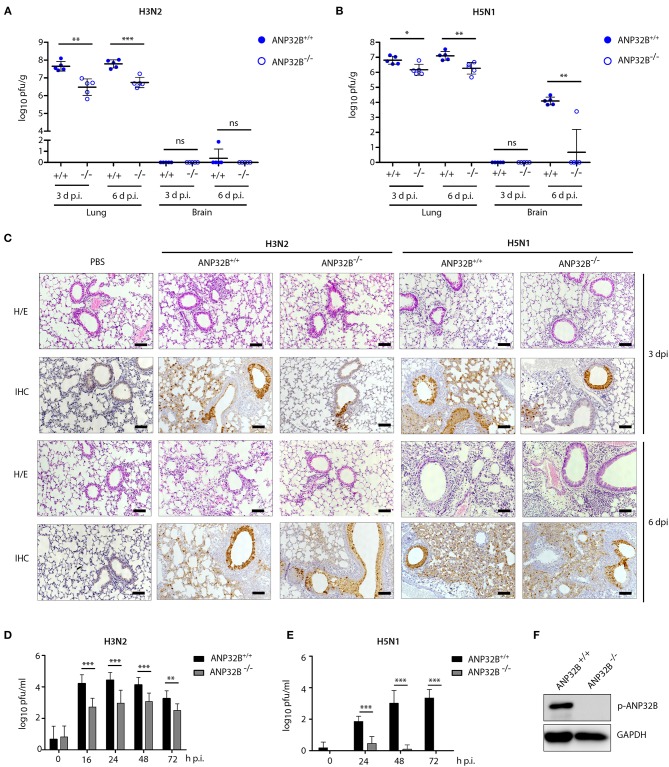
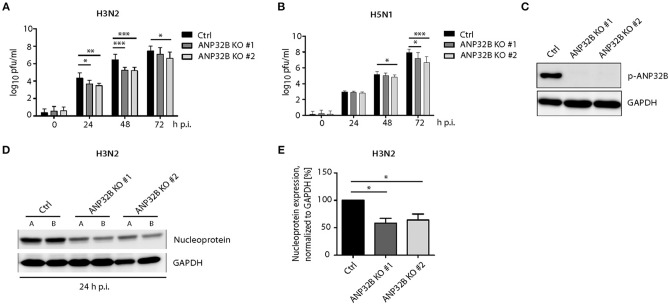
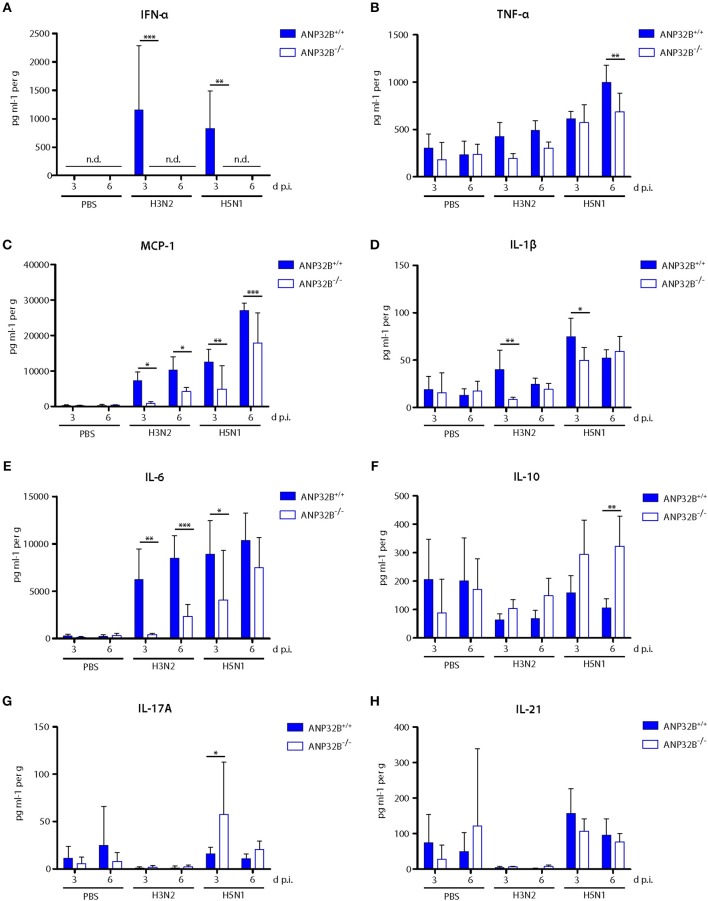
Deciphering complex virus-host interactions is crucial for pandemic preparedness. In this study, we assessed the impact of recently postulated cellular factors ANP32A and ANP32B of influenza A virus (IAV) species specificity on viral pathogenesis in a genetically modified mouse model. Infection of ANP32A and ANP32A mice with a seasonal H3N2 IAV or a highly pathogenic H5N1 human isolate did not result in any significant differences in virus tropism, innate immune response or disease outcome. However, infection of ANP32B mice with H3N2 or H5N1 IAV revealed significantly reduced virus loads, inflammatory cytokine response and reduced pathogenicity compared to ANP32B mice. Genome-wide transcriptome analyses in ANP32B and ANP32B mice further uncovered novel immune-regulatory pathways that correlate with reduced pathogenicity in the absence of ANP32B. These data show that ANP32B but not ANP32A promotes IAV pathogenesis in mice. Moreover, ANP32B might possess a yet unknown immune-modulatory function during IAV infection. Targeting ANP32B or its regulated pathways might therefore pose a new strategy to combat severe influenza.
解析复杂的病毒-宿主相互作用对于大流行的防范至关重要。在这项研究中,我们评估了最近提出的流感 A 病毒(IAV)物种特异性的细胞因子 ANP32A 和 ANP32B 对遗传修饰小鼠模型中病毒发病机制的影响。用季节性 H3N2 IAV 或高致病性 H5N1 人分离株感染 ANP32A 和 ANP32A 小鼠,不会导致病毒嗜性、先天免疫反应或疾病结局有任何显著差异。然而,用 H3N2 或 H5N1 IAV 感染 ANP32B 小鼠,与 ANP32B 小鼠相比,病毒载量、炎症细胞因子反应和致病性显著降低。在 ANP32B 和 ANP32B 小鼠中进行的全基因组转录组分析进一步揭示了新的免疫调节途径,这些途径与缺乏 ANP32B 时的降低致病性相关。这些数据表明,ANP32B 而不是 ANP32A 促进了小鼠中的 IAV 发病机制。此外,ANP32B 在 IAV 感染期间可能具有未知的免疫调节功能。因此,靶向 ANP32B 或其调节途径可能是对抗严重流感的一种新策略。