State Key Laboratory of Veterinary Biotechnology, Harbin Veterinary Research Institute, The Chinese Academy of Agricultural Sciences, Harbin, China.
College of Life Sciences, Nanjing Normal University, Nanjing, Jiangsu, China.
PLoS Pathog. 2020 Feb 21;16(2):e1008330. doi: 10.1371/journal.ppat.1008330. eCollection 2020 Feb.
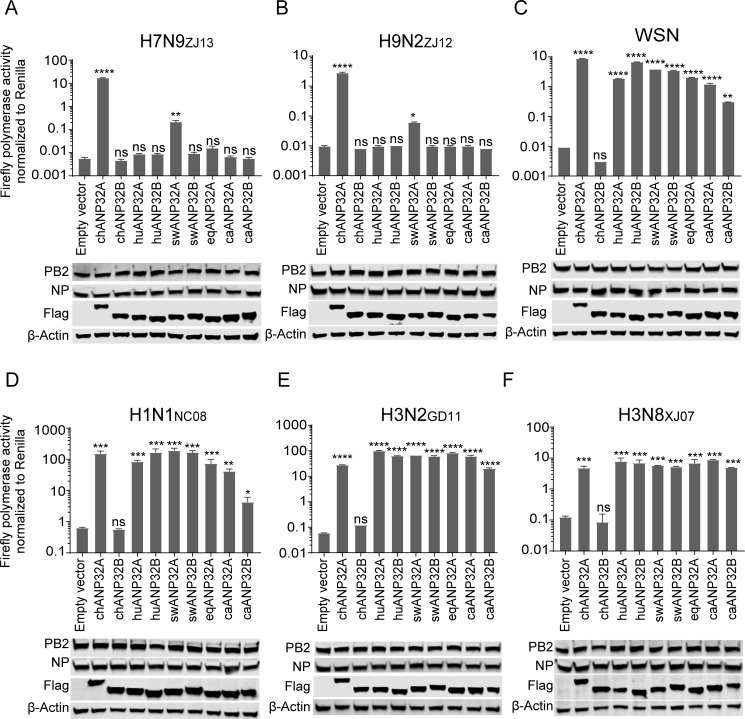
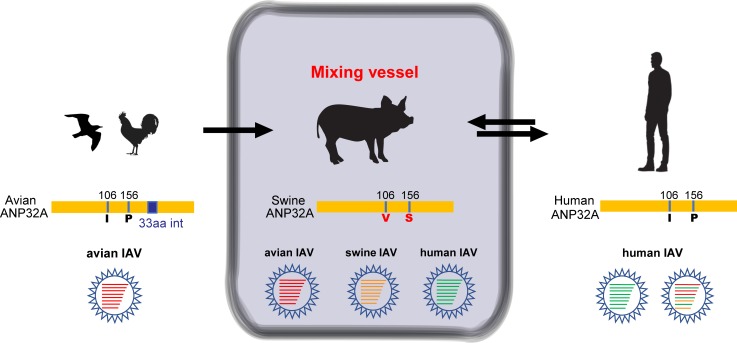
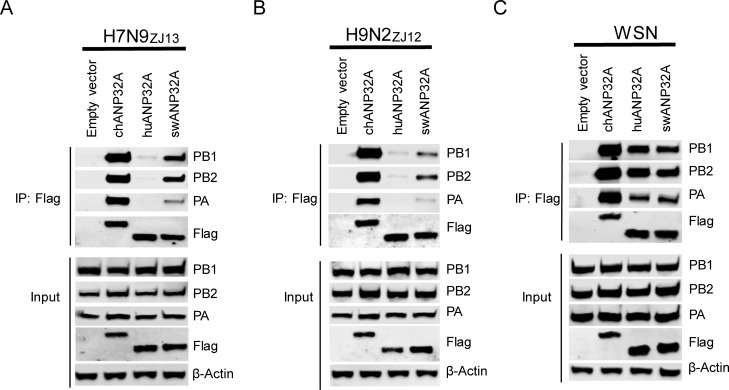
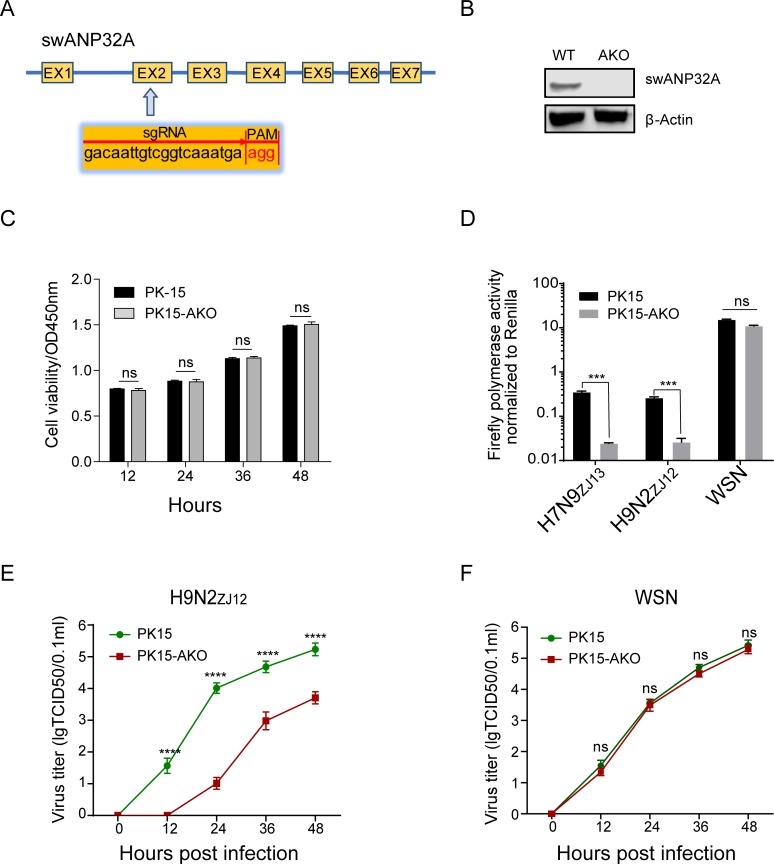
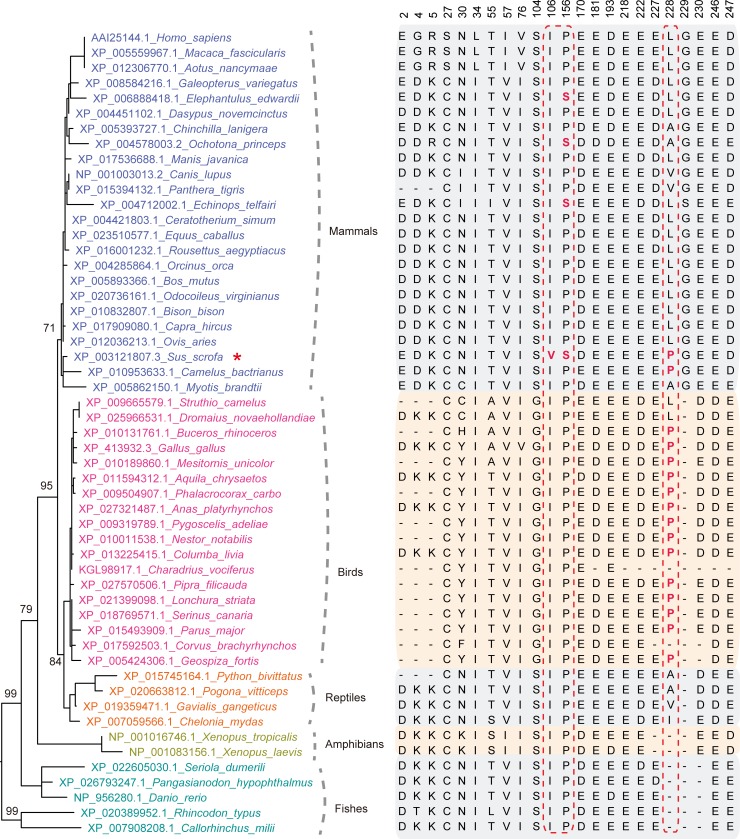
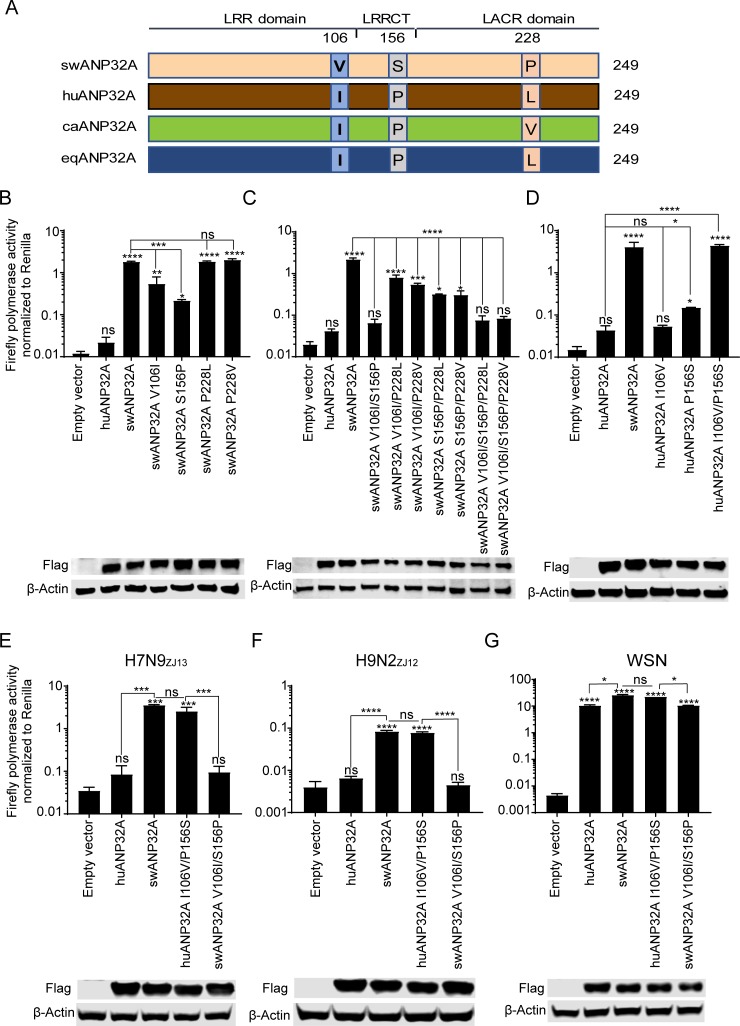
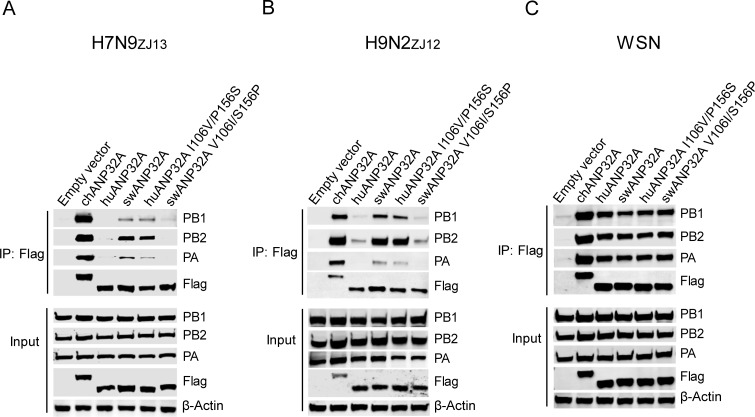
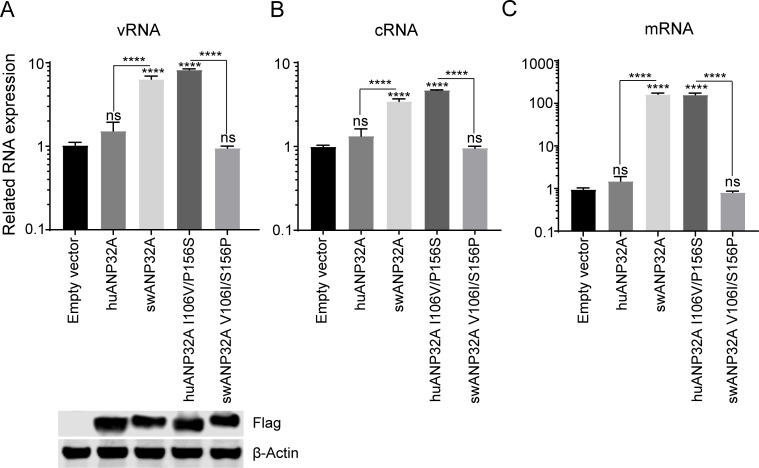
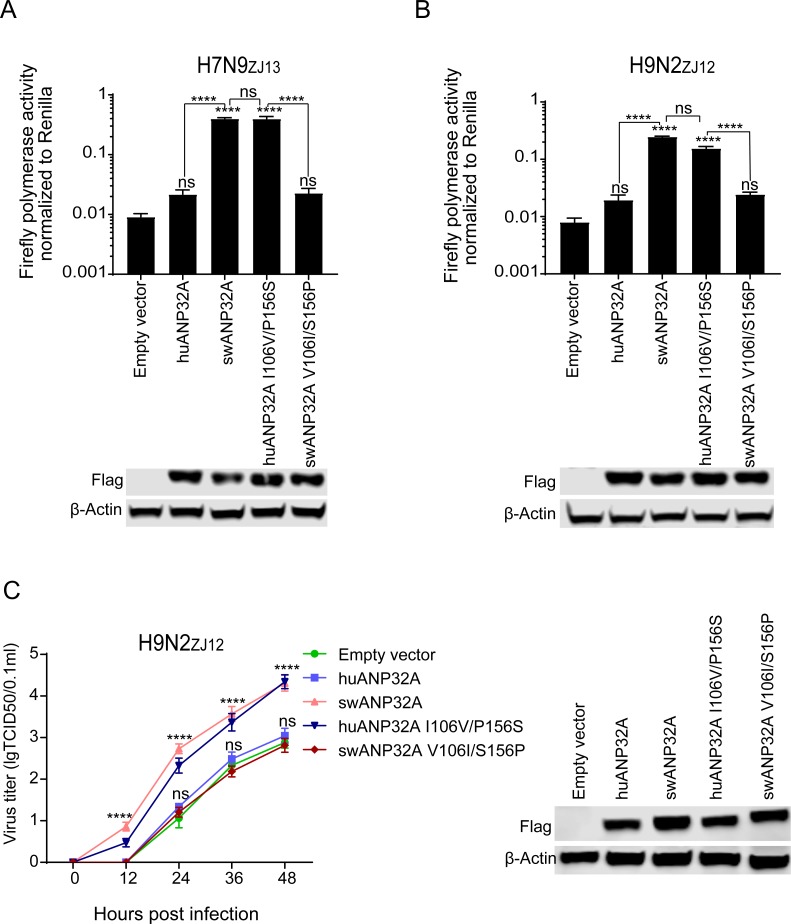
Both the replication and transcription of the influenza virus are catalyzed by the viral polymerase complex. The polymerases of most avian influenza A viruses have poor performance in mammalian cells, which is considered to be one of the important species barriers. Pigs have been long considered as important intermediate hosts for interspecies transmission of the avian influenza virus, because of their susceptibility to infection with both avian and mammalian influenza viruses. However, the molecular basis of influenza polymerase adaptation in pigs remains largely unknown. ANP32A and ANP32B proteins have been identified as playing fundamental roles in influenza virus replication and host range determination. In this study, we found that swine ANP32A (swANP32A), unlike swine ANP32B or other mammalian ANP32A or B, shows stronger supporting activity to avian viral polymerase. Knockout of ANP32A in pig cells PK15 dramatically reduced avian influenza polymerase activity and viral infectivity, suggesting a unique feature of swANP32A in supporting avian influenza viral polymerase. This species-specific activity is mapped to two key sites, 106V and 156S, in swANP32A. Interestingly, the amino acid 106V is unique to pigs among all the vertebrate species studied, and when combined with 156S, exhibits positive epistasis in pigs. Mutation of 106V and 156S to the signature found in ANP32As from other mammalian species weakened the interaction between swANP32A and chicken viral polymerase, and reduced polymerase activity. Understanding the molecular basis of ANP32 proteins may help to discover new antiviral targets and design avian influenza resistant genome edited pigs.
流感病毒的复制和转录均由病毒聚合酶复合物催化。大多数禽流感 A 病毒的聚合酶在哺乳动物细胞中的性能较差,这被认为是重要的物种障碍之一。猪一直被认为是禽流感病毒种间传播的重要中间宿主,因为它们易感染禽源和兽源流感病毒。然而,流感聚合酶在猪中的适应性的分子基础在很大程度上仍然未知。ANP32A 和 ANP32B 蛋白已被确定在流感病毒复制和宿主范围决定中发挥着基本作用。在本研究中,我们发现猪 ANP32A(swANP32A)与猪 ANP32B 或其他哺乳动物的 ANP32A 或 B 不同,对禽源病毒聚合酶表现出更强的支持活性。猪细胞 PK15 中 ANP32A 的敲除显著降低了禽源流感聚合酶的活性和病毒感染力,表明 swANP32A 具有支持禽源流感病毒聚合酶的独特特征。这种种属特异性活性被定位到 swANP32A 中的两个关键位点 106V 和 156S。有趣的是,在所有研究的脊椎动物物种中,氨基酸 106V 是猪所特有的,与 156S 结合时,在猪中表现出正的上位效应。将 106V 和 156S 突变为其他哺乳动物 ANP32A 中的特征性氨基酸,削弱了 swANP32A 与鸡病毒聚合酶之间的相互作用,降低了聚合酶的活性。了解 ANP32 蛋白的分子基础可能有助于发现新的抗病毒靶点,并设计抗禽流感的基因组编辑猪。