Department of Biochemistry and Medical Chemistry, Pomeranian Medical University in Szczecin, Powstańców Wlkp. 72, 70-111 Szczecin, Poland.
Department of Pharmacology and Pharmacodynamics, Medical University of Lublin, Chodźki 4a, 20-093 Lublin, Poland.
Int J Mol Sci. 2020 Mar 29;21(7):2361. doi: 10.3390/ijms21072361.
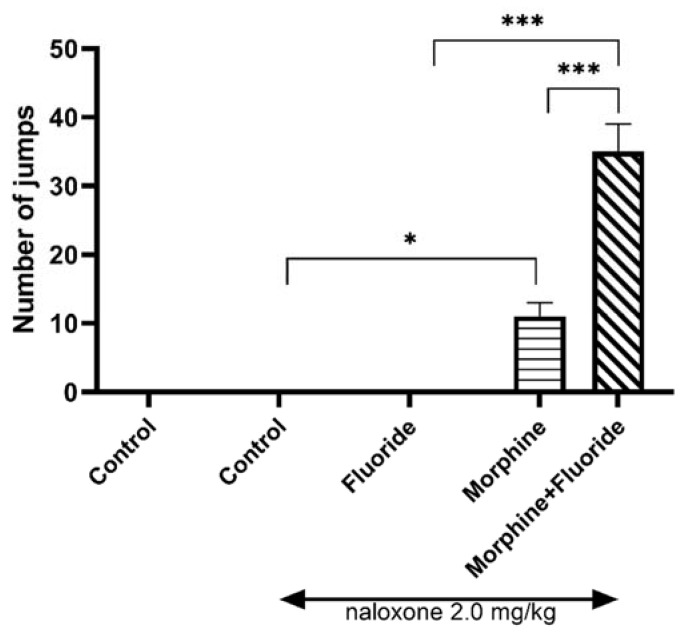
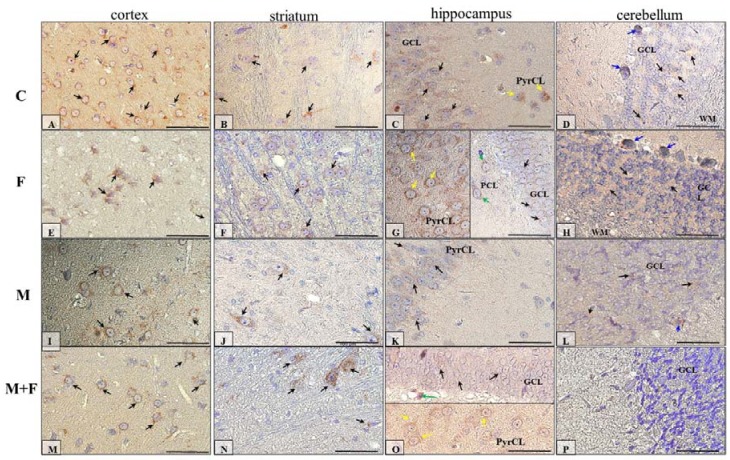
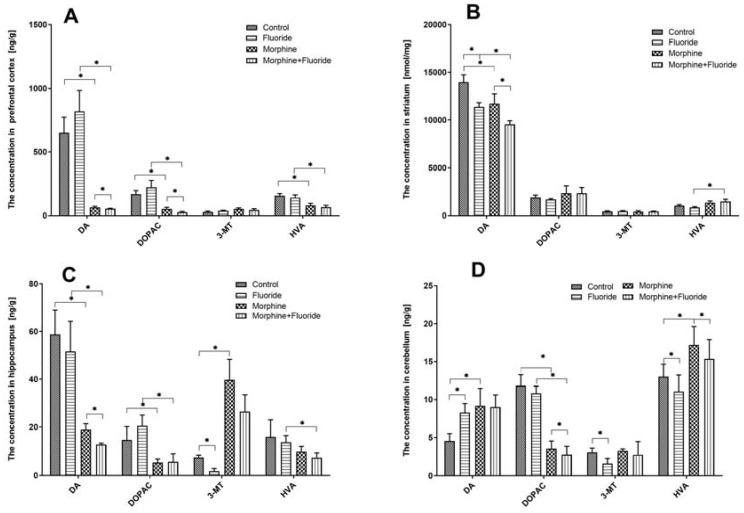
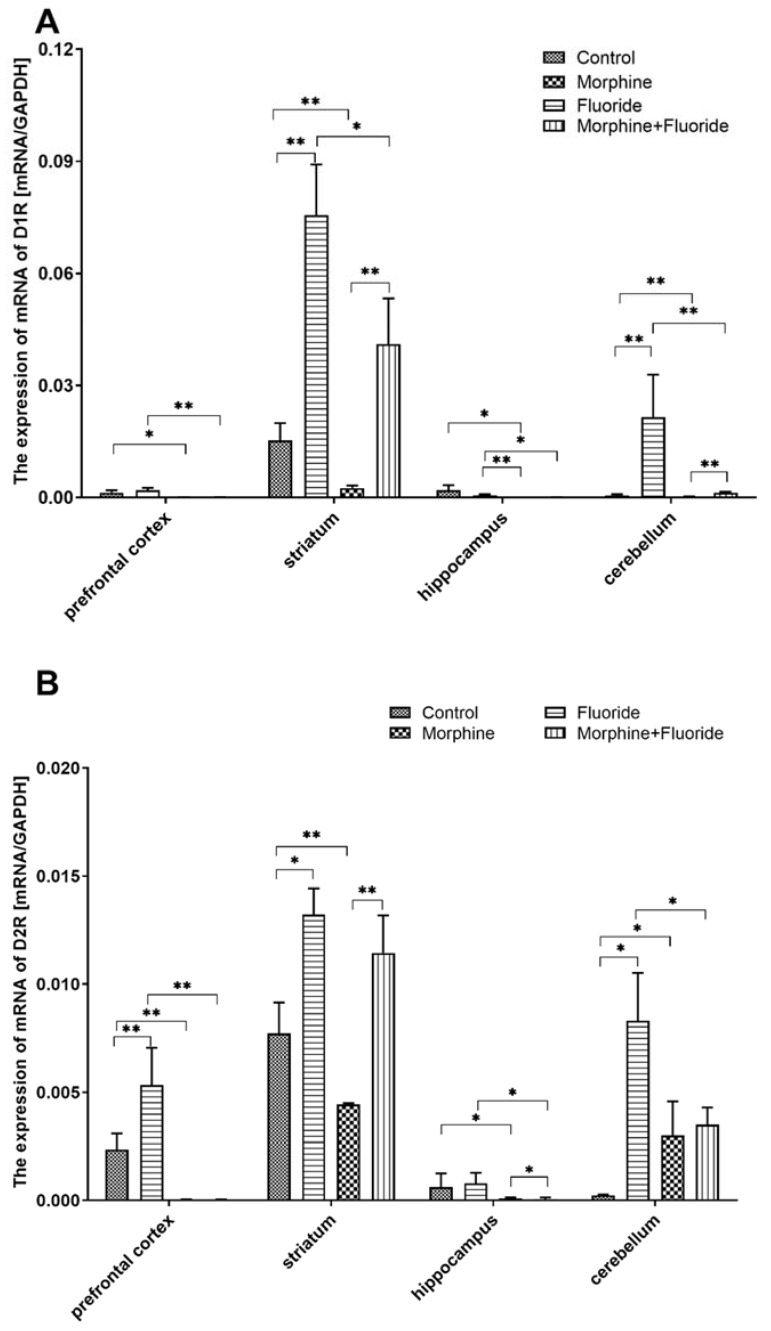
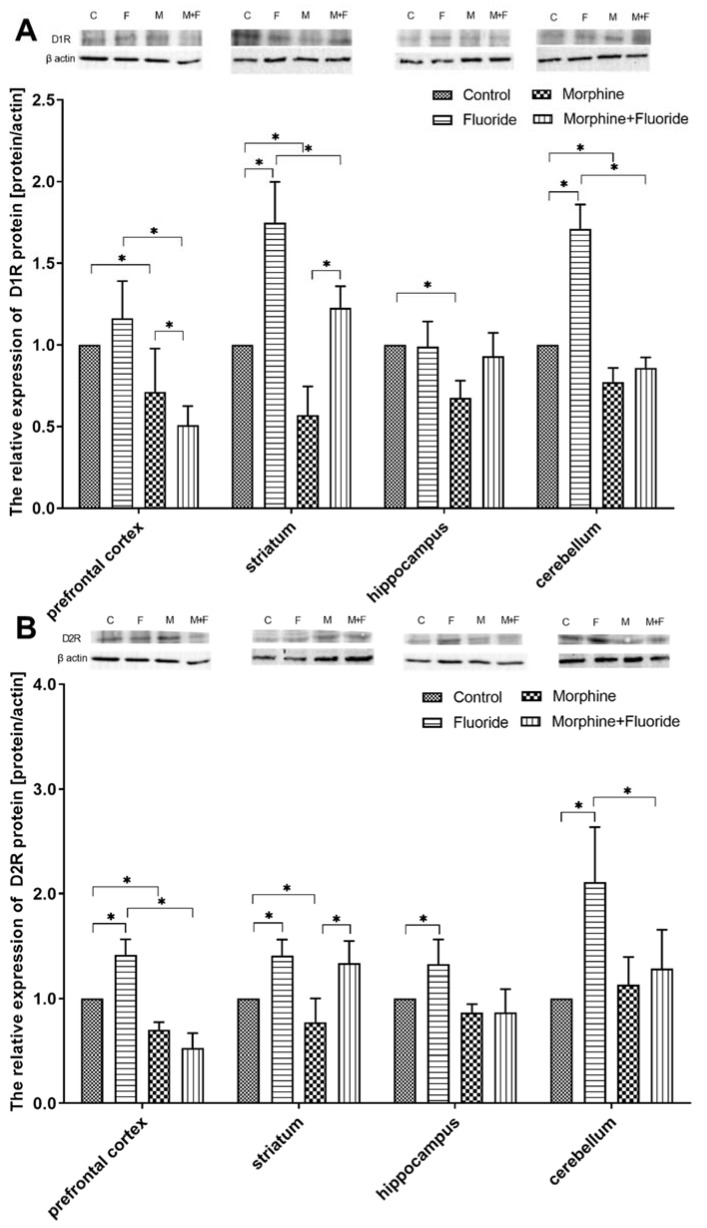
Disturbances caused by excess or shortages of certain elements can affect the cerebral reward system and may therefore modulate the processes associated with the development of dependence as was confirmed by behavioural studies on animals addicted to morphine. Earlier publications demonstrated and proved the neurodegenerative properties of both low and high doses of fluoride ions in animal experiments and in epidemiological and clinical studies. The aim of the experiments conducted in the course of the present study was to analyse the effect of pre- and postnatal exposure to 50 ppm F on the initiation/development of morphine dependence. For this purpose, the following were conducted: behavioural studies, the analysis of concentrations of dopamine and its metabolites, and the analyses of mRNA expression and dopamine receptor proteins D1 and D2 in the prefrontal cortex, striatum, hippocampus, and cerebellum of rats. In this study, it was observed for the first time that pre- and postnatal exposure to fluoride ions influenced the phenomenon of morphine dependence in a model expressing withdrawal symptoms. Behavioural, molecular, and neurochemical studies demonstrated that the degenerative changes caused by toxic activity of fluoride ions during the developmental period of the nervous system may impair the functioning of the dopaminergic pathway due to changes in dopamine concentration and in dopamine receptors. Moreover, the dopaminergic disturbances within the striatum and the cerebellum played a predominant role as both alterations of dopamine metabolism and profound alterations in striatal D1 and D2 receptors were discovered in these structures. The present study provides a new insight into a global problem showing direct associations between environmental factors and addictive disorders.
过量或缺乏某些元素会引起大脑奖励系统的紊乱,从而影响依赖性的发展过程,这一点已经被对吗啡成瘾动物的行为研究证实。早期的出版物已经在动物实验和流行病学及临床研究中证明和证实了低剂量和高剂量氟离子的神经退行性特性。本研究中进行的实验旨在分析产前和产后暴露于 50ppmF 对吗啡依赖性发生/发展的影响。为此,进行了以下实验:行为研究、多巴胺及其代谢物浓度分析,以及前额叶皮层、纹状体、海马体和小脑中多巴胺受体蛋白 D1 和 D2 的 mRNA 表达分析。在这项研究中,首次观察到产前和产后暴露于氟离子会影响表达戒断症状的吗啡依赖性模型中的现象。行为、分子和神经化学研究表明,在神经系统发育期间,氟离子的毒性作用引起的退行性变化可能会由于多巴胺浓度和多巴胺受体的变化而损害多巴胺能途径的功能。此外,纹状体和小脑内的多巴胺能紊乱起着主要作用,因为在这些结构中发现了多巴胺代谢的改变和纹状体 D1 和 D2 受体的深刻改变。本研究为一个全球性问题提供了新的视角,该问题显示了环境因素与成瘾障碍之间的直接关联。