Zhang Xiaoqin, Yang Jingyi, Chen Na, Zhang Shaoxiang, Xu Yifa, Tan Liwen
Institute of Digital Medicine, School of Biomedical Engineering and Medical Imaging, Army Medical University (Third Military Medical University), Chongqing, 400038, China.
Shandong Digihuman Technology Co., Inc, Jinan, 250101, China.
Vis Comput Ind Biomed Art. 2019 Aug 2;2(1):8. doi: 10.1186/s42492-019-0019-4.
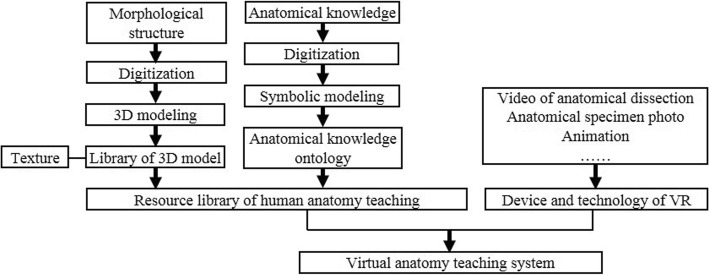
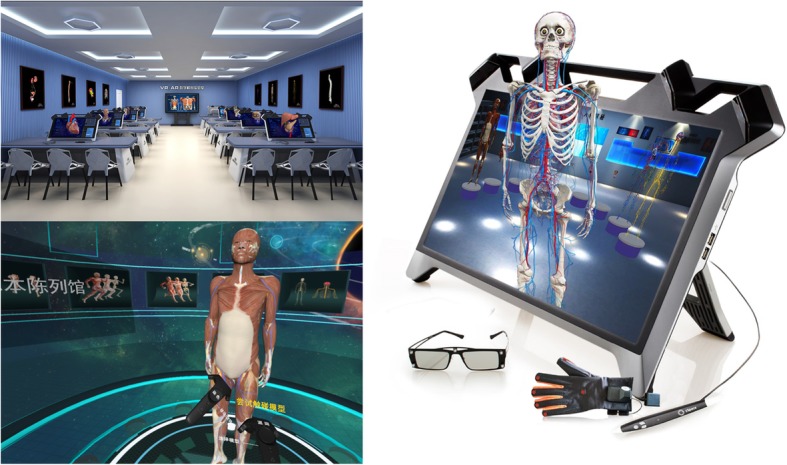
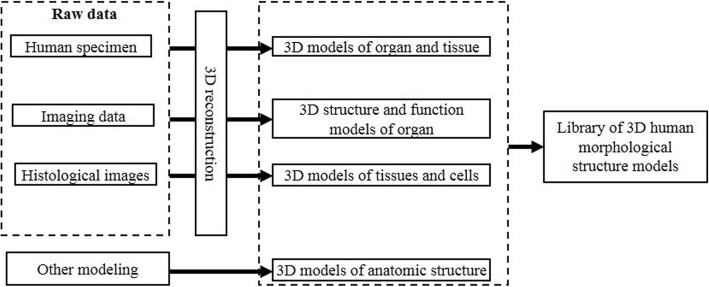
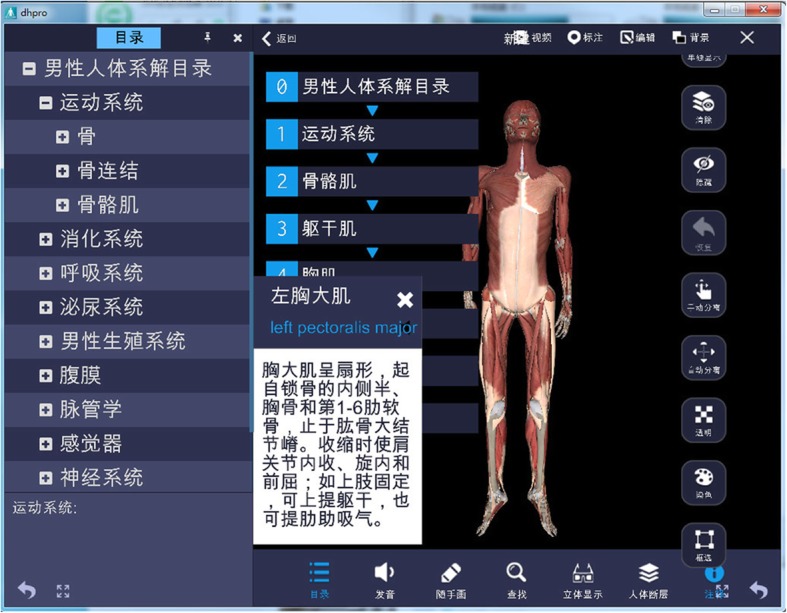
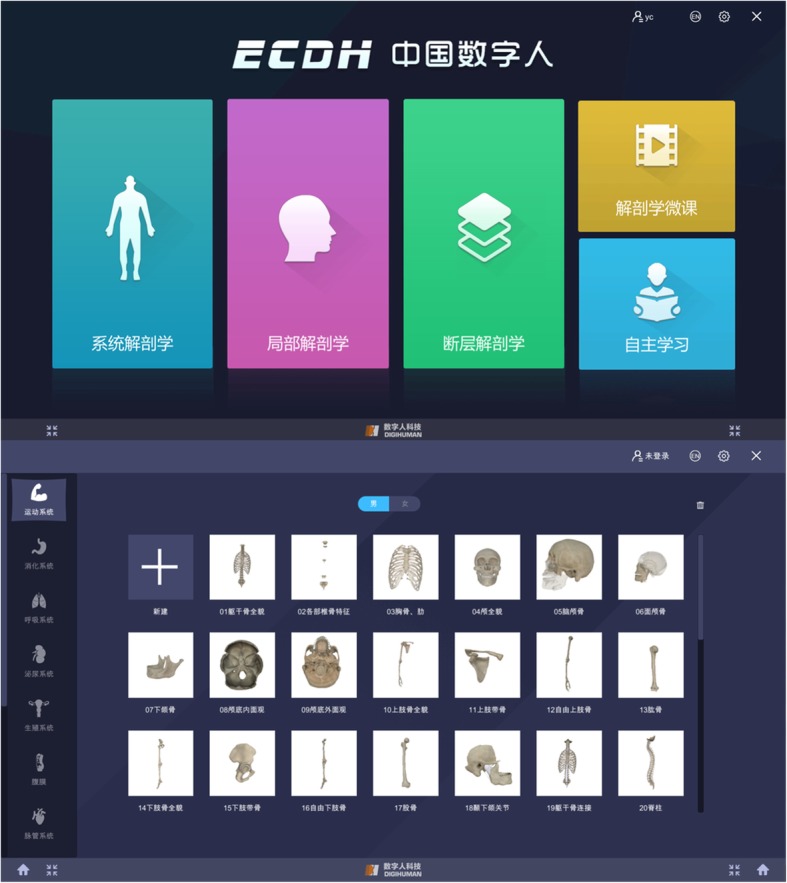
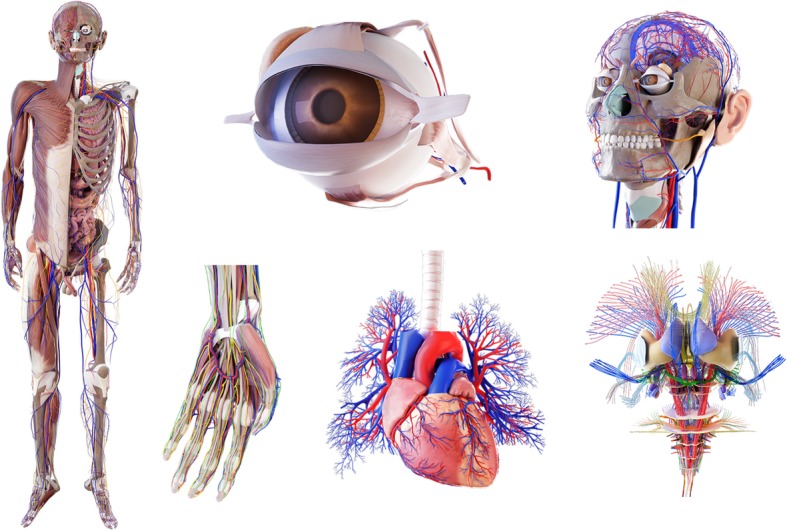
Specimen observation and dissection have been regarded as the best approach to teach anatomy, but due to the severe lack of anatomical specimens in recent years, the quality of anatomy teaching has been seriously affected. In order to disseminate anatomical knowledge effectively under such circumstances, this study discusses three key factors (modeling, perception, and interaction) involved in constructing virtual anatomy teaching systems in detail. To ensure the authenticity, integrity, and accuracy of modeling, detailed three-dimensional (3D) digital anatomical models are constructed using multi-scale data, such as the Chinese Visible Human dataset, clinical imaging data, tissue sections, and other sources. The anatomical knowledge ontology is built according to the needs of the particular teaching purposes. Various kinds of anatomical knowledge and 3D digital anatomical models are organically combined to construct virtual anatomy teaching system by means of virtual reality equipment and technology. The perception of knowledge is realized by the Yi Chuang Digital Human Anatomy Teaching System that we have created. The virtual interaction mode, which is similar to actual anatomical specimen observation and dissection, can enhance the transmissibility of anatomical knowledge. This virtual anatomy teaching system captures the three key factors. It can provide realistic and reusable teaching resources, expand the new medical education model, and effectively improve the quality of anatomy teaching.
标本观察与解剖一直被视为解剖学教学的最佳方法,但近年来由于解剖标本严重短缺,解剖学教学质量受到严重影响。为了在这种情况下有效地传播解剖学知识,本研究详细讨论了构建虚拟解剖学教学系统所涉及的三个关键因素(建模、感知和交互)。为确保建模的真实性、完整性和准确性,利用多尺度数据构建详细的三维(3D)数字解剖模型,如中国可视化人体数据集、临床影像数据、组织切片等。根据特定教学目的的需求构建解剖学知识本体。通过虚拟现实设备和技术,将各类解剖学知识与3D数字解剖模型有机结合,构建虚拟解剖学教学系统。我们创建的易创数字人体解剖教学系统实现了知识的感知。类似于实际解剖标本观察与解剖的虚拟交互模式,可以提高解剖学知识的传播性。这种虚拟解剖学教学系统抓住了这三个关键因素。它可以提供逼真且可重复使用的教学资源,拓展新的医学教育模式,并有效提高解剖学教学质量。