Battineni Gopi, Sagaro Getu Gamo, Chinatalapudi Nalini, Amenta Francesco
Center for Telemedicine and Tele pharmacy, School of Medicinal and Health Sciences Products, University of Camerino, Via Madonna Della carceri 9, 62032 Camerino, Italy.
Research Department, International Medical Radio Center Foundation (C.I.R.M.), 00144 Roma, Italy.
J Pers Med. 2020 Mar 31;10(2):21. doi: 10.3390/jpm10020021.
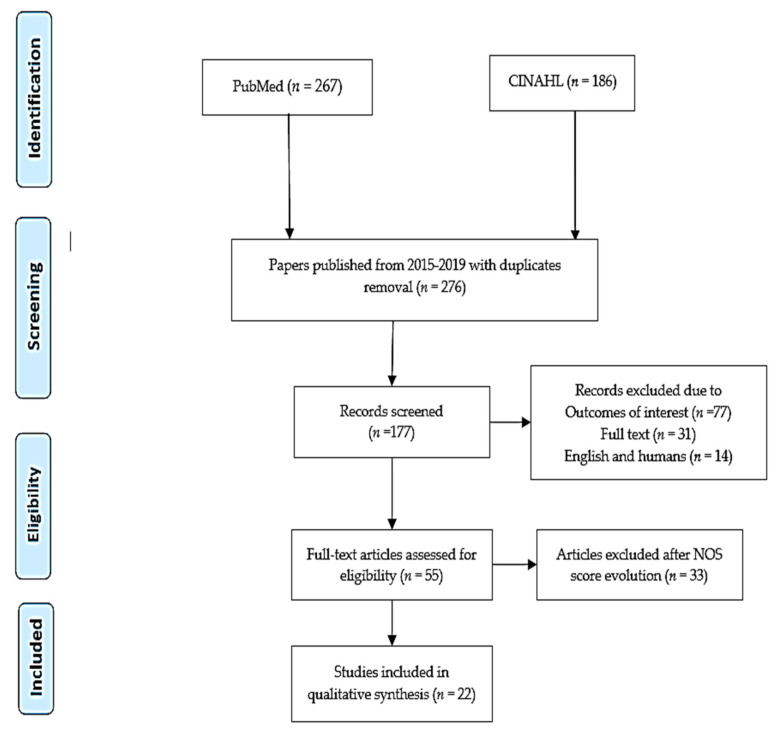
This paper reviews applications of machine learning (ML) predictive models in the diagnosis of chronic diseases. Chronic diseases (CDs) are responsible for a major portion of global health costs. Patients who suffer from these diseases need lifelong treatment. Nowadays, predictive models are frequently applied in the diagnosis and forecasting of these diseases. In this study, we reviewed the state-of-the-art approaches that encompass ML models in the primary diagnosis of CD. This analysis covers 453 papers published between 2015 and 2019, and our document search was conducted from PubMed (Medline), and Cumulative Index to Nursing and Allied Health Literature (CINAHL) libraries. Ultimately, 22 studies were selected to present all modeling methods in a precise way that explains CD diagnosis and usage models of individual pathologies with associated strengths and limitations. Our outcomes suggest that there are no standard methods to determine the best approach in real-time clinical practice since each method has its advantages and disadvantages. Among the methods considered, support vector machines (SVM), logistic regression (LR), clustering were the most commonly used. These models are highly applicable in classification, and diagnosis of CD and are expected to become more important in medical practice in the near future.
本文综述了机器学习(ML)预测模型在慢性病诊断中的应用。慢性病(CDs)占全球医疗费用的很大一部分。患有这些疾病的患者需要终身治疗。如今,预测模型经常应用于这些疾病的诊断和预测。在本研究中,我们回顾了在慢性病初步诊断中涵盖ML模型的最新方法。该分析涵盖了2015年至2019年间发表的453篇论文,我们的文献检索是从PubMed(医学文献数据库)和护理及相关健康文献累积索引(CINAHL)数据库中进行的。最终,选择了22项研究,以精确的方式展示所有建模方法,解释慢性病诊断以及个体病理的使用模型及其相关优势和局限性。我们的结果表明,由于每种方法都有其优缺点,因此在实时临床实践中没有确定最佳方法的标准方法。在所考虑的方法中,支持向量机(SVM)、逻辑回归(LR)、聚类是最常用的。这些模型在慢性病的分类和诊断中具有高度适用性,预计在不久的将来在医疗实践中会变得更加重要。