State Key Laboratory Breeding Base of Green Pesticide and Agricultural Bioengineering, The Key Laboratory of Plant Resources Conservation and Germplasm Innovation in Mountainous Region (Ministry of Education), Guizhou University, Guiyang 550025, China.
Key Laboratory of Molecular Genetics/Upland Flue-cured Tobacco Quality and Ecology Key Laboratory, Guizhou Academy of Tobacco Science, CNTC, Guiyang 550081, China.
Int J Mol Sci. 2020 Mar 31;21(7):2394. doi: 10.3390/ijms21072394.
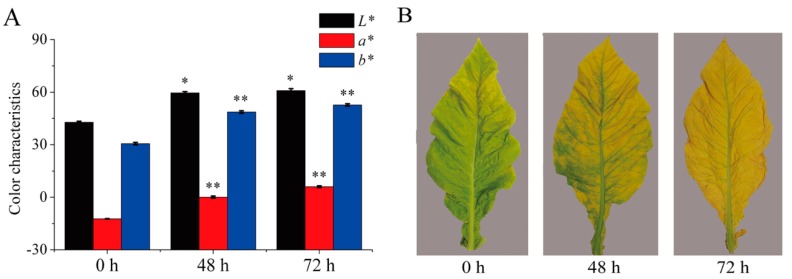
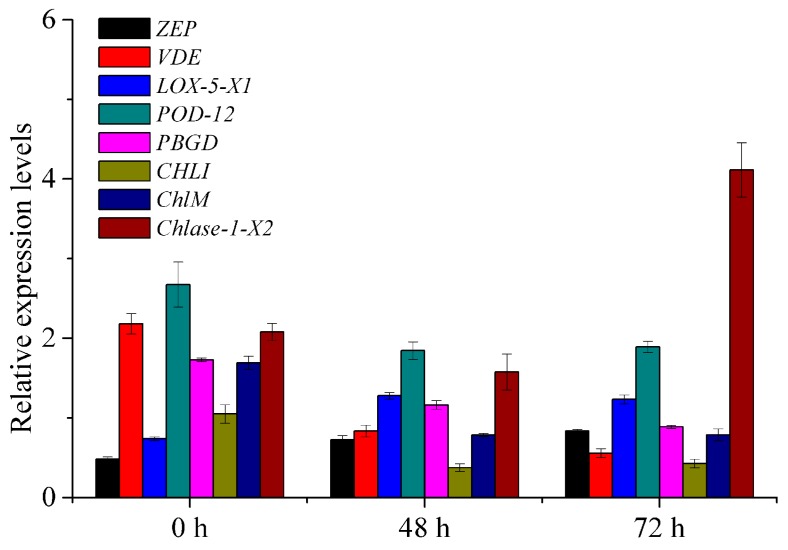
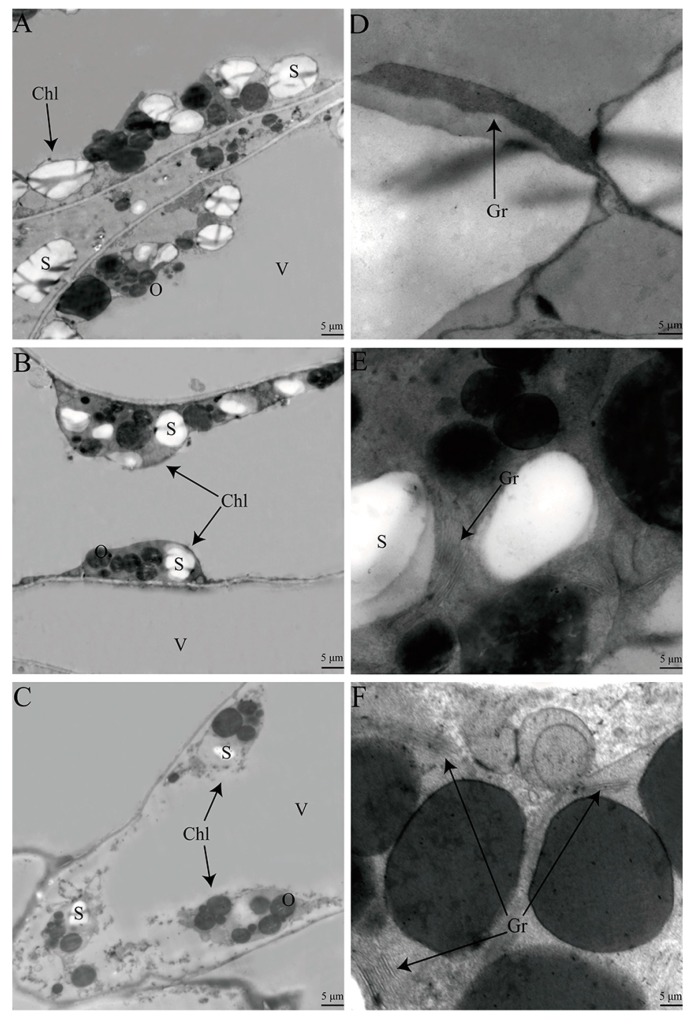
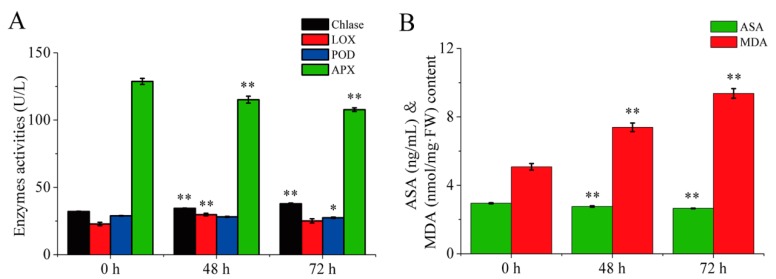
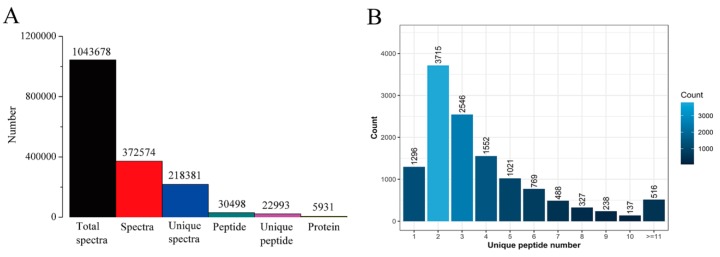
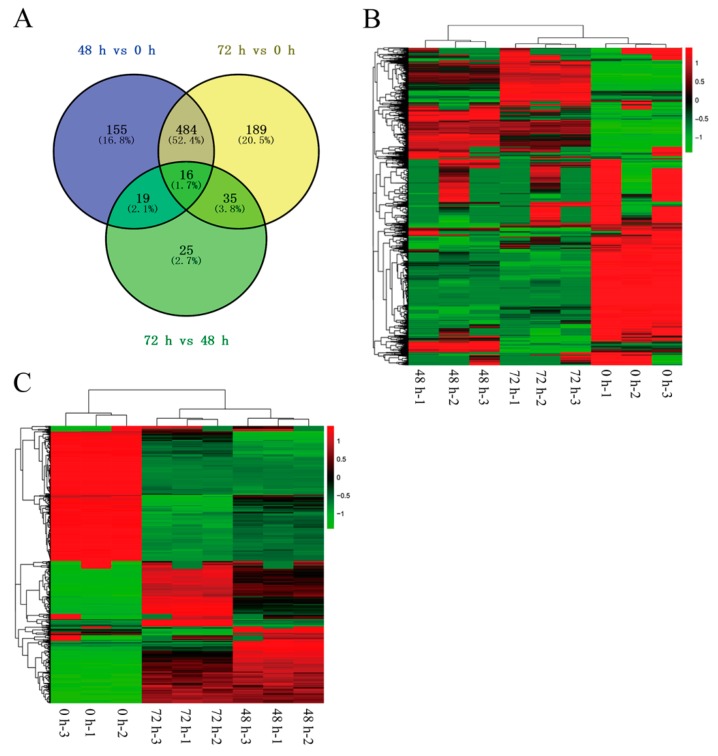
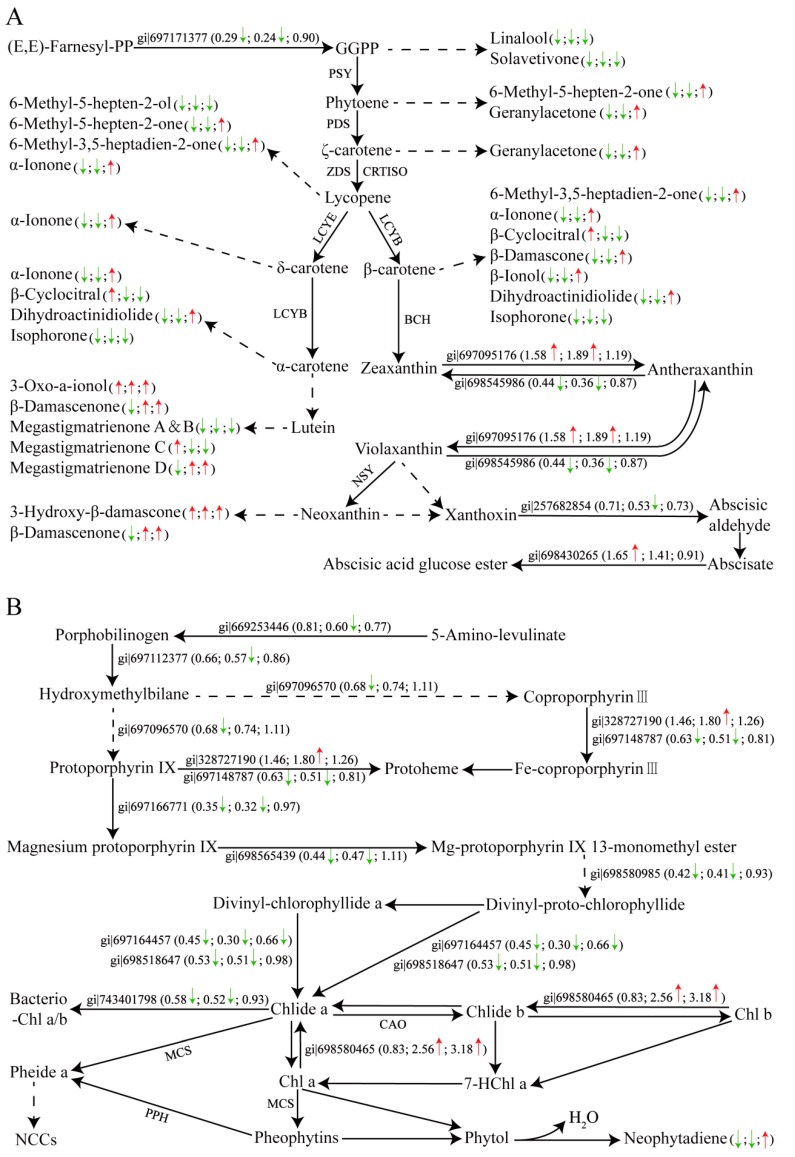
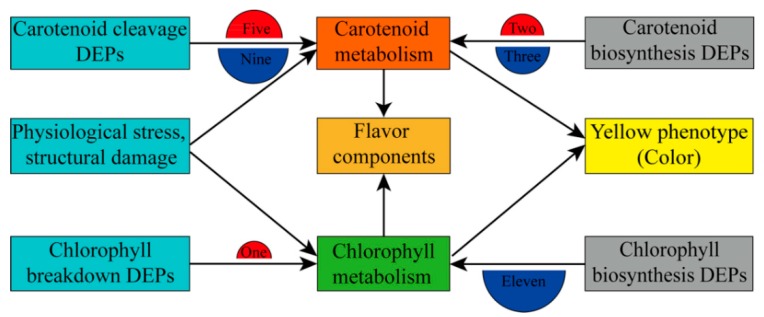
Tobacco (), is a world's major non-food agricultural crop widely cultivated for its economic value. Among several color change associated biological processes, plastid pigment metabolism is of trivial importance in postharvest plant organs during curing and storage. However, the molecular mechanisms involved in carotenoid and chlorophyll metabolism, as well as color change in tobacco leaves during curing, need further elaboration. Here, proteomic analysis at different curing stages (0 h, 48 h, 72 h) was performed in tobacco cv. Bi'na1 with an aim to investigate the molecular mechanisms of pigment metabolism in tobacco leaves as revealed by the iTRAQ proteomic approach. Our results displayed significant differences in leaf color parameters and ultrastructural fingerprints that indicate an acceleration of chloroplast disintegration and promotion of pigment degradation in tobacco leaves due to curing. In total, 5931 proteins were identified, of which 923 (450 up-regulated, 452 down-regulated, and 21 common) differentially expressed proteins (DEPs) were obtained from tobacco leaves. To elucidate the molecular mechanisms of pigment metabolism and color change, 19 DEPs involved in carotenoid metabolism and 12 DEPs related to chlorophyll metabolism were screened. The results exhibited the complex regulation of DEPs in carotenoid metabolism, a negative regulation in chlorophyll biosynthesis, and a positive regulation in chlorophyll breakdown, which delayed the degradation of xanthophylls and accelerated the breakdown of chlorophylls, promoting the formation of yellow color during curing. Particularly, the up-regulation of the chlorophyllase-1-like isoform X2 was the key protein regulatory mechanism responsible for chlorophyll metabolism and color change. The expression pattern of 8 genes was consistent with the iTRAQ data. These results not only provide new insights into pigment metabolism and color change underlying the postharvest physiological regulatory networks in plants, but also a broader perspective, which prompts us to pay attention to further screen key proteins in tobacco leaves during curing.
烟草()是一种世界主要的非食用农业作物,因其经济价值而广泛种植。在几种与颜色变化相关的生物过程中,质体色素代谢在采后植物器官的调制和储存过程中具有重要意义。然而,参与类胡萝卜素和叶绿素代谢以及烟草叶片在调制过程中颜色变化的分子机制仍需要进一步阐述。在这里,我们以烟草品种 Bi'na1 为材料,在不同调制阶段(0 h、48 h、72 h)进行了蛋白质组学分析,旨在通过 iTRAQ 蛋白质组学方法研究烟草叶片色素代谢的分子机制。我们的结果显示叶片颜色参数和超微结构指纹存在显著差异,表明调制加速了叶绿体解体,促进了烟草叶片中色素的降解。共鉴定到 5931 种蛋白质,其中烟草叶片中有 923 种(450 种上调、452 种下调和 21 种共同)差异表达蛋白(DEPs)。为了阐明色素代谢和颜色变化的分子机制,筛选出了 19 种参与类胡萝卜素代谢的 DEP 和 12 种与叶绿素代谢相关的 DEP。结果表明,类胡萝卜素代谢中 DEP 的复杂调控、叶绿素生物合成的负调控以及叶绿素分解的正调控,延缓了叶黄素的降解,加速了叶绿素的分解,促进了调制过程中黄色的形成。特别是叶绿素酶-1 样同工型 X2 的上调是调控叶绿素代谢和颜色变化的关键蛋白调节机制。8 个基因的表达模式与 iTRAQ 数据一致。这些结果不仅为植物采后生理调控网络中色素代谢和颜色变化提供了新的见解,而且为我们提供了更广阔的视角,促使我们进一步关注调制过程中烟草叶片中的关键蛋白。