Weintraub Center for Reconstructive Biotechnology, Division of Advanced Prosthodontics, UCLA School of Dentistry, Los Angeles, CA 90095-1668, USA.
Department of Oral Pathology, School of Dentistry, Aichi Gakuin University, 1-100 Kusumoto-cho, Chikusa-ku, Nagoya, Aichi 464-8650, Japan.
Int J Mol Sci. 2020 Mar 31;21(7):2405. doi: 10.3390/ijms21072405.
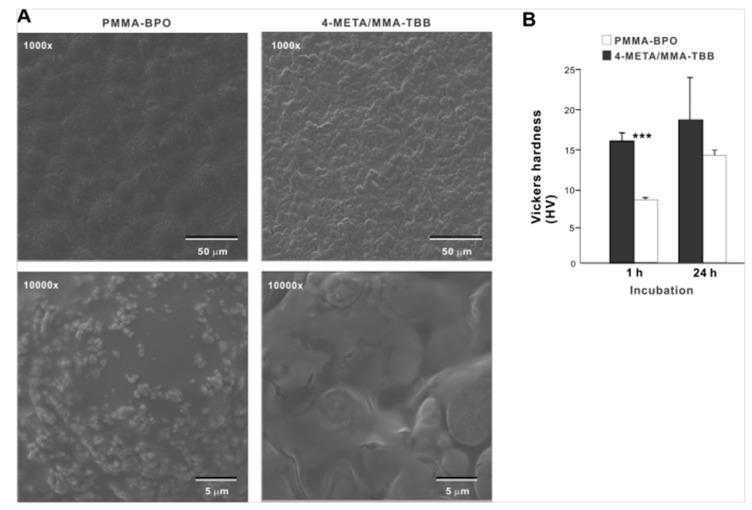
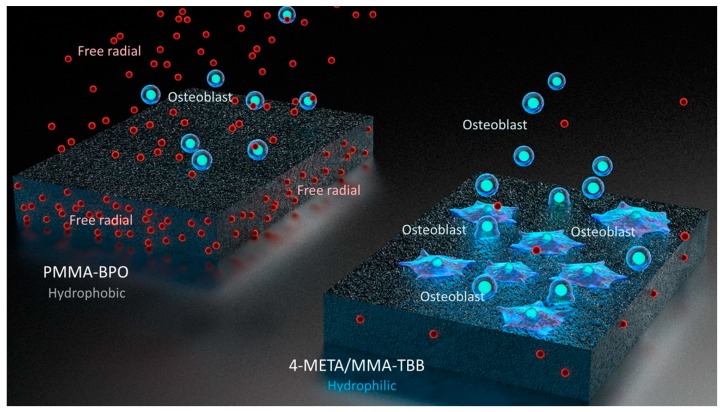
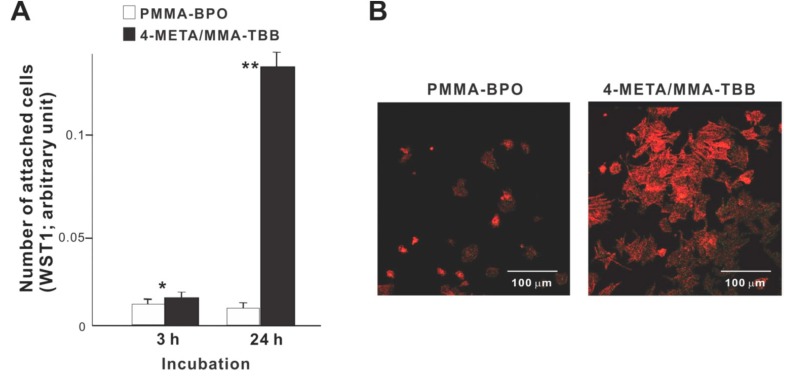
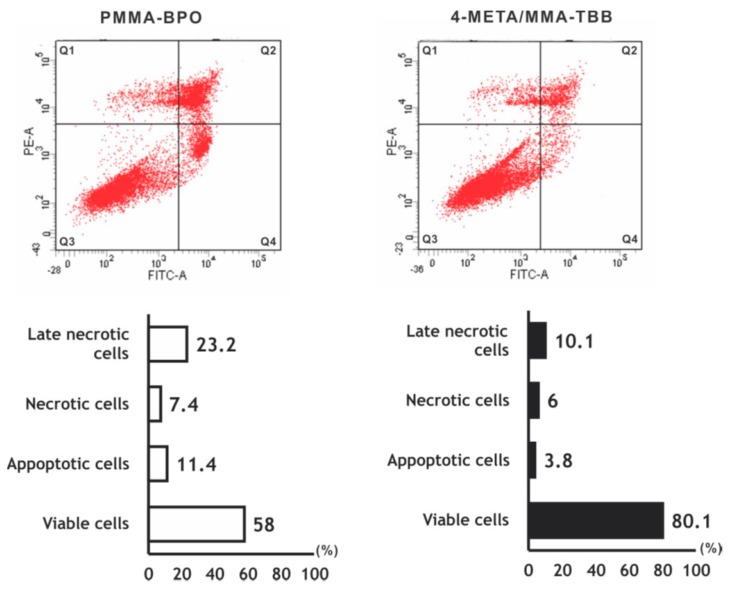
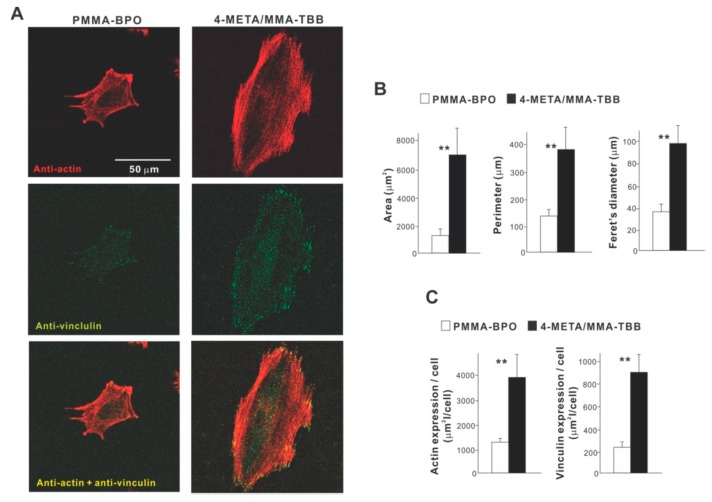
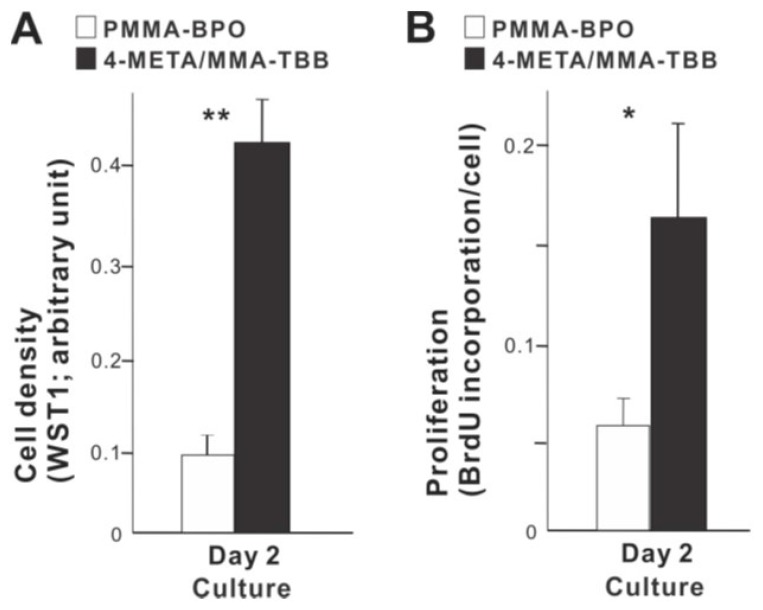
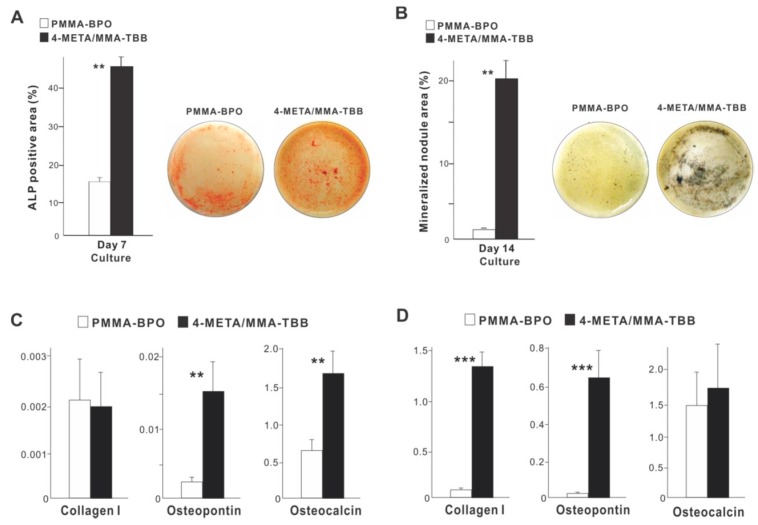
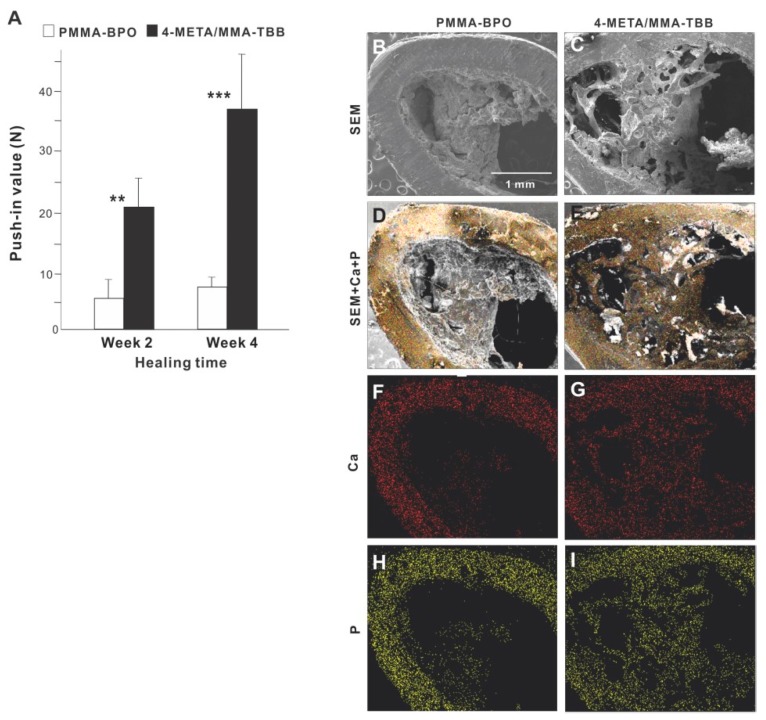
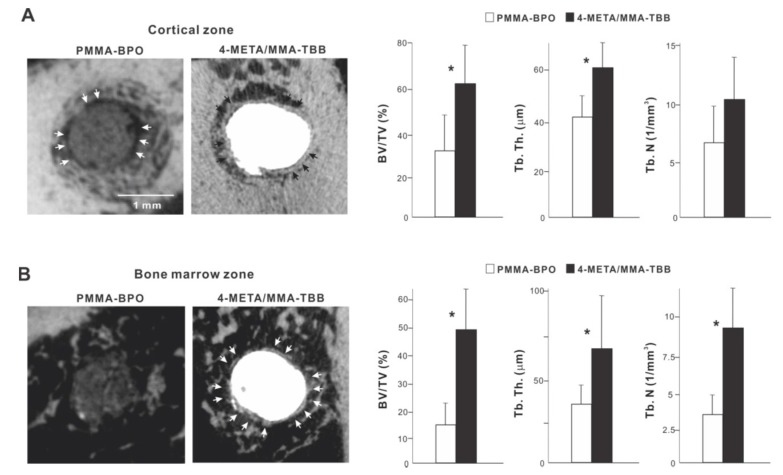
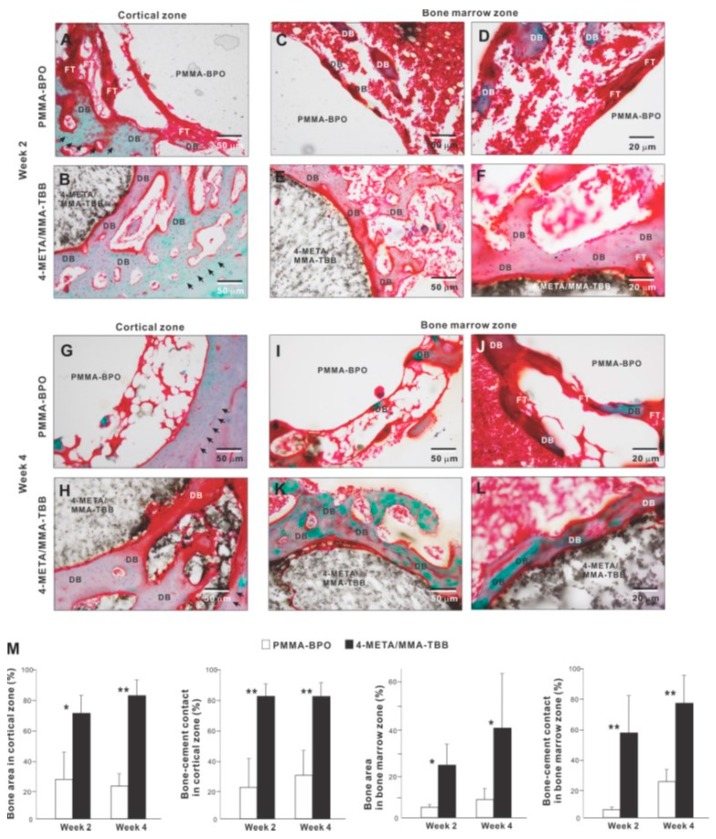
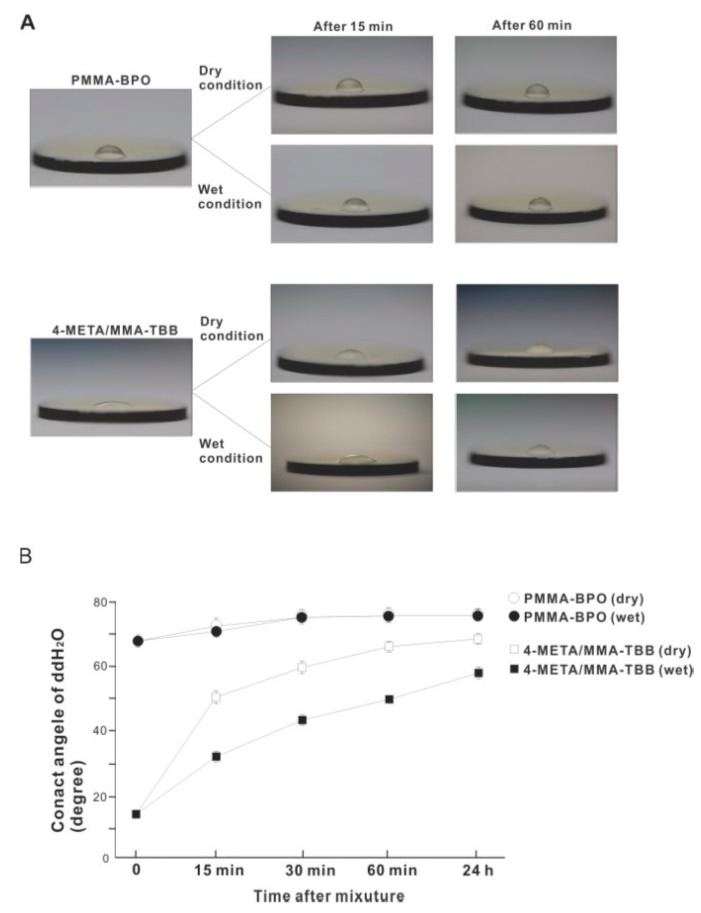
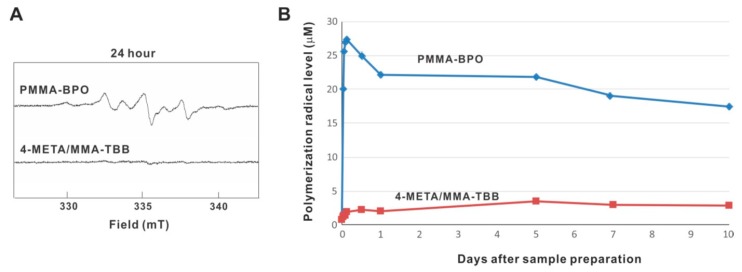
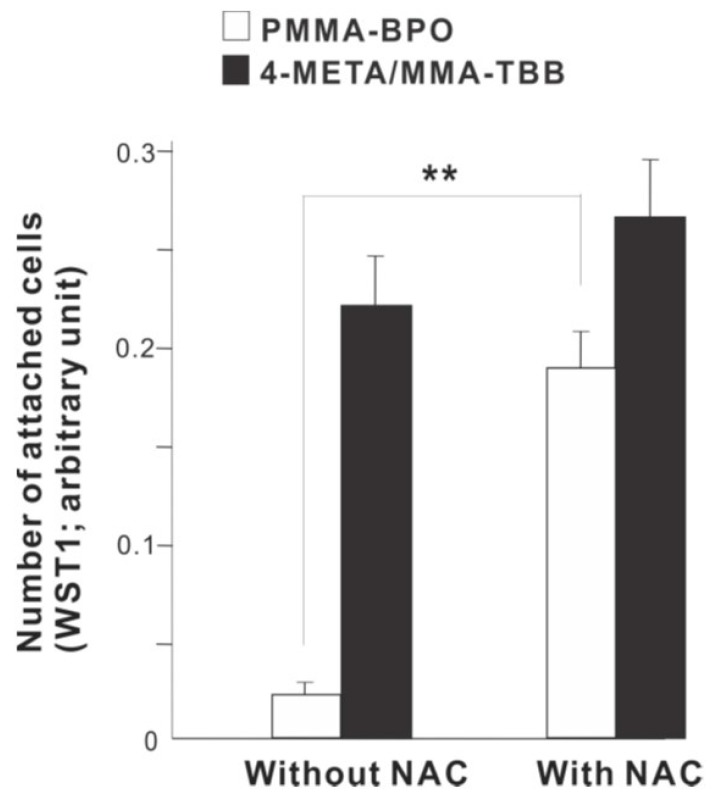
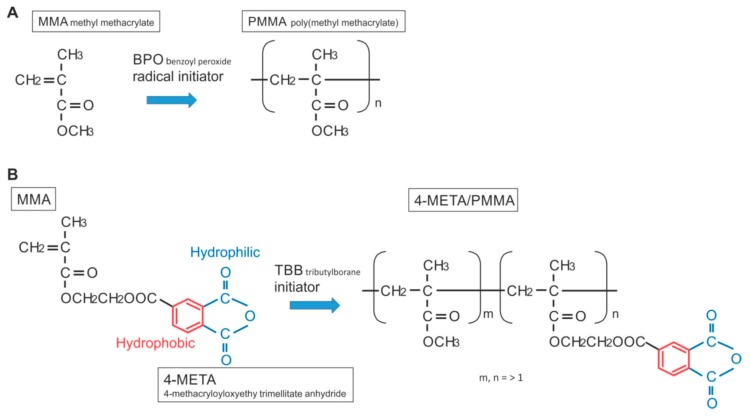
Poly(methyl methacrylate) (PMMA)-based bone cement, which is widely used to affix orthopedic metallic implants, is considered bio-tolerant but lacks osteoconductivity and is cytotoxic. Implant loosening and toxic complications are significant and recognized problems. Here we devised two strategies to improve PMMA-based bone cement: (1) adding 4-methacryloyloxylethyl trimellitate anhydride (4-META) to MMA monomer to render it hydrophilic; and (2) using tri-n-butyl borane (TBB) as a polymerization initiator instead of benzoyl peroxide (BPO) to reduce free radical production. Rat bone marrow-derived osteoblasts were cultured on PMMA-BPO, common bone cement ingredients, and 4-META/MMA-TBB, newly formulated ingredients. After 24 h of incubation, more cells survived on 4-META/MMA-TBB than on PMMA-BPO. The mineralized area was 20-times greater on 4-META/MMA-TBB than PMMA-BPO at the later culture stage and was accompanied by upregulated osteogenic gene expression. The strength of bone-to-cement integration in rat femurs was 4- and 7-times greater for 4-META/MMA-TBB than PMMA-BPO during early- and late-stage healing, respectively. MicroCT and histomorphometric analyses revealed contact osteogenesis exclusively around 4-META/MMA-TBB, with minimal soft tissue interposition. Hydrophilicity of 4-META/MMA-TBB was sustained for 24 h, particularly under wet conditions, whereas PMMA-BPO was hydrophobic immediately after mixing and was unaffected by time or condition. Electron spin resonance (ESR) spectroscopy revealed that the free radical production for 4-META/MMA-TBB was 1/10 to 1/20 that of PMMA-BPO within 24 h, and the substantial difference persisted for at least 10 days. The compromised ability of PMMA-BPO in recruiting cells was substantially alleviated by adding free radical-scavenging amino-acid N-acetyl cysteine (NAC) into the material, whereas adding NAC did not affect the ability of 4-META/MMA-TBB. These results suggest that 4-META/MMA-TBB shows significantly reduced cytotoxicity compared to PMMA-BPO and induces osteoconductivity due to uniquely created hydrophilic and radical-free interface. Further pre-clinical and clinical validations are warranted.
聚甲基丙烯酸甲酯(PMMA)基骨水泥广泛用于固定骨科金属植入物,被认为具有生物耐受性,但缺乏成骨活性且具有细胞毒性。植入物松动和毒性并发症是严重且公认的问题。在这里,我们设计了两种策略来改进 PMMA 基骨水泥:(1)在 MMA 单体中添加 4-丙烯酰氧乙基偏苯三酸酐(4-META)使其亲水;(2)使用三正丁基硼烷(TBB)作为聚合引发剂代替过氧化二苯甲酰(BPO)以减少自由基生成。大鼠骨髓源性成骨细胞在 PMMA-BPO(普通骨水泥成分)和 4-META/MMA-TBB(新配方成分)上培养。孵育 24 小时后,在 4-META/MMA-TBB 上的细胞存活率高于 PMMA-BPO。在后期培养阶段,4-META/MMA-TBB 上的矿化面积比 PMMA-BPO 大 20 倍,同时成骨基因表达上调。在早期和晚期愈合过程中,4-META/MMA-TBB 增强了大鼠股骨与骨水泥的整合强度,分别比 PMMA-BPO 高 4 倍和 7 倍。MicroCT 和组织形态计量学分析显示,4-META/MMA-TBB 周围仅发生接触性成骨,软组织介入最小。4-META/MMA-TBB 的亲水性持续 24 小时,尤其是在潮湿条件下,而 PMMA-BPO 混合后立即具有疏水性,且不受时间或条件影响。电子顺磁共振(ESR)光谱显示,4-META/MMA-TBB 在 24 小时内的自由基生成量为 PMMA-BPO 的 1/10 至 1/20,至少 10 天内仍存在明显差异。通过向材料中添加自由基清除氨基酸 N-乙酰半胱氨酸(NAC),可以大大减轻 PMMA-BPO 招募细胞的能力缺陷,而添加 NAC 不会影响 4-META/MMA-TBB 的能力。这些结果表明,与 PMMA-BPO 相比,4-META/MMA-TBB 的细胞毒性显著降低,并由于独特的亲水和无自由基界面而诱导成骨活性。需要进一步的临床前和临床验证。