Department of Cell Biology, Cancer Institute, Japanese Foundation for Cancer Research, Tokyo 135-8550, Japan.
Department of Medical Oncology, Dana-Farber Cancer Institute, Boston, MA 02215, USA.
Int J Mol Sci. 2020 Apr 1;21(7):2450. doi: 10.3390/ijms21072450.
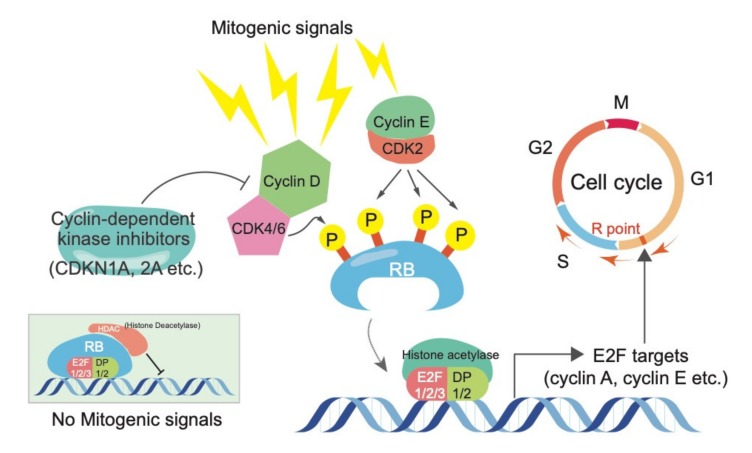
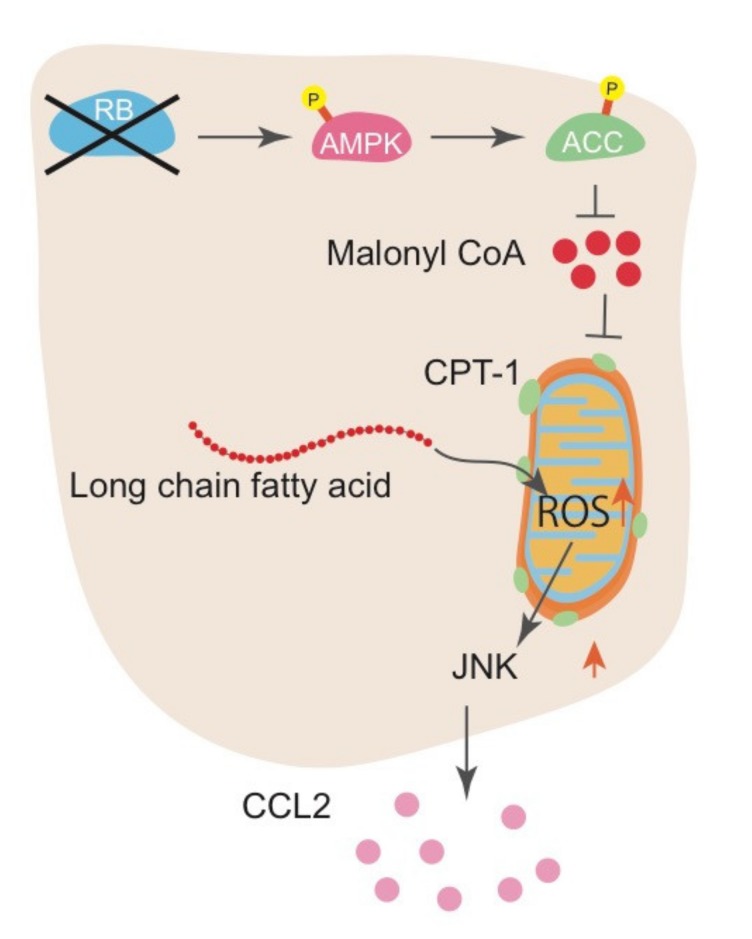
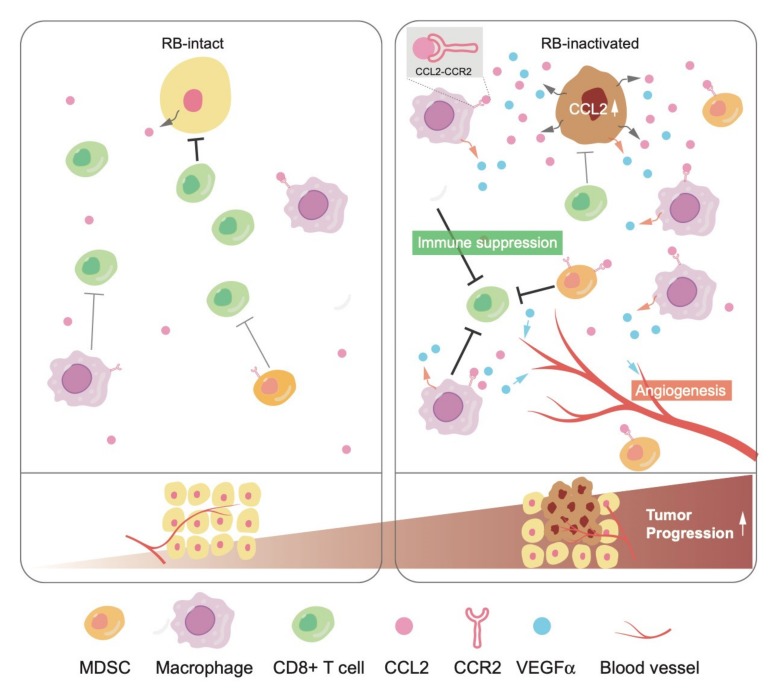
The gene is one of the most frequently mutated genes in human cancers. Canonically, RB exerts its tumor suppressive activity through the regulation of the G1/S transition during cell cycle progression by modulating the activity of E2F transcription factors. However, aberration of the gene is most commonly detected in tumors when they gain more aggressive phenotypes, including metastatic activity or drug resistance, rather than accelerated proliferation. This implicates RB controls' malignant progression to a considerable extent in a cell cycle-independent manner. In this review, we highlight the multifaceted functions of the RB protein in controlling tumor lineage plasticity, metabolism, and the tumor microenvironment (TME), with a focus on the mechanism whereby RB controls the TME. In brief, RB inactivation in several types of cancer cells enhances production of pro-inflammatory cytokines, including CCL2, through upregulation of mitochondrial reactive oxygen species (ROS) production. These factors not only accelerate the growth of cancer cells in a cell-autonomous manner, but also stimulate non-malignant cells in the TME to generate a pro-tumorigenic niche in a non-cell-autonomous manner. Here, we discuss the biological and pathological significance of the non-cell-autonomous functions of RB and attempt to predict their potential clinical relevance to cancer immunotherapy.
该基因是人类癌症中最常发生突变的基因之一。通常情况下,RB 通过调节 E2F 转录因子的活性来调控细胞周期进程中的 G1/S 转换,从而发挥其肿瘤抑制活性。然而,当肿瘤获得更具侵袭性的表型,包括转移活性或耐药性时,而不是加速增殖时,最常检测到 基因的异常。这表明 RB 在很大程度上以非细胞周期依赖的方式控制着恶性进展。在这篇综述中,我们强调了 RB 蛋白在控制肿瘤谱系可塑性、代谢和肿瘤微环境(TME)方面的多方面功能,重点介绍了 RB 控制 TME 的机制。简而言之,几种类型的癌细胞中 RB 的失活通过上调线粒体活性氧(ROS)的产生,增强了促炎细胞因子(包括 CCL2)的产生。这些因子不仅以细胞自主的方式加速癌细胞的生长,而且还以非细胞自主的方式刺激 TME 中的非恶性细胞产生促肿瘤发生的小生境。在这里,我们讨论了 RB 的非细胞自主功能的生物学和病理学意义,并试图预测它们在癌症免疫治疗中的潜在临床相关性。