University of Zurich, Zurich, Switzerland.
Epitrack, Recife, Brazil.
JMIR Public Health Surveill. 2020 Apr 7;6(2):e16119. doi: 10.2196/16119.
With the evolution of digital media, areas such as public health are adding new platforms to complement traditional systems of epidemiological surveillance. Participatory surveillance and digital epidemiology have become innovative tools for the construction of epidemiological landscapes with citizens' participation, improving traditional sources of information. Strategies such as these promote the timely detection of warning signs for outbreaks and epidemics in the region.
This study aims to describe the participatory surveillance platform Guardians of Health, which was used in a project conducted during the 2016 Olympic and Paralympic Games in Rio de Janeiro, Brazil, and officially used by the Brazilian Ministry of Health for the monitoring of outbreaks and epidemics.
This is a descriptive study carried out using secondary data from Guardians of Health available in a public digital repository. Based on syndromic signals, the information subsidy for decision making by policy makers and health managers becomes more dynamic and assertive. This type of information source can be used as an early route to understand the epidemiological scenario.
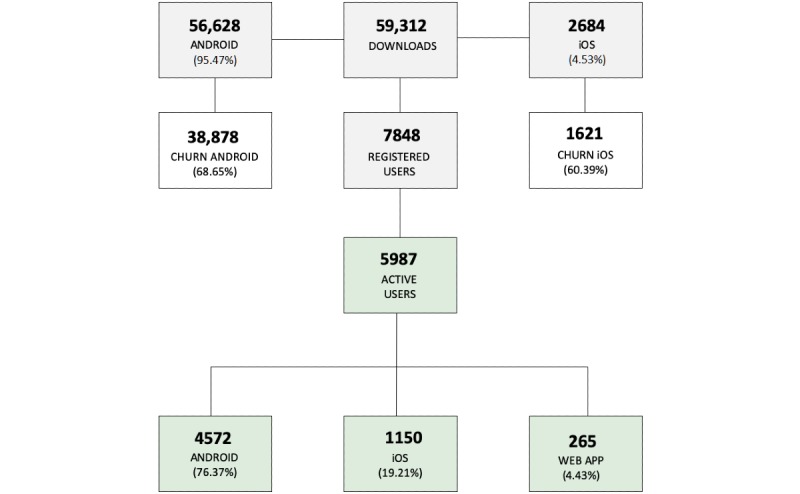
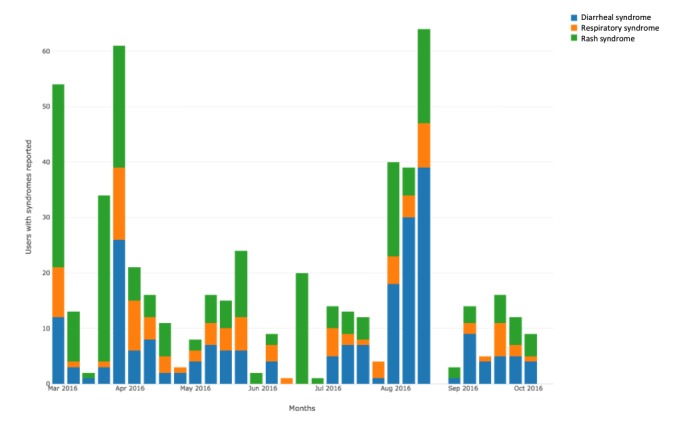
The main result of this research was demonstrating the use of the participatory surveillance platform as an additional source of information for the epidemiological surveillance performed in Brazil during a mass gathering. The platform Guardians of Health had 7848 users who generated 12,746 reports about their health status. Among these reports, the following were identified: 161 users with diarrheal syndrome, 68 users with respiratory syndrome, and 145 users with rash syndrome.
It is hoped that epidemiological surveillance professionals, researchers, managers, and workers become aware of, and allow themselves to use, new tools that improve information management for decision making and knowledge production. This way, we may follow the path for a more intelligent, efficient, and pragmatic disease control system.
随着数字媒体的发展,公共卫生等领域正在增加新的平台,以补充传统的流行病学监测系统。参与式监测和数字流行病学已成为公民参与构建流行病学景观的创新工具,改进了传统的信息来源。这些策略有助于及时发现该地区爆发和流行的预警信号。
本研究旨在描述 Guardians of Health 参与式监测平台,该平台在巴西里约热内卢 2016 年奥运会和残奥会期间的一个项目中使用,并由巴西卫生部正式用于监测暴发和流行。
这是一项使用 Guardians of Health 的二次数据进行的描述性研究,这些数据可在公共数字存储库中获得。基于综合征信号,为决策者和卫生管理人员提供的决策信息支持变得更加动态和果断。这种信息来源可作为了解流行病学情况的早期途径。
这项研究的主要结果是展示了在人群聚集期间,参与式监测平台作为巴西进行流行病学监测的附加信息来源的使用情况。Guardians of Health 平台有 7848 名用户,他们生成了 12746 份关于他们健康状况的报告。在这些报告中,确定了以下情况:161 名用户出现腹泻综合征,68 名用户出现呼吸道综合征,145 名用户出现皮疹综合征。
希望流行病学监测专业人员、研究人员、管理人员和工作人员能够意识到并使用新工具,以改善决策和知识生产的信息管理。这样,我们就可以走上一条更加智能、高效和务实的疾病控制系统的道路。