Faheem Safaa A, Saeed Noha M, El-Naga Reem N, Ayoub Iriny M, Azab Samar S
Department of Pharmacology and Toxicology, Faculty of Pharmacy, Egyptian Russian University, Cairo, Egypt.
Department of Pharmacology and Toxicology, Faculty of Pharmacy, Ain Shams University, Cairo, Egypt.
Front Pharmacol. 2020 Mar 18;11:218. doi: 10.3389/fphar.2020.00218. eCollection 2020.
Non-alcoholic fatty liver disease (NAFLD) is a pathological accumulation of triglycerides (TGs) in the hepatocyte in the absence of alcohol intake. Untreated NAFLD is expected to progress into liver fibrosis. Cranberry is rich in polyphenols with antioxidant and anti-inflammatory activities.
The present study was performed to evaluate our hypothesis of the possible anti-fibrotic effect of cranberry nutraceuticals in a high fat cholesterol diet induced (HFCD)-NAFLD in rats, focusing on improving insulin sensitivity and modulating the expression of nuclear factor erythroid-2-related factor-2 (Nrf2) (a transcription factor responsible for regulating cellular redox balance).
Male albino wistar rats (12 weeks) received HFCD and/or cranberry (50 and 100 mg/kg/day, three times/week) orally for 8 consecutive weeks.
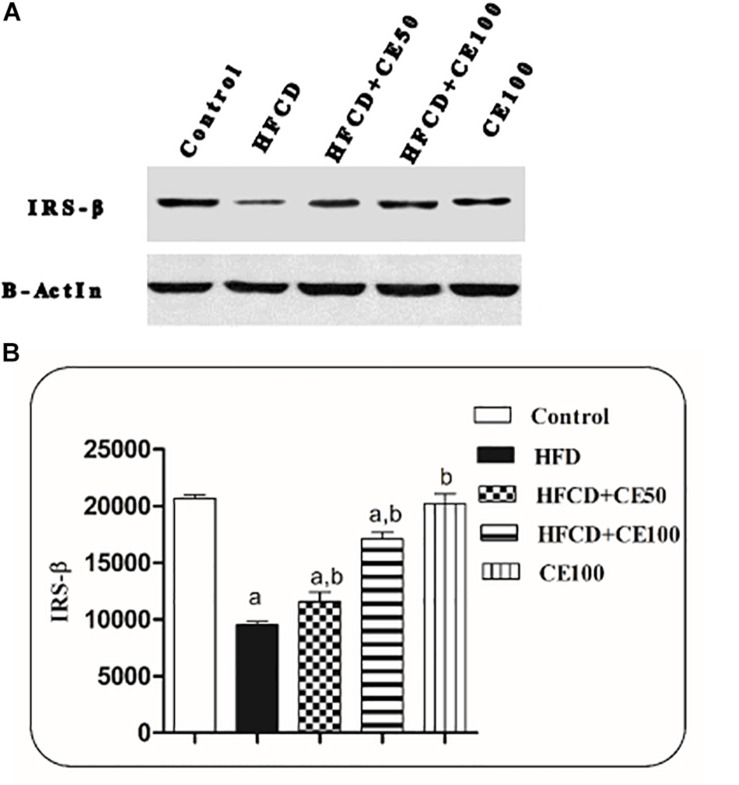
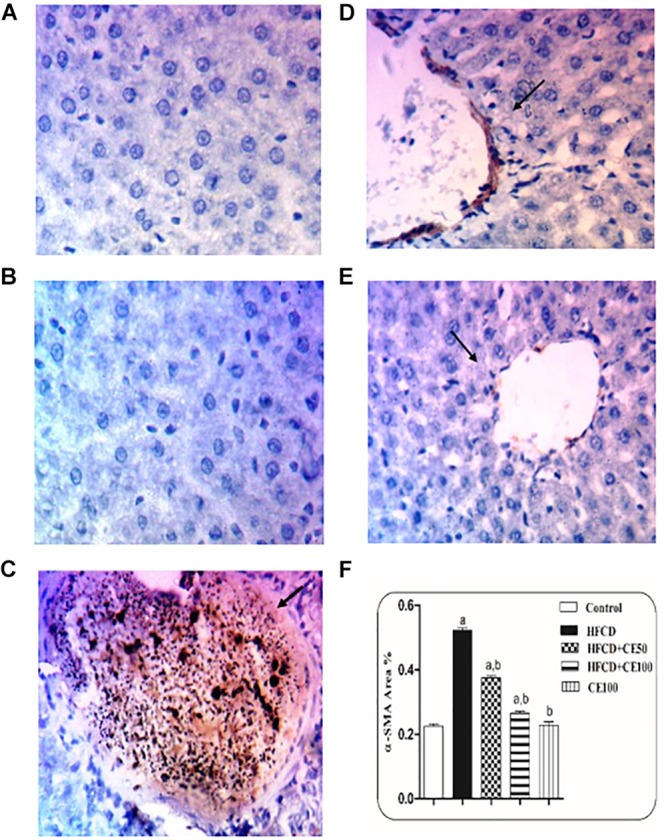
In comparison to the HFCD group, cranberry treated groups (50 and 100 mg/kg) showed marked hepatoprotection, where it significantly decreased liver enzymes (alanine transaminases by 49 and 64% and aspartate transaminases by 45 and 64%; respectively), TGs, and ameliorated the histopathological alterations (such as inflammatory cells infiltration and ballooning degeneration) induced by HFCD. Cranberry also alleviated oxidative stress (malondialdehyde, glutathione, catalase and superoxide dismutase) and inflammation (tumor necrosis factor- alpha, interleukine-6 and nuclear factor kappa-b) and significantly reduced the HOMA-IR and TyG index. On the other hand, cranberry treated groups (50 and 100 mg/kg) showed a marked increase in the expression of adiponectin, by 8 and 13-fold, insulin receptor substrate-2 by 21 and 79%, and Nrf2 by 13 and 61%, respectively. Notably, cranberry significantly reduced the fibrotic markers, TGF-β and α-SMA expression and collagen deposition.
The present study showed that cranberry significantly attenuated NAFLD, in a dose dependent manner, which could be partially recognized by its antioxidant, anti-inflammatory activities, and its ability to improve insulin sensitivity. Notably, our study proves for the first time that the anti-fibrotic activity of cranberry is promising.
非酒精性脂肪性肝病(NAFLD)是在无酒精摄入情况下肝细胞内甘油三酯(TGs)的病理性蓄积。未经治疗的NAFLD预计会进展为肝纤维化。蔓越莓富含具有抗氧化和抗炎活性的多酚。
本研究旨在评估我们的假说,即蔓越莓营养制品对高脂胆固醇饮食诱导(HFCD)的大鼠NAFLD可能具有抗纤维化作用,重点在于改善胰岛素敏感性并调节核因子红细胞2相关因子2(Nrf2)(一种负责调节细胞氧化还原平衡的转录因子)的表达。
12周龄雄性白化Wistar大鼠连续8周口服HFCD和/或蔓越莓(50和100毫克/千克/天,每周三次)。
与HFCD组相比,蔓越莓治疗组(50和100毫克/千克)表现出显著的肝脏保护作用,其中肝酶(丙氨酸转氨酶分别降低49%和64%,天冬氨酸转氨酶分别降低45%和64%)、TGs显著降低,并改善了HFCD诱导的组织病理学改变(如炎症细胞浸润和气球样变性)。蔓越莓还减轻了氧化应激(丙二醛、谷胱甘肽、过氧化氢酶和超氧化物歧化酶)和炎症(肿瘤坏死因子-α、白细胞介素-6和核因子κB),并显著降低了HOMA-IR和TyG指数。另一方面,蔓越莓治疗组(50和100毫克/千克)脂联素表达分别显著增加8倍和13倍,胰岛素受体底物-2分别增加21%和79%,Nrf2分别增加13%和61%。值得注意的是,蔓越莓显著降低了纤维化标志物、TGF-β和α-SMA表达以及胶原蛋白沉积。
本研究表明,蔓越莓以剂量依赖方式显著减轻NAFLD,这可能部分归因于其抗氧化、抗炎活性以及改善胰岛素敏感性的能力。值得注意的是,我们的研究首次证明蔓越莓的抗纤维化活性很有前景。