Du Rina, Lei Tiechi
Department of Dermatology, Renmin Hospital of Wuhan University, Wuhan, Hubei 430060, P.R. China.
Department of Dermatology, Inner Mongolia International Mongolian Hospital, Hohhot, Inner Mongolia 010010, P.R. China.
Exp Ther Med. 2020 Apr;19(4):3024-3030. doi: 10.3892/etm.2020.8531. Epub 2020 Feb 17.
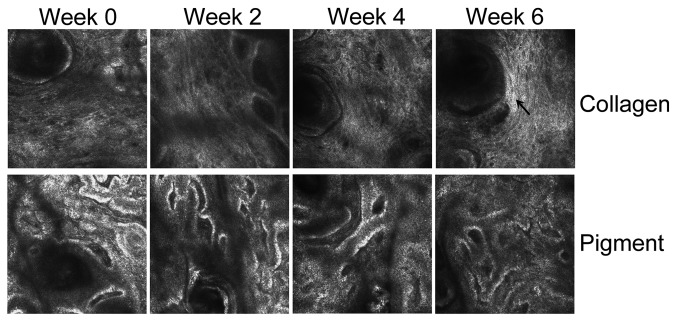
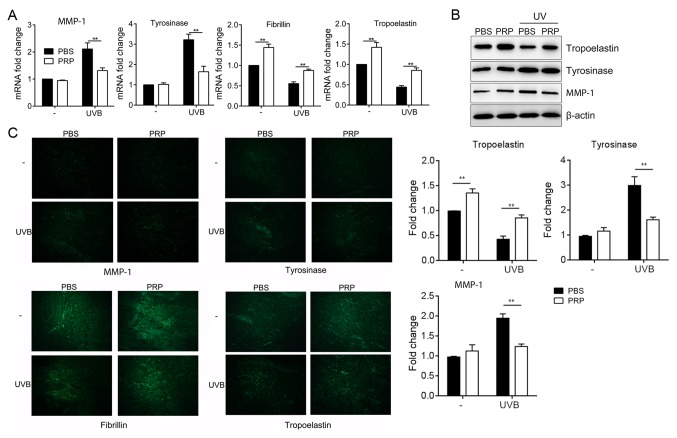
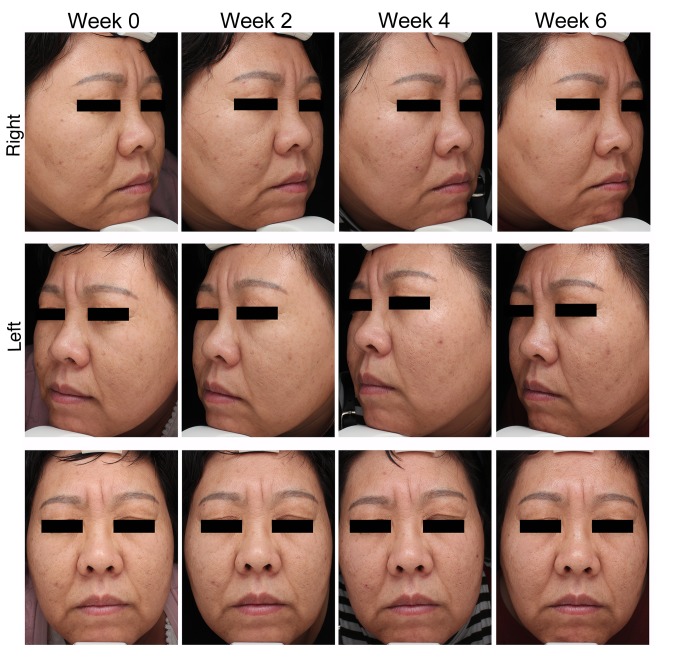
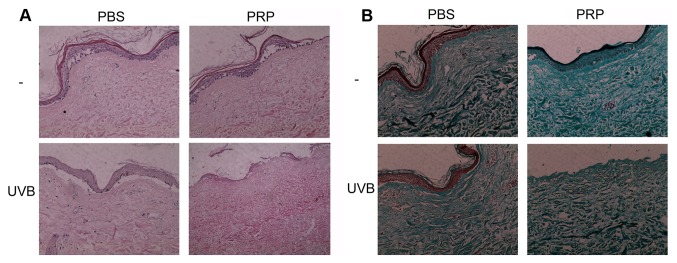
Autologous serum platelet-rich plasma (PRP) has been used to rejuvenate wrinkled and aged skin for years; however, the molecular mechanism for the positive effects of PRP on the skin remains unclear. The present study aimed to clarify the potential molecular mechanisms for the role of PRP in wrinkled and aged skin rejuvenation, and provide evidence for future clinical applications. A total of 30 healthy females were recruited for PRP treatment and signed informed consent was obtained. A total of 3 autologous PRP injections were administered to each patient with 15-day intervals between injections. The effects of PRP injections were evaluated using the VISIA Complexion Analysis System and skin computed tomography. A human organotypic skin model was established and treated with PBS or PRP before ultraviolet (UV)-B light (10 mJ/cm) irradiation. The distribution of the epidermal structure and dermal fibers were analyzed by hematoxylin and eosin and Masson's trichome staining. Expression of matrix metalloproteinase-1 (MMP-1), tyrosinase, fibrillin and tropoelastin was detected by reverse transcription-quantitative PCR, western blotting and immunofluorescence. The present results showed that PRP treatment improved skin quality in the participants. In addition, the VISIA results showed that wrinkles, texture and pores were decreased in the PRP groups compared with the PBS treatment. The study demonstrated that PRP treatment ameliorated photoaging by inhibiting UV-B-induced MMP-1 and tyrosinase upregulation, and by inducing fibrillin and tropoelastin expression that was downregulated by UV-B. Collectively, it was demonstrated that PRP treatment ameliorated skin photoaging through regulation of MMP-1, tyrosinase, fibrillin and tropoelastin expression.
多年来,自体血清富血小板血浆(PRP)一直被用于改善皱纹和老化皮肤;然而,PRP对皮肤产生积极作用的分子机制仍不清楚。本研究旨在阐明PRP在皱纹和老化皮肤年轻化中作用的潜在分子机制,并为未来的临床应用提供证据。共招募了30名健康女性进行PRP治疗,并获得了签署的知情同意书。每位患者共接受3次自体PRP注射,每次注射间隔15天。使用VISIA肤色分析系统和皮肤计算机断层扫描评估PRP注射的效果。建立人组织型皮肤模型,并在紫外线(UV)-B光(10 mJ/cm)照射前用PBS或PRP处理。通过苏木精和伊红染色以及Masson三色染色分析表皮结构和真皮纤维的分布。通过逆转录定量PCR、蛋白质印迹和免疫荧光检测基质金属蛋白酶-1(MMP-1)、酪氨酸酶、原纤蛋白和原弹性蛋白的表达。目前的结果表明,PRP治疗改善了参与者的皮肤质量。此外,VISIA结果显示,与PBS治疗相比,PRP组的皱纹、纹理和毛孔减少。该研究表明,PRP治疗通过抑制UV-B诱导的MMP-1和酪氨酸酶上调,以及诱导被UV-B下调的原纤蛋白和原弹性蛋白表达来改善光老化。总的来说,已证明PRP治疗通过调节MMP-1、酪氨酸酶、原纤蛋白和原弹性蛋白的表达来改善皮肤光老化。