Institute of Clinical Physiology, National Council of Research (IFC-CNR), ASST Grande Ospedale Metropolitano Niguarda, Milan, Italy.
Institute of Science and Chemical Technology, National Council of Research (SCITEC-CNR), Milan, Italy.
Oxid Med Cell Longev. 2020 Jan 17;2020:3062807. doi: 10.1155/2020/3062807. eCollection 2020.
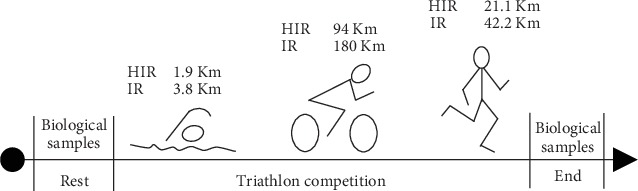
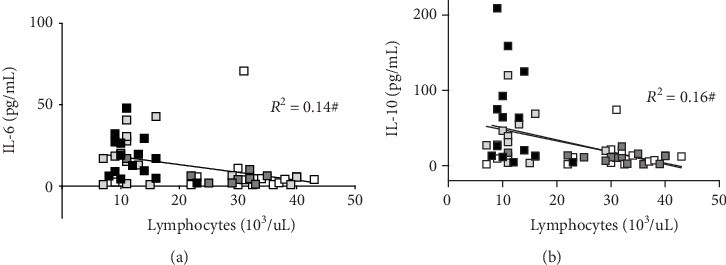
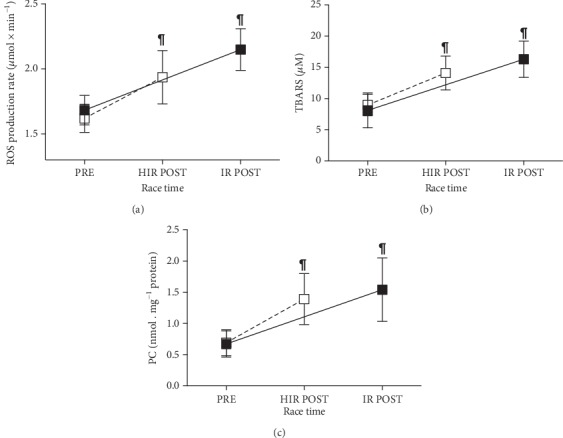
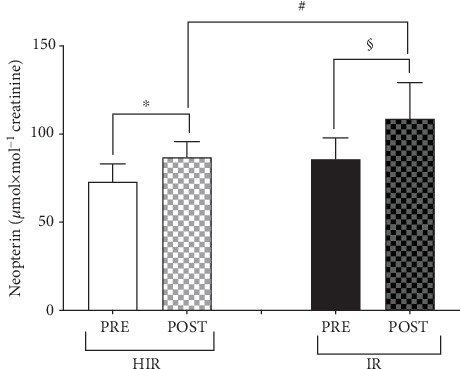
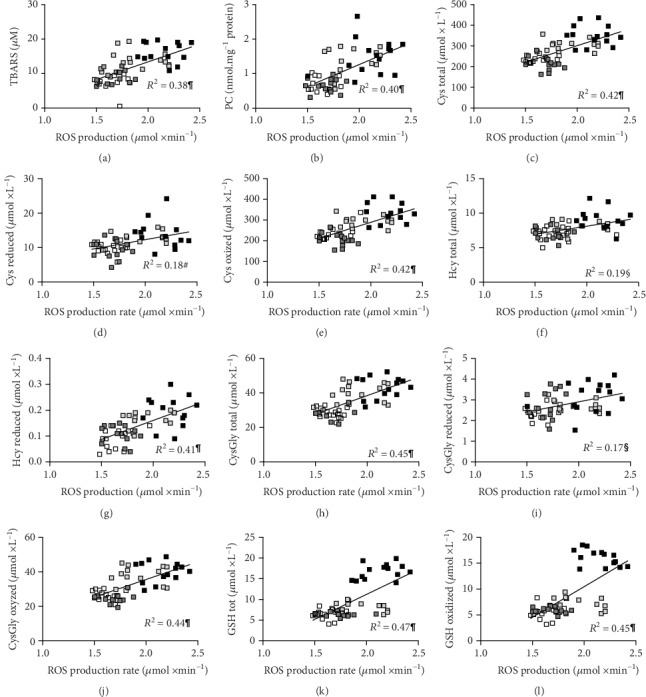
The response to strenuous exercise was investigated by reactive oxygen species (ROS) production, oxidative damage, thiol redox status, and inflammation assessments in 32 enrolled triathlon athletes (41.9 ± 7.9 yrs) during Ironman® (IR), or half Ironman® (HIR) competition. In biological samples, inflammatory cytokines, aminothiols (glutathione (GSH), homocysteine (Hcy), cysteine (Cys), and cysteinylglycine (CysGly)), creatinine and neopterin, oxidative stress (OxS) biomarkers (protein carbonyl (PC), thiobarbituric acid-reactive substances (TBARS)), and ROS were assessed. Thirteen HIR and fourteen IR athletes finished the race. Postrace, ROS (HIR +20%; IR +28%; < 0.0001), TBARS (HIR +57%; IR +101%), PC (HIR +101%; IR +130%) and urinary neopterin (HIR +19%, IR +27%) significantly (range < 0.05-0.0001) increased. Moreover, HIR showed an increase in total Cys +28%, while IR showed total aminothiols, Cys, Hcy, CysGly, and GSH increase by +48, +30, +58, and +158%, respectively (range < 0.05-0.0001). ROS production was significantly correlated with TBARS and PC ( = 0.38 and = 0.40; < 0.0001) and aminothiols levels (range = 0.17-0.47; range < 0.01-0.0001). In particular, ROS was directly correlated with the athletes' age ( = 0.19; < 0.05), with ultraendurance years of training ( = 0.18; < 0.05) and the days/week training activity ( = 0.16; < 0.05). Finally, the days/week training activity (hours/in the last 2 weeks) was found inversely correlated with the IL-6 postrace ( = -0.21; < 0.01). A strenuous performance, the Ironman® distance triathlon competition, alters the oxidant/antioxidant balance through a great OxS response that is directly correlated to the inflammatory parameters; furthermore, the obtained data suggest that an appropriate training time has to be selected in order to achieve the lowest ROS production and IL-6 concentration at the same time.
在 32 名参加铁人三项(IR)或半铁人三项(HIR)比赛的运动员(41.9 ± 7.9 岁)中,通过活性氧(ROS)产生、氧化损伤、巯基氧化还原状态和炎症评估来研究剧烈运动的反应。在生物样本中,评估了炎症细胞因子、氨基硫醇(谷胱甘肽(GSH)、同型半胱氨酸(Hcy)、半胱氨酸(Cys)和半胱氨酰甘氨酸(CysGly))、肌酸酐和新蝶呤、氧化应激(OxS)生物标志物(蛋白羰基(PC)、硫代巴比妥酸反应物质(TBARS))和 ROS。13 名 HIR 和 14 名 IR 运动员完成了比赛。赛后,ROS(HIR +20%;IR +28%;<0.0001)、TBARS(HIR +57%;IR +101%)、PC(HIR +101%;IR +130%)和尿新蝶呤(HIR +19%,IR +27%)显著增加(范围 <0.05-0.0001)。此外,HIR 总半胱氨酸增加 28%,而 IR 则增加了总氨基硫醇、半胱氨酸、同型半胱氨酸、半胱氨酰甘氨酸和 GSH 分别增加 48%、30%、58%和 158%(范围 <0.05-0.0001)。ROS 产生与 TBARS 和 PC 显著相关(=0.38 和=0.40;<0.0001),与氨基硫醇水平也显著相关(范围=0.17-0.47;范围 <0.01-0.0001)。特别是,ROS 与运动员的年龄呈直接相关(=0.19;<0.05),与超耐力训练年限(=0.18;<0.05)和每周训练活动天数(=0.16;<0.05)也呈直接相关。最后,每周训练活动天数(两周内的小时数)与赛后 IL-6 呈负相关(= -0.21;<0.01)。一项艰苦的比赛,即铁人三项距离比赛,通过剧烈的氧化应激反应改变了氧化剂/抗氧化剂的平衡,这与炎症参数直接相关;此外,获得的数据表明,为了同时达到最低的 ROS 产生和 IL-6 浓度,必须选择适当的训练时间。