Zapata-Lamana Rafael, Lalanza Jaume F, Losilla Josep-Maria, Parrado Eva, Capdevila Lluis
Escuela de Educación, Universidad de Concepción, Los Ángeles, Chile.
Department of Basic Psychology, Universitat Autónoma de Barcelona, Bellaterra, Spain.
PeerJ. 2020 Mar 26;8:e8848. doi: 10.7717/peerj.8848. eCollection 2020.
To systematically review the publications on ecological momentary assessment (EMA) relating to physical activity (PA) behavior in order to classify the methodologies, and to identify the main mHealth technology-based tools and procedures that have been applied during the first 10 years since the emergence of smartphones. As a result of this review, we want to ask if there is enough evidence to propose the use of the term "mEMA" (mobile-based EMA).
A systematic review according to PRISMA Statement (PROSPERO registration: CRD42018088136).
Four databases (PsycINFO, CINALH, Medline and Web of Science Core Collection) were searched electronically from 2008 to February 2018.
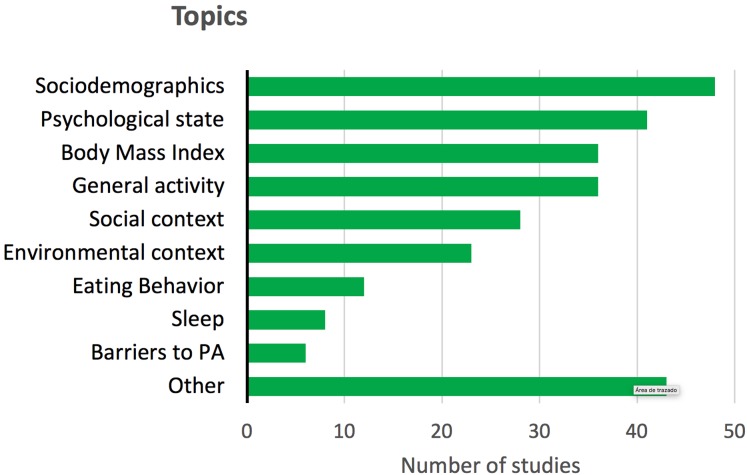
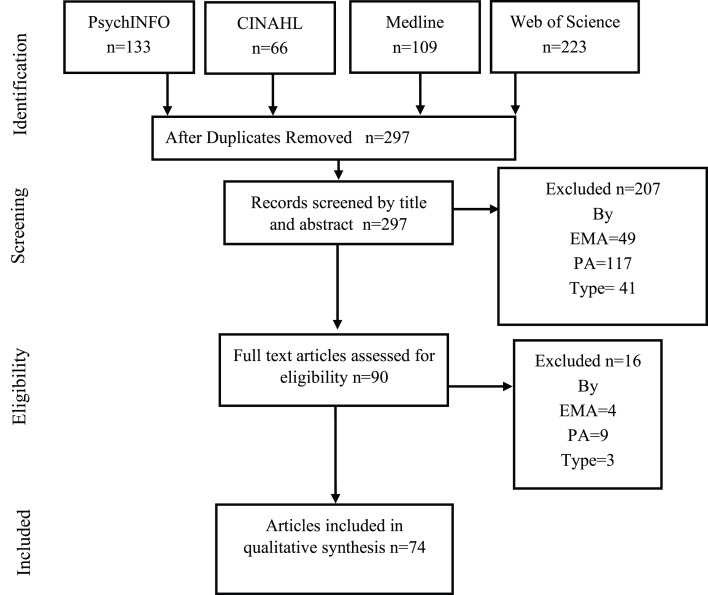
A total of 76 studies from 297 potential articles on the use of EMA and PA were included in this review. It was found that 71% of studies specifically used "EMA" for assessing PA behaviors but the rest used other terminology that also adjusted to the inclusion criteria. Just over half (51.3%) of studies (39) used mHealth technology, mainly smartphones, for collecting EMA data. The majority (79.5%) of these studies (31 out of 39) were published during the last 4 years. On the other hand, 58.8% of studies that only used paper-and-pencil were published during the first 3 years of the 10-year period analyzed. An accelerometer was the main built-in sensor used for collecting PA behavior by means of mHealth (69%). Most of the studies were carried out on young-adult samples, with only three studies in older adults. Women were included in 60% of studies, and healthy people in 82%. The studies lasted between 1 and 7 days in 57.9%, and between three and seven assessments per day were carried out in 37%. The most popular topics evaluated together with PA were psychological state and social and environmental context.
We have classified the EMA methodologies used for assessing PA behaviors. A total of 71% of studies used the term "EMA" and 51.3% used mHealth technology. Accelerometers have been the main built-in sensor used for collecting PA. The change of trend in the use of tools for EMA in PA coincides with the technological advances of the last decade due to the emergence of smartphones and mHealth technology. There is enough evidence to use the term mEMA when mHealth technology is being used for monitoring real-time lifestyle behaviors in natural situations. We define mEMA as the use of mobile computing and communication technologies for the EMA of health and lifestyle behaviors. It is clear that the use of mHealth is increasing, but there is still a lot to be gained from taking advantage of all the capabilities of this technology in order to apply EMA to PA behavior. Thus, mEMA methodology can help in the monitoring of healthy lifestyles under both subjective and objective perspectives. The tendency for future research should be the automatic recognition of the PA of the user without interrupting their behavior. The ecological information could be completed with voice messages, image captures or brief text selections on the touch screen made in real time, all managed through smartphone apps. This methodology could be extended when EMA combined with mHealth are used to evaluate other lifestyle behaviors.
系统回顾有关身体活动(PA)行为的生态瞬时评估(EMA)的出版物,以便对方法进行分类,并确定自智能手机出现后的头10年里所应用的主要基于移动健康技术的工具和程序。通过本次综述,我们想探讨是否有足够的证据来提议使用“移动生态瞬时评估(mEMA)”这一术语。
根据PRISMA声明进行的系统综述(PROSPERO注册号:CRD42018088136)。
2008年至2018年2月期间,通过电子方式检索了四个数据库(PsycINFO、CINALH、Medline和科学引文索引核心合集)。
本综述共纳入了297篇关于使用EMA和PA的潜在文章中的76项研究。结果发现,71%的研究专门使用“EMA”来评估PA行为,但其余研究使用的其他术语也符合纳入标准。略超过一半(51.3%)的研究(39项)使用移动健康技术,主要是智能手机,来收集EMA数据。其中大部分研究(39项中的31项,即79.5%)是在过去4年发表的。另一方面,在分析的10年期间的前3年里,仅使用纸笔方式的研究中有58.8%发表。加速度计是通过移动健康技术收集PA行为时使用的主要内置传感器(69%)。大多数研究以青年成人样本为对象,仅有三项研究针对老年人。60%的研究纳入了女性,82%纳入了健康人群。57.9%的研究持续时间为1至7天,37%的研究每天进行三至七次评估。与PA一起评估的最常见主题是心理状态以及社会和环境背景。
我们对用于评估PA行为的EMA方法进行了分类。71%的研究使用了“EMA”一词,51.3%使用了移动健康技术。加速度计一直是用于收集PA的主要内置传感器。PA中EMA工具使用趋势的变化与过去十年由于智能手机和移动健康技术的出现而带来的技术进步相吻合。当移动健康技术用于在自然情境中监测实时生活方式行为时,有足够的证据使用“mEMA”一词。我们将mEMA定义为使用移动计算和通信技术对健康和生活方式行为进行EMA。显然,移动健康的使用正在增加,但为了将EMA应用于PA行为,充分利用该技术的所有功能仍有很大的提升空间。因此,mEMA方法有助于从主观和客观角度监测健康的生活方式。未来研究的趋势应该是在不干扰用户行为的情况下自动识别用户的PA。生态信息可以通过语音消息、图像捕捉或在触摸屏上实时进行的简短文本选择来补充,所有这些都通过智能手机应用程序进行管理。当EMA与移动健康相结合用于评估其他生活方式行为时,这种方法可以得到扩展。