Mostafavinia Atarodsadat, Bidram Mohammad, Gomi Avili Amirhossein, Mahmanzar Mohammadamin, Karimifard Seyed Ali, Sajadi Ensieh, Amini Abdollah, Hadipour Jahromy Mahsa, Ghoreishi Seyed Kamran, Chien Sufan, Bayat Mohammad
1Department of Anatomy, Faculty of Medicine, Tehran Medical Sciences, Islamic Azad University, Tehran, Iran.
2Department of Microbiology, Faculty of Advanced Science and Technology, Tehran Medical Sciences, Islamic Azad University, Tehran, Iran.
Lab Anim Res. 2019 Dec 11;35:28. doi: 10.1186/s42826-019-0025-x. eCollection 2019.
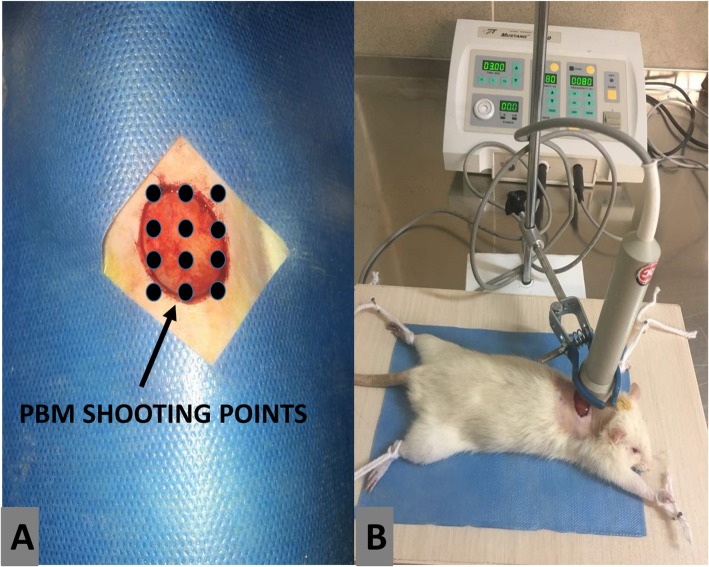
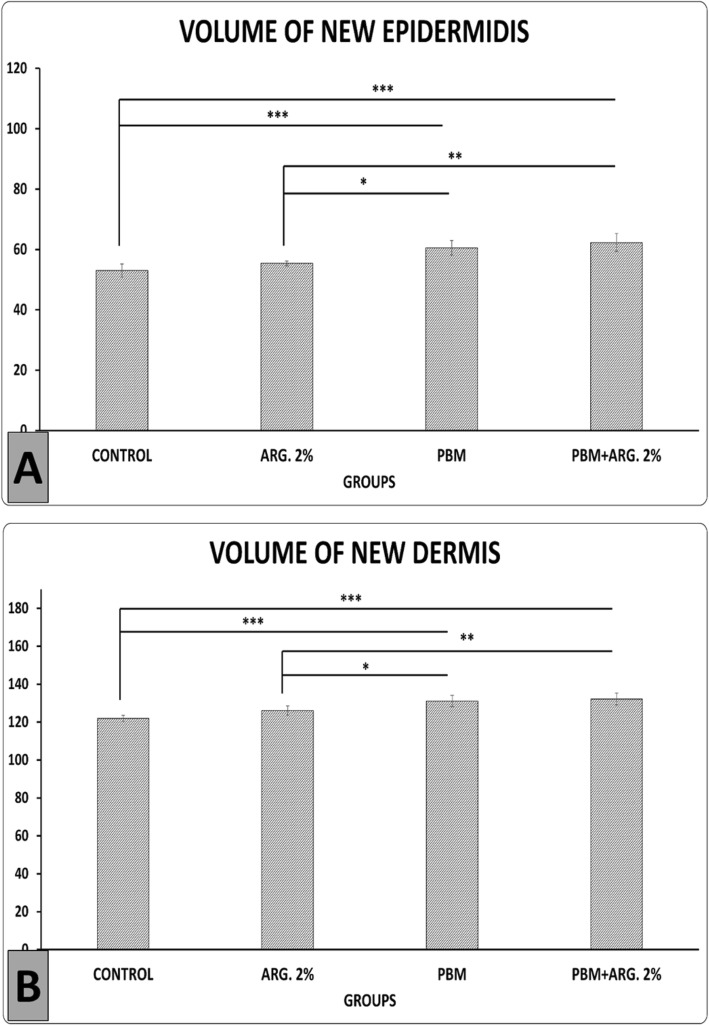
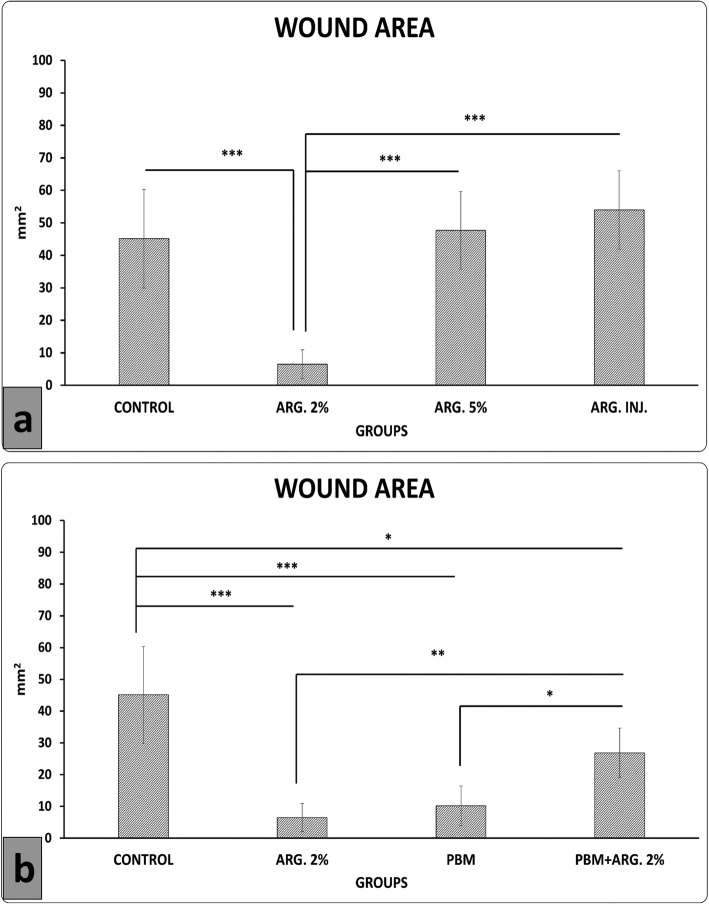
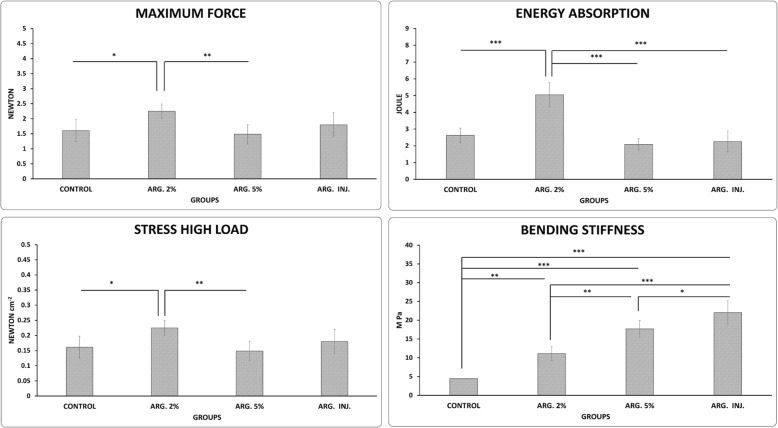
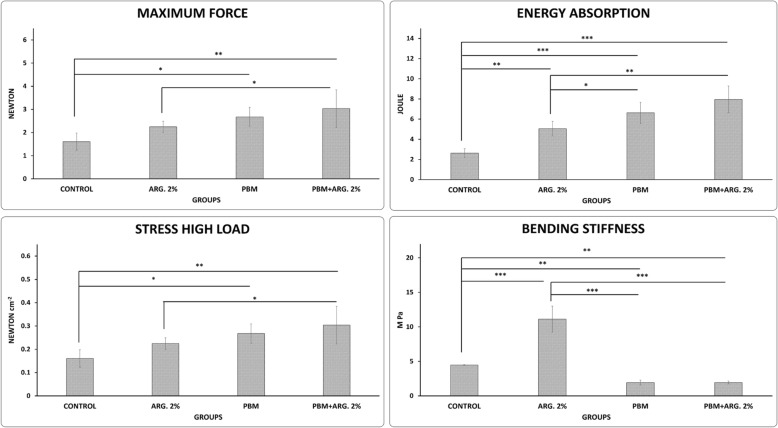
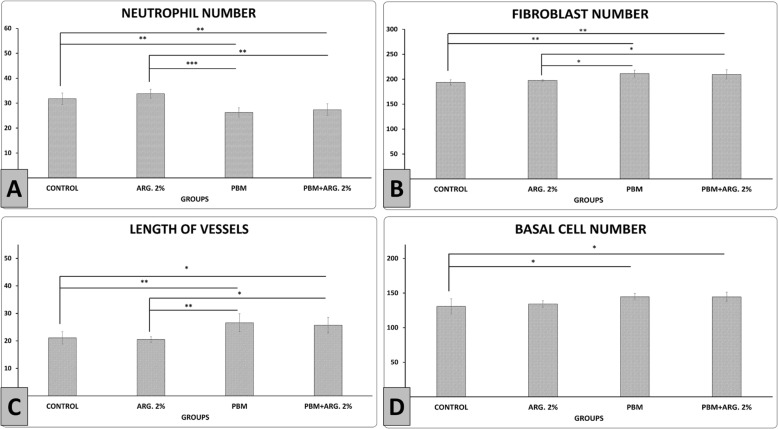
In this probe, at first we examined the best route and dosage of arginine administration on wound healing in an excisional wound model in rats. Next, we intend to assess the impact of photobiomodulation (PBM) and arginine, individually and together, on the wound healing. In the pilot study, an excisional wound was made in each of 24 rats. There were 4 groups. Group 1 was the control group. In groups 2 and 3, wounds were topically treated with arginine ointments (ARG.) 2% and 5%, respectively. In group 4, arginine was injected (ARG. INJ.,i.p.). In the main phase, in 24 new rats, an excisional wound was made. There were 4 groups: group 5 served as the control. Wounds in group 6 were topically treated with ARG 2%. Wounds in group 7 were subjected to PBM. Wounds in group 8 were treated with PBM+ARG. 2%. On day 15, wound area measurement, wound strength, and stereological examination were performed. In the pilot study, we found that the ARG 2% ointment significantly decreased wound area than ARG. 5%, ARG. INJ. and control groups, and significantly increased wound strength compared to the control and ARG.5% groups. In the main phase, a significant decrease of wound area in all treatment regimens was induced. PBM + ARG. 2% and PBM treatment regimens significantly improved wound strength and almost all stereological parameters, compared to the control and ARG. 2% groups. PBM + ARG. 2% induced anti-inflammatory and angiogenic activities, and hastened the wound healing process in an excisional wound model in rats.
在本研究中,首先我们在大鼠切除伤口模型中研究了精氨酸给药促进伤口愈合的最佳途径和剂量。接下来,我们打算评估光生物调节(PBM)和精氨酸单独及联合应用对伤口愈合的影响。在预实验中,对24只大鼠分别制造切除伤口。分为4组,第1组为对照组。第2组和第3组的伤口分别用2%和5%的精氨酸软膏局部治疗。第4组腹腔注射精氨酸。在主要实验阶段,对另外24只大鼠制造切除伤口,分为4组:第5组为对照组。第6组伤口用2%精氨酸局部治疗。第7组伤口接受PBM治疗。第8组伤口接受PBM+2%精氨酸治疗。在第15天,进行伤口面积测量、伤口强度和体视学检查。在预实验中,我们发现2%精氨酸软膏组的伤口面积比5%精氨酸软膏组、腹腔注射精氨酸组和对照组显著减小,且与对照组和5%精氨酸软膏组相比,伤口强度显著增加。在主要实验阶段,所有治疗方案均使伤口面积显著减小。与对照组和2%精氨酸组相比,PBM+2%精氨酸组和PBM治疗方案显著改善了伤口强度和几乎所有体视学参数。PBM+2%精氨酸在大鼠切除伤口模型中具有抗炎和促血管生成活性,并加速了伤口愈合过程。