Buechler Connor R, Ukani Anita, Elsharawi Radwa, Gable Jessica, Petersen Anneliese, Franklin Michael, Chung Raymond, Bell Jedidiah, Manly Amanda, Hefzi Nousha, Carpenter Dean, Bryce Richard
Street Medicine Detroit, Detroit, Michigan, 48201, USA.
Wayne State University School of Medicine, Detroit, Michigan, 48201, USA.
Heliyon. 2020 Mar 26;6(3):e03474. doi: 10.1016/j.heliyon.2020.e03474. eCollection 2020 Mar.
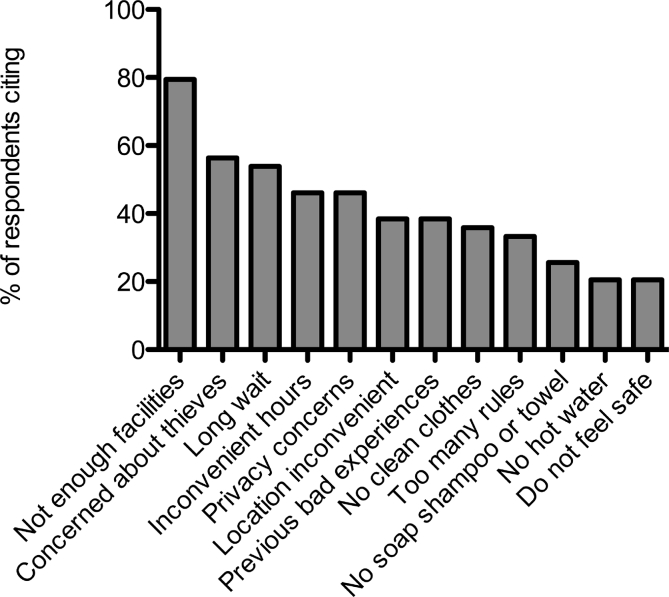
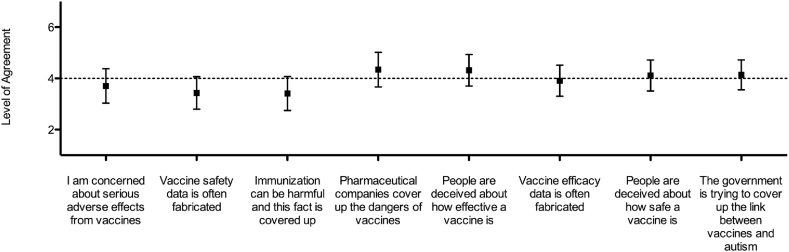
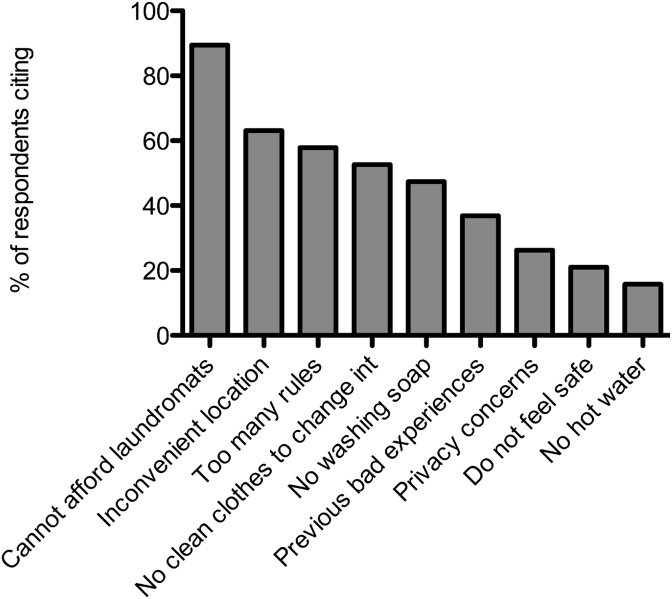
Appropriate hygiene practices and vaccine acceptance are key factors impacting the health of homeless individuals. A recent outbreak of hepatitis A in Michigan, especially impacting Detroit, prompted us to investigate the practices and attitudes of Detroit's homeless population toward hygiene measures and vaccinations, as well as barriers to such resources. We developed a questionnaire as a means to collect our data, and participants were interviewed at shelters and soup kitchens. While the majority of participants adhered to healthy hygiene practices, approximately 89% reported barriers to accessing public showers. More than half the participants (64%) reported receiving their hepatitis A vaccine prior to the study, while 23% reported previously refusing or hesitating to receive vaccinations. Despite an overall favorable adherence to hygiene practices, substantial barriers are yet to be overcome. Moreover, active measures should be taken to establish higher levels of trust between providers and the homeless to encourage vaccine acceptance.
适当的卫生习惯和疫苗接受度是影响无家可归者健康的关键因素。密歇根州最近爆发的甲型肝炎疫情,尤其是对底特律造成了影响,促使我们调查底特律无家可归者群体对卫生措施和疫苗接种的做法与态度,以及获取这些资源的障碍。我们设计了一份问卷作为收集数据的手段,并在收容所和施粥处对参与者进行了访谈。虽然大多数参与者坚持健康的卫生习惯,但约89%的人表示在使用公共淋浴方面存在障碍。超过一半的参与者(64%)报告在研究之前接种了甲型肝炎疫苗,而23%的人报告此前拒绝或犹豫接种疫苗。尽管总体上对卫生习惯的遵守情况良好,但仍有重大障碍有待克服。此外,应采取积极措施,在提供者和无家可归者之间建立更高水平的信任,以鼓励疫苗接种。