Oliveira-Rosado Joana, Duarte João P, Sousa-E-Silva Paulo, Costa Daniela C, Martinho Diogo V, Sarmento Hugo, Valente-Dos-Santos João, Rama Luís M, Tavares Óscar M, Conde Jorge, Castanheira Joaquim, Soles-Gonçalves Rui, Agostinete Ricardo R, Coelho-E-Silva Manuel J
Escola Superior de Tecnologia da Saúde de Coimbra, Instituto Politécnico de Coimbra, Coimbra, Portugal.
Faculdade de Desporto, Universidade do Porto, Porto, Portugal.
Einstein (Sao Paulo). 2020 Apr 6;18:eAO5256. doi: 10.31744/einstein_journal/2020AO5256. eCollection 2020.
To describe and identify the importance of different indicators of the aerobic and anaerobic fitness of male ultra-trail runners according to their level of participation (regional or national).
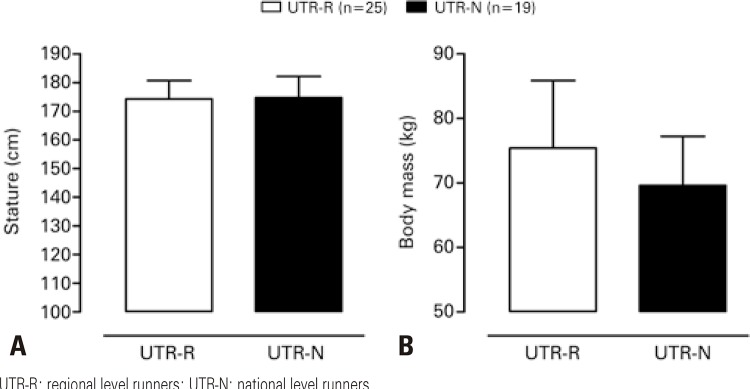
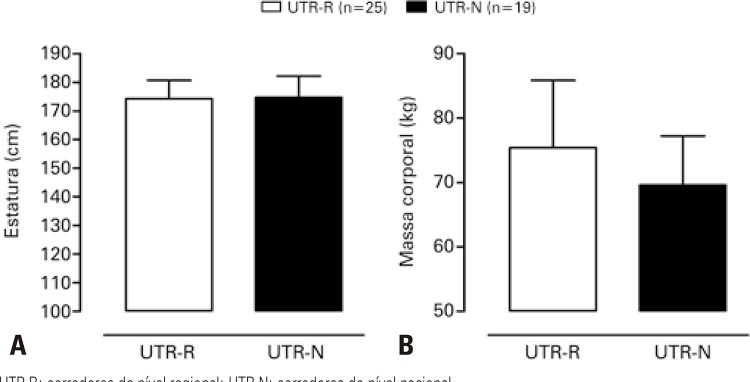
Forty-four male ultra-trail runners were assessed (36.5±7.2 years). They were classified as regional (n=25) and national (n=19). Wingate test was used to assess the anaerobic pathway. A progressive incremental running test was performed and ventilatory thresholds registered, in parallel to heart rate and lactate concentration at the end of the protocol. Comparison between groups was performed using independent samples t-test.
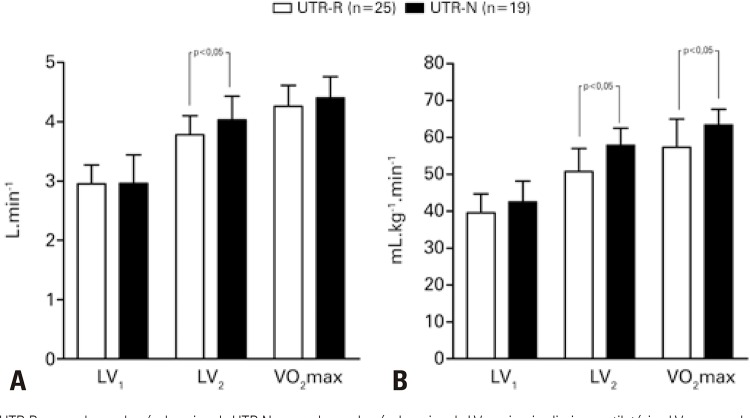
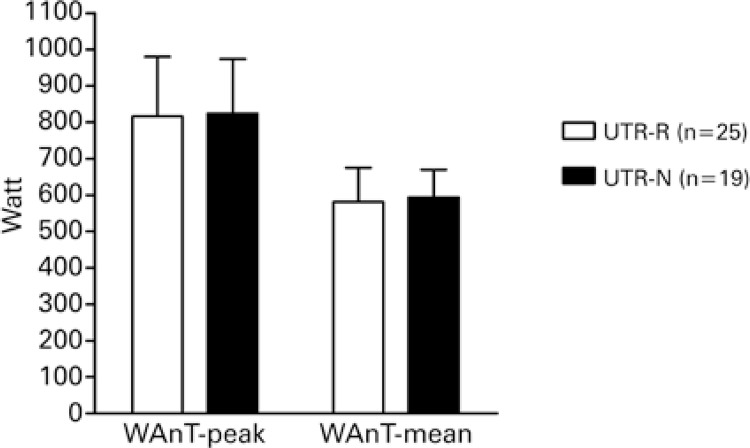
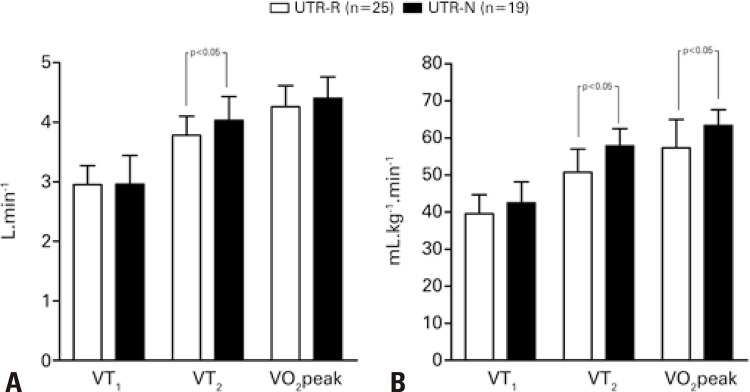
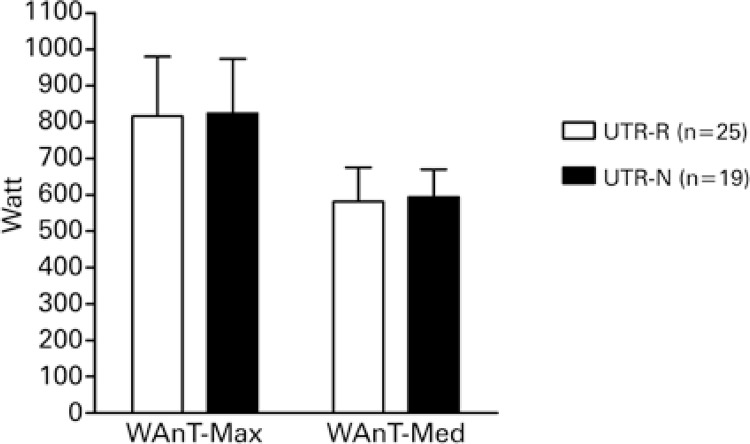
No significant differences were found between outputs derived from Wingate test. For aerobic fitness, while examining absolute values, differences were uniquely significant for the second ventilatory threshold (ultra-trail regional runners: 3.78±0.32L.min-1; ultra-trail national runners: 4.03±0.40L.min-1 p<0.05). Meantime, when aerobic fitness was expressed per unit of body mass, differences were significant for the second ventilatory threshold (ultra-trail regional runners: 50.75±6.23mL.kg-1.min-1; ultra-trail national runners: 57.88±4.64mL.kg-1.min-1 p<0.05) and also maximum volume of oxygen (ultra-trail regional runners: 57.33±7.66mL.kg-1.min-1; ultra-trail national runners: 63.39±4.26mL.kg-1.min-1 p<0.05).
This study emphasized the importance of expressing physiological variables derived from running protocols per unit of body mass. Also, the second ventilatory threshold appears to be the best and the only aerobic fitness variable to distinguish between trail runners according to competitive level. Maximal oxygen uptake seems of relative interest to distinguish between long distance runners according to competitive level.
根据参与水平(地区或全国)描述并确定男性超级越野跑者有氧和无氧适能不同指标的重要性。
对44名男性超级越野跑者进行评估(年龄36.5±7.2岁)。他们被分为地区组(n=25)和全国组(n=19)。采用温盖特测试评估无氧途径。进行递增式跑步测试并记录通气阈值,同时记录测试结束时的心率和乳酸浓度。使用独立样本t检验进行组间比较。
温盖特测试得出的输出结果之间未发现显著差异。对于有氧适能,在检查绝对值时,仅第二通气阈值存在显著差异(超级越野地区组跑者:3.78±0.32L·min-1;超级越野全国组跑者:4.03±0.40L·min-1,p<0.05)。同时,当以每单位体重表示有氧适能时,第二通气阈值存在显著差异(超级越野地区组跑者:50.75±6.23mL·kg-1·min-1;超级越野全国组跑者:57.88±4.64mL·kg-1·min-1,p<0.05),最大摄氧量也存在显著差异(超级越野地区组跑者:57.33±7.66mL·kg-1·min-1;超级越野全国组跑者:63.39±4.26mL·kg-1·min-1,p<0.05)。
本研究强调了以每单位体重表示跑步测试得出的生理变量的重要性。此外,第二通气阈值似乎是根据竞技水平区分越野跑者的最佳且唯一的有氧适能变量。最大摄氧量对于根据竞技水平区分长跑者似乎具有相对重要性。