State Key Laboratory of Cotton Biology, School of Life Science, Henan University, Kaifeng, Henan, P. R. China.
State Key Laboratory of Crop Stress Adaptation and Improvement, Henan University, Kaifeng, Henan, P. R. China.
BMC Plant Biol. 2020 Apr 8;20(1):147. doi: 10.1186/s12870-020-02345-z.
Plant Na/H antiporters (NHXs) are membrane-localized proteins that maintain cellular Na/K and pH homeostasis. Considerable evidence highlighted the critical roles of NHX family in plant development and salt response; however, NHXs in cotton are rarely studied.
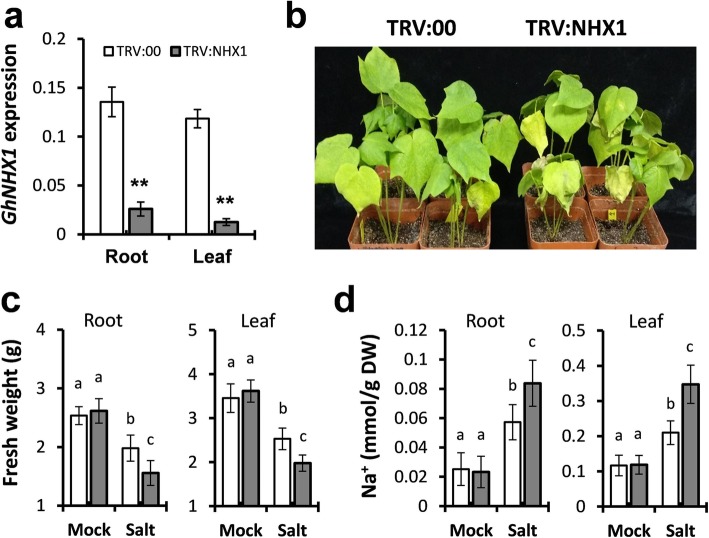
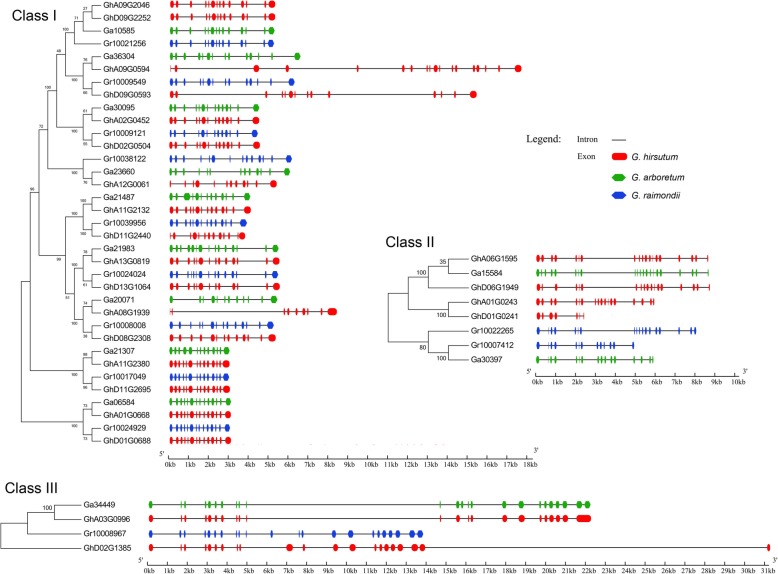
The comprehensive and systematic comparative study of NHXs in three Gossypium species was performed. We identified 12, 12, and 23 putative NHX proteins from G. arboreum, G. raimondii, and G. hirsutum, respectively. Phylogenetic study revealed that repeated polyploidization of Gossypium spp. contributed to the expansion of NHX family. Gene structure analysis showed that cotton NHXs contain many introns, which will lead to alternative splicing and help plants to adapt to high salt concentrations in soil. The expression changes of NHXs indicate the possible differences in the roles of distinct NHXs in salt response. GhNHX1 was proved to be located in the vacuolar system and intensively induced by salt stress in cotton. Silencing of GhNHX1 resulted in enhanced sensitivity of cotton seedlings to high salt concentrations, which suggests that GhNHX1 positively regulates cotton tolerance to salt stress.
We characterized the gene structure, phylogenetic relationship, chromosomal location, and expression pattern of NHX genes from G. arboreum, G. raimondii, and G. hirsutum. Our findings indicated that the cotton NHX genes are regulated meticulously and differently at the transcription level with possible alternative splicing. The tolerance of plants to salt stress may rely on the expression level of a particular NHX, rather than the number of NHXs in the genome. This study could provide significant insights into the function of plant NHXs, as well as propose promising candidate genes for breeding salt-resistant cotton cultivars.
植物 Na/H 反向转运蛋白(NHXs)是定位于膜上的蛋白,可维持细胞内的 Na/K 和 pH 稳态。大量证据表明 NHX 家族在植物发育和盐响应中起着关键作用;然而,棉花中的 NHX 研究甚少。
对三个棉属物种中的 NHX 进行了全面而系统的比较研究。我们分别从亚洲棉、雷蒙德氏棉和陆地棉中鉴定出 12、12 和 23 个推定的 NHX 蛋白。系统发育研究表明,棉属物种的多次多倍化导致了 NHX 家族的扩张。基因结构分析表明,棉花 NHX 含有许多内含子,这将导致选择性剪接,并有助于植物适应土壤中的高盐浓度。NHXs 的表达变化表明不同 NHX 在盐响应中的作用可能存在差异。GhNHX1 被证明位于液泡系统中,并在棉花中受到盐胁迫的强烈诱导。GhNHX1 的沉默导致棉花幼苗对高盐浓度的敏感性增强,这表明 GhNHX1 正向调节棉花对盐胁迫的耐受性。
我们对亚洲棉、雷蒙德氏棉和陆地棉中的 NHX 基因的基因结构、系统发育关系、染色体定位和表达模式进行了描述。我们的研究结果表明,棉花 NHX 基因在转录水平上受到精细而不同的调控,可能存在选择性剪接。植物对盐胁迫的耐受性可能依赖于特定 NHX 的表达水平,而不是基因组中 NHX 的数量。本研究可为植物 NHX 的功能提供重要见解,并为培育耐盐棉花品种提供有前景的候选基因。