Menzies School of Health Research, Charles Darwin University, PO Box 41096, Darwin, NT, 0811, Australia.
Health, Rights and Development (HEARD@UNSW), Faculty of Arts and Social Sciences, University of New South Wales, Sydney, NSW, 2052, Australia.
BMC Int Health Hum Rights. 2020 Apr 8;20(1):9. doi: 10.1186/s12914-020-00229-9.
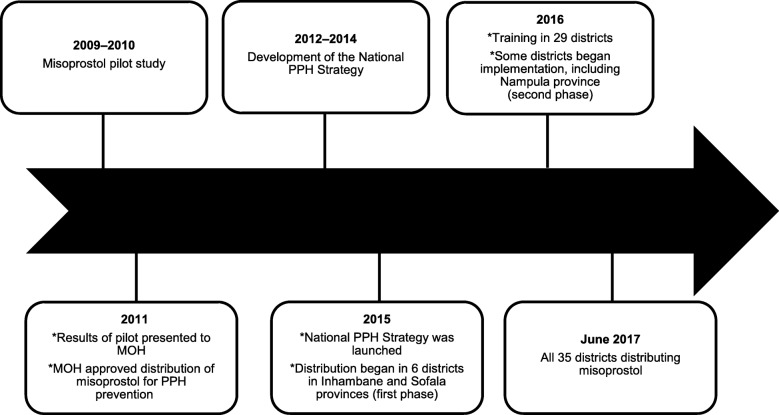
Mozambique has high maternal mortality which is compounded by limited human resources for health, weak access to health services, and poor development indicators. In 2011, the Mozambique Ministry of Health (MoH) approved the distribution of misoprostol for the prevention of post-partum haemorrhage (PPH) at home births where oxytocin is not available. Misoprostol can be administered by a traditional birth attendant or self-administered. The objective of this paper is to examine, through applying a human rights lens, the broader contextual, policy and institutional issues that have influenced and impacted the early implementation of misoprostol for the prevention of PPH. We explore the utility of rights-based framework to inform this particular program, with implications for sexual and reproductive health programs more broadly.
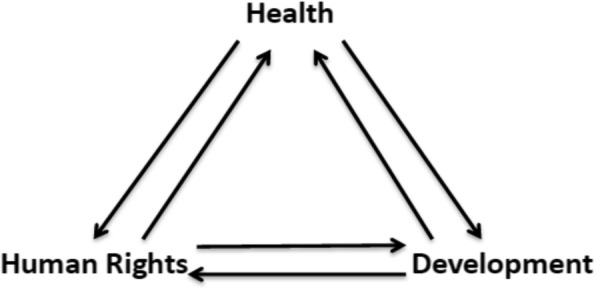
A human rights, health and development framework was used to analyse the early expansion phase of the scale-up of Mozambique's misoprostol program in two provinces. A policy document review was undertaken to contextualize the human rights, health and development setting in Mozambique. Qualitative primary data from a program evaluation of misoprostol for the prevention of PPH was then analysed using a human rights lens; these results are presented alongside three examples where rights are constrained.
Structural and institutional challenges exacerbated gaps in the misoprostol program, and sexual and reproductive health more generally. While enshrined in the constitution and within health policy documents, human rights were not fully met and many individuals in the study were unaware of their rights. Lack of information about the purpose of misoprostol and how to access the medication contributed to power imbalances between the state, health care workers and beneficiaries. The accessibility of misoprostol was further limited due to dynamics of power and control.
Applying a rights-based approach to the Mozambican misoprostol program is helpful in contextualising and informing the practical changes needed to improve access to misoprostol as an essential medicine, and in turn, preventing PPH. This study adds to the evidence of the interconnection between human rights, health and development and the importance of integrating the concepts to ensure women's rights are prioritized within health service delivery.
莫桑比克的孕产妇死亡率很高,这是由于卫生人力资源有限、获得卫生服务的机会有限以及发展指标较差造成的。2011 年,莫桑比克卫生部批准在没有催产素的情况下,在家中分娩时分发米索前列醇以预防产后出血。米索前列醇可以由传统助产妇或自行给药。本文的目的是通过应用人权视角,审查影响和影响米索前列醇早期用于预防产后出血的更广泛的背景、政策和体制问题。我们探讨了基于权利的框架在告知这一特定方案方面的效用,对更广泛的性健康和生殖健康方案具有启示意义。
采用人权、卫生和发展框架,分析莫桑比克米索前列醇方案扩大规模的早期扩张阶段在两个省的情况。进行政策文件审查,以了解莫桑比克的人权、卫生和发展背景。然后,从米索前列醇预防产后出血方案的方案评价中使用人权视角分析定性原始数据;这些结果与三个权利受到限制的例子一起呈现。
结构和体制挑战加剧了米索前列醇方案以及性健康和生殖健康方面的差距。虽然人权在宪法和卫生政策文件中得到体现,但并未得到充分落实,研究中的许多人并不知道自己的权利。缺乏关于米索前列醇的用途以及如何获得药物的信息,导致国家、卫生保健工作者和受益者之间的权力失衡。由于权力和控制的动态,米索前列醇的可及性进一步受到限制。
将基于权利的方法应用于莫桑比克的米索前列醇方案有助于在上下文中理解和告知需要进行哪些实际变革,以改善获取米索前列醇作为基本药物的机会,并进而预防产后出血。本研究增加了人权、卫生和发展之间相互关联的证据,并强调了将这些概念整合起来以确保妇女的权利在卫生服务提供中得到优先考虑的重要性。