International Centre for Reproductive Health (ICRH), Ghent University, 9000 Gent, Belgium.
Centro de Estudos Africanos, Universidade Eduardo Mondlane, C. P. 1993, Maputo, Mozambique.
Int J Environ Res Public Health. 2018 Feb 13;15(2):329. doi: 10.3390/ijerph15020329.
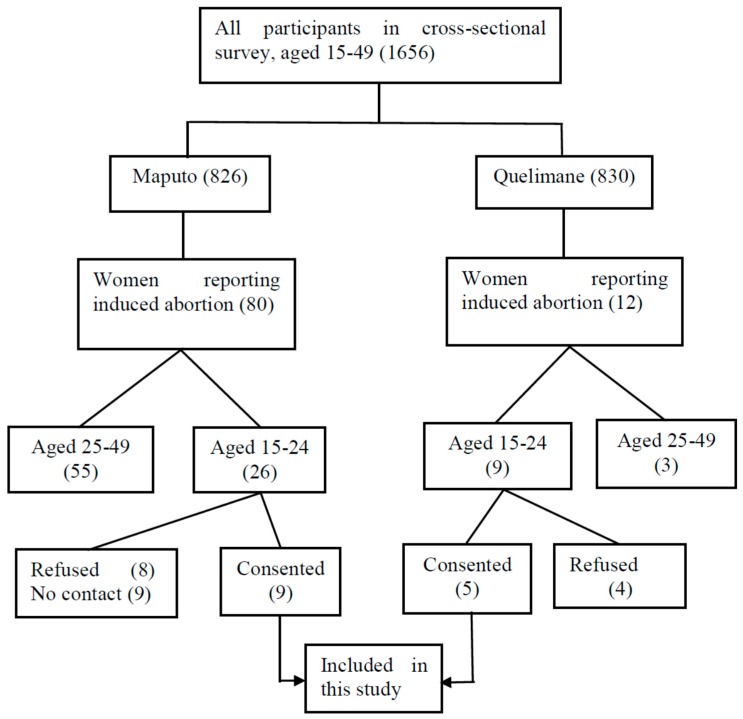
Decision-making about if and how to terminate a pregnancy is a dilemma for young women experiencing an unwanted pregnancy. Those women are subject to sociocultural and economic barriers that limit their autonomy and make them vulnerable to pressures that influence or force decisions about abortion. : The objective of this study was to explore the individual, interpersonal and environmental factors behind the abortion decision-making process among young Mozambican women. : A qualitative study was conducted in Maputo and Quelimane. Participants were identified during a cross-sectional survey with women in the reproductive age (15-49). In total, 14 women aged 15 to 24 who had had an abortion participated in in-depth interviews. A thematic analysis was used. : The study found determinants at different levels, including the low degree of autonomy for women, the limited availability of health facilities providing abortion services and a lack of patient-centeredness of health services. : Based on the results of the study, the authors suggest strategies to increase knowledge of abortion rights and services and to improve the quality and accessibility of abortion services in Mozambique.
对于意外怀孕的年轻女性来说,决定是否以及如何终止妊娠是一个两难的选择。这些女性面临着社会文化和经济障碍,这限制了她们的自主权,并使她们容易受到影响或强迫堕胎决定的压力。本研究旨在探讨莫桑比克年轻女性堕胎决策过程背后的个人、人际和环境因素。这项定性研究在马普托和克利马内进行。研究人员在一项针对生育年龄(15-49 岁)女性的横断面调查中确定了参与者。共有 14 名 15 至 24 岁的堕胎妇女参加了深入访谈。采用主题分析。研究发现,不同层面的决定因素,包括妇女自主权程度低、提供堕胎服务的卫生设施有限以及卫生服务缺乏以患者为中心。基于研究结果,作者建议采取一些策略来提高对堕胎权利和服务的认识,并提高莫桑比克堕胎服务的质量和可及性。