Department of Otolaryngology-Head & Neck Surgery, University of Alabama at Birmingham, 1155 Faculty Office Tower, 510 20th Street South, Birmingham, AL 35233, USA; Gregory Fleming James Cystic Fibrosis Research Center, University of Alabama at Birmingham, Birmingham, AL, USA.
Department of Microbiology & Immunology, University of Minnesota, 3-115 Microbiology Research Facility, 689 23rd Avenue SE, Minneapolis, MN 55455, USA.
Immunol Allergy Clin North Am. 2020 May;40(2):251-263. doi: 10.1016/j.iac.2019.12.009. Epub 2020 Jan 16.
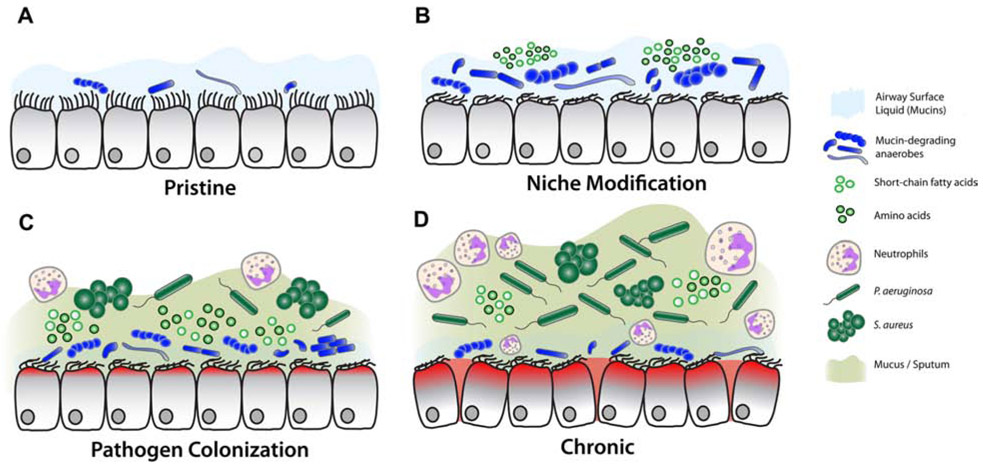
Chronic rhinosinusitis (CRS) is persistent inflammation and/or infection of the nasal cavity and paranasal sinuses. Recent advancements in culture-independent molecular techniques have enhanced understanding of interactions between sinus microbiota and upper airway microenvironment. The dysbiosis hypothesis-alteration of microbiota associated with perturbation of the local ecological landscape-is suggested as a mechanism involved in CRS pathogenesis. This review discusses the complex role of the microbiota in health and in CRS and considerations in sinus microbiome investigation, dysbiosis of sinus microbiota in CRS, microbial interactions in CRS, and development of preclinical models. The authors conclude with future directions for CRS-associated microbiome research.
慢性鼻-鼻窦炎(CRS)是鼻腔和鼻窦的持续炎症和/或感染。最近,非培养依赖性分子技术的进步提高了人们对鼻窦微生物群与上呼吸道微环境之间相互作用的理解。菌群失调假说——与局部生态景观扰动相关的微生物群改变——被认为是 CRS 发病机制的一个机制。这篇综述讨论了微生物群在健康和 CRS 中的复杂作用,以及鼻窦微生物组研究、CRS 中鼻窦微生物群失调、CRS 中的微生物相互作用以及临床前模型发展中的注意事项。作者最后为 CRS 相关微生物组研究的未来方向提供了结论。