Then Eric Omar, Lopez Michell, Saleem Saad, Gayam Vijay, Sunkara Tagore, Culliford Andrea, Gaduputi Vinaya
Division of Gastroenterology and Hepatology, SBH Health System, 4422 Third Ave, Bronx, NY 10457, USA.
Department of Internal Medicine, Mercy Saint Vincent Medical Center, 2213 Cherry St, Toledo, OH 43608, USA.
World J Oncol. 2020 Apr;11(2):55-64. doi: 10.14740/wjon1254. Epub 2020 Mar 29.
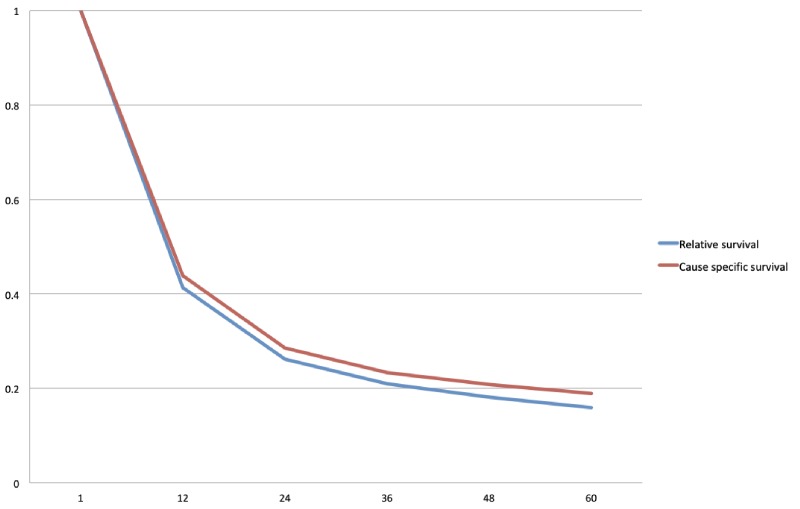
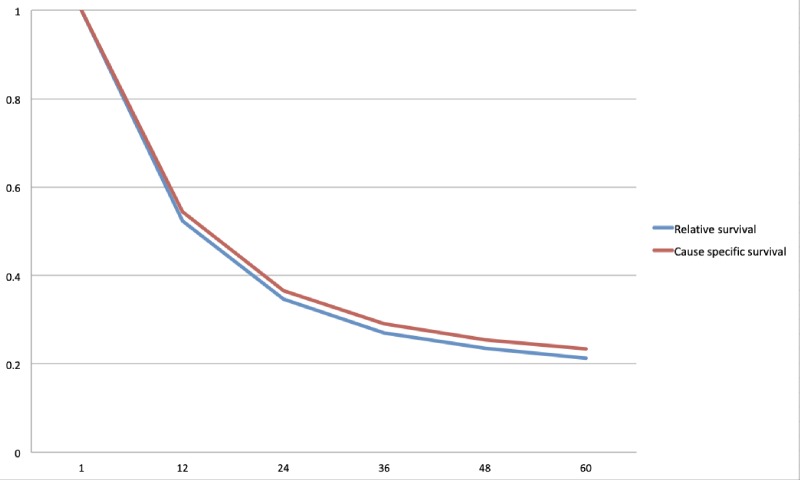
Esophageal cancer is the sixth leading cause of cancer-related deaths and the eighth most common cancer worldwide with a 5-year survival rate of less than 25%. Here we report the incidence, risk factors and treatment options that are available currently, and moving into the future.
We retrospectively analyzed the Surveillance Epidemiology and End Results (SEER) database made available by the National Cancer Institute in the USA. Specifically we extracted data from the years 2004 - 2015.
In total we identified 23,804 patients with esophageal adenocarcinoma and 13,919 patients with esophageal squamous cell carcinoma. Males were at an increased risk of developing both types of esophageal cancer when compared to females. Most cases of adenocarcinoma were diagnosed as poorly differentiated grade III (42%), and most cases of squamous cell carcinoma were diagnosed as moderately differentiated grade II (39.5%). The most common stage of presentation for both adenocarcinoma (36.9%) and squamous cell (26.8%) carcinoma was stage IV. The worst outcomes for adenocarcinoma were noted with grade III tumors (hazard ratio (HR): 1.56, 95% confidence interval (CI): 1.44 - 1.68, P value: < 0.01), stage IV tumors (HR: 3.58, 95% CI: 3.33 - 3.85, P value: < 0.01) and those not treated with surgery (HR: 2.54, 95% CI: 2.44 - 2.65, P value: < 0.01). For squamous cell carcinoma, the worst outcomes were noted with grade III tumors (HR: 1.35, 95% CI: 1.23 - 1.49, P value: < 0.01), stage IV tumors (HR: 2.12, 95% CI: 1.94 - 2.32, P value: <0.01).
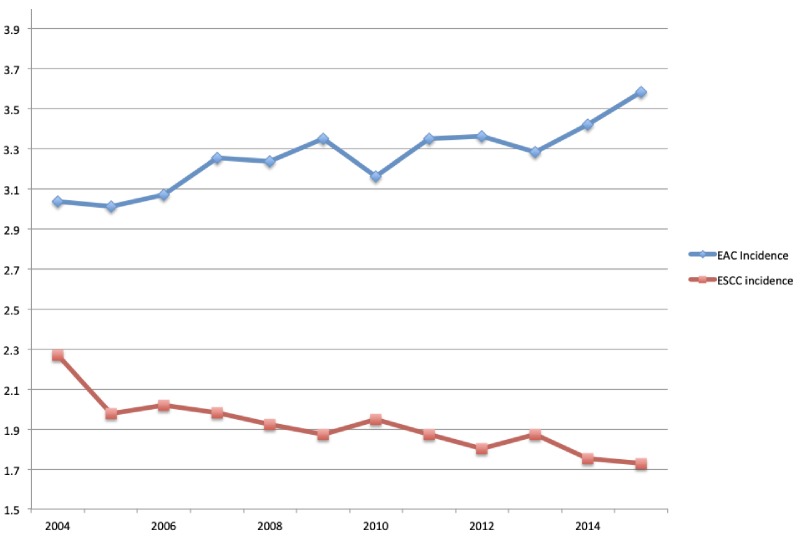
The incidence of esophageal adenocarcinoma in the USA is steadily on the rise. Conversely, the incidence of squamous cell carcinoma has been continually declining. While white males had an increased incidence of both types of esophageal cancer, a higher proportion of African Americans suffered from squamous cell carcinoma. Despite the wide spread use of proton pump inhibitors, adenocarcinoma continues to be a major public health concern.
食管癌是全球癌症相关死亡的第六大原因,也是第八大常见癌症,其5年生存率低于25%。在此,我们报告目前及未来食管癌的发病率、风险因素和可用的治疗方案。
我们回顾性分析了美国国立癌症研究所提供的监测、流行病学和最终结果(SEER)数据库。具体而言,我们提取了2004年至2015年的数据。
我们共识别出23804例食管腺癌患者和13919例食管鳞状细胞癌患者。与女性相比,男性患这两种食管癌的风险更高。大多数腺癌病例被诊断为低分化三级(42%),大多数鳞状细胞癌病例被诊断为中分化二级(39.5%)。腺癌(36.9%)和鳞状细胞癌(26.8%)最常见的就诊分期均为IV期。腺癌中,三级肿瘤(风险比(HR):1.56,95%置信区间(CI):1.44 - 1.68,P值:<0.01)、IV期肿瘤(HR:3.58,95%CI:3.33 - 3.85,P值:<0.01)以及未接受手术治疗的患者(HR:2.54,95%CI:2.44 - 2.65,P值:<0.01)预后最差。对于鳞状细胞癌,三级肿瘤(HR:1.35,95%CI:1.23 - 1.49,P值:<0.01)、IV期肿瘤(HR:2.12,95%CI:1.94 - 2.32,P值:<0.01)预后最差。
美国食管腺癌的发病率在稳步上升。相反,鳞状细胞癌的发病率一直在持续下降。虽然白人男性患这两种食管癌的发病率都有所增加,但非裔美国人患鳞状细胞癌的比例更高。尽管质子泵抑制剂广泛应用,但腺癌仍然是一个主要的公共卫生问题。