Tan T Z, Quek C, Ng G S, Ng E Y K
Centre for Computational Intelligence, School of Computer Engineering, Nanyang Technological University, Blk N4, #B1a-02, Nanyang Avenue, Singapore 639798, Singapore.
School of Mechanical and Aerospace Engineering, Nanyang Technological University, Blk N2, #01a-29, Nanyang Avenue, Singapore 639798, Singapore.
Expert Syst Appl. 2007 Oct;33(3):652-666. doi: 10.1016/j.eswa.2006.06.012. Epub 2006 Jul 13.
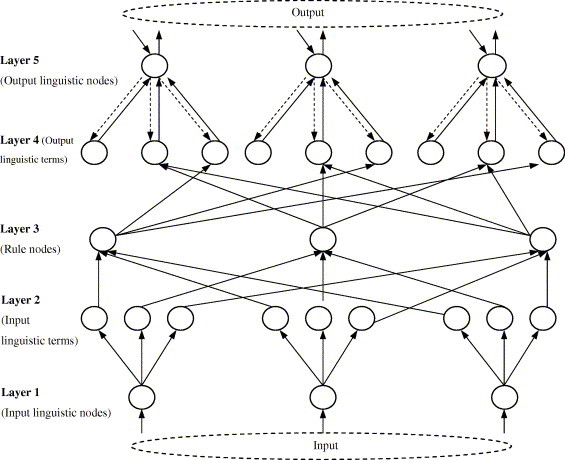
Early detection of breast cancer is the key to improve survival rate. Thermogram is a promising front-line screening tool as it is able to warn women of breast cancer up to 10 years in advance. However, analysis and interpretation of thermogram are heavily dependent on the analysts, which may be inconsistent and error-prone. In order to boost the accuracy of preliminary screening using thermogram without incurring additional financial burden, (CLFNN), FALCON-AART is proposed as the (CAI) tool for thermogram analysis. CLFNN is a neuroscience-inspired technique that provides intuitive fuzzy rules, human-like reasoning, and good classification performance. Confluence of thermogram and CLFNN offers a promising tool for fighting breast cancer.
早期发现乳腺癌是提高生存率的关键。热成像图是一种很有前景的一线筛查工具,因为它能够提前长达10年向女性发出乳腺癌预警。然而,热成像图的分析和解读在很大程度上依赖于分析人员,这可能会出现不一致且容易出错的情况。为了在不增加额外经济负担的情况下提高使用热成像图进行初步筛查的准确性,提出了模糊联想学习神经网络(CLFNN)、基于自适应共振理论的快速自主学习连接主义网络(FALCON - AART)作为热成像图分析的计算机辅助智能(CAI)工具。CLFNN是一种受神经科学启发的技术,它提供直观的模糊规则、类似人类的推理以及良好的分类性能。热成像图与CLFNN的融合为抗击乳腺癌提供了一种很有前景的工具。