Li Xingru, Larsson Pär, Ljuslinder Ingrid, Öhlund Daniel, Myte Robin, Löfgren-Burström Anna, Zingmark Carl, Ling Agnes, Edin Sofia, Palmqvist Richard
Department of Medical Biosciences, Pathology, Umeå University, 90185 Umeå, Sweden.
Department of Radiation Sciences, Oncology, Umeå University, 90185 Umeå, Sweden.
Cancers (Basel). 2020 Apr 10;12(4):923. doi: 10.3390/cancers12040923.
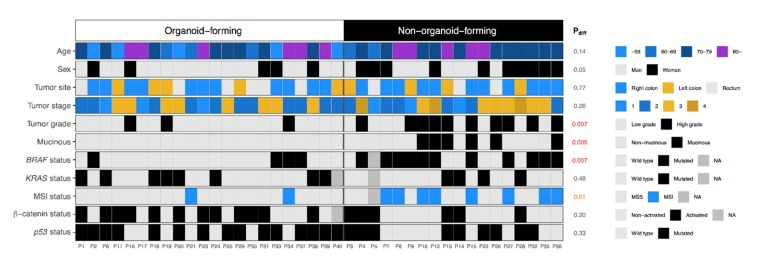
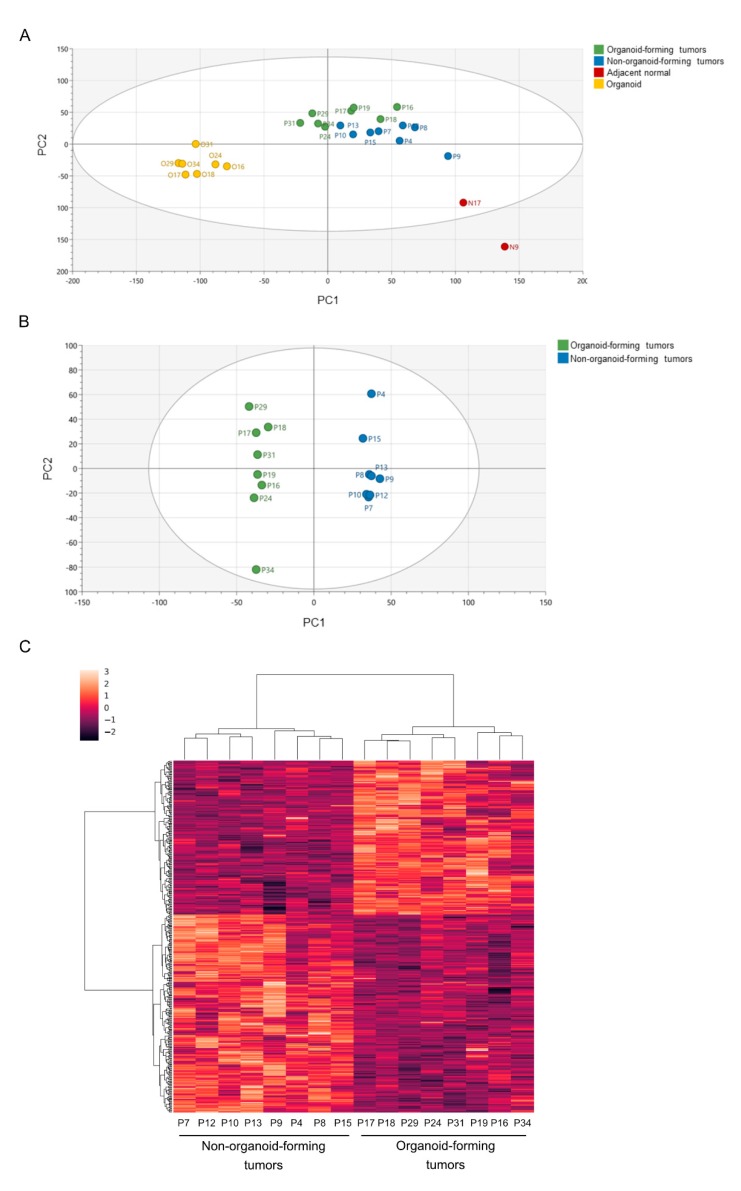
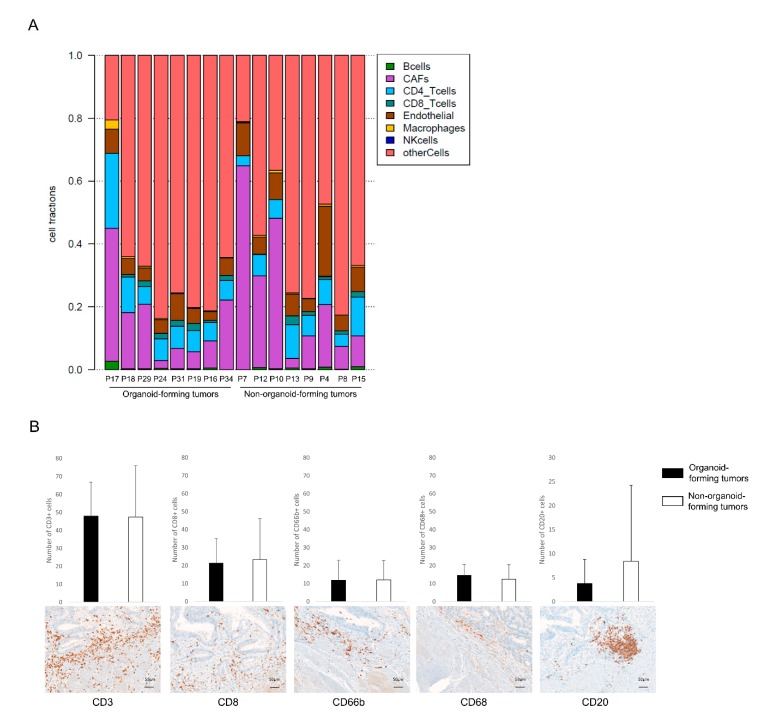
Colorectal cancer (CRC) is a heterogeneous disease, with varying clinical presentations and patient prognosis. Different molecular subgroups of CRC should be treated differently and therefore, must be better characterized. Organoid culture has recently been suggested as a good model to reflect the heterogeneous nature of CRC. However, organoid cultures cannot be established from all CRC tumors. The study examines which CRC tumors are more likely to generate organoids and thus benefit from ex vivo organoid drug testing. Long-term organoid cultures from 22 out of 40 CRC tumor specimens were established. It was found that organoid cultures were more difficult to establish from tumors characterized as microsatellite instable (MSI), -mutated, poorly differentiated and/or of a mucinous type. This suggests that patients with such tumors are less likely to benefit from ex vivo organoid drug testing, but it may also suggest biological difference in tumor growth. RNA sequencing analysis of tumor sections revealed that the in vivo maintenance of these non-organoid-forming tumors depends on factors related to inflammation and pathogen exposure. Furthermore, using TCGA data we could show a trend towards a worse prognosis for patients with organoid-forming tumors, suggesting also clinical differences. Results suggest that organoids are more difficult to establish from tumors characterized as MSI, -mutated, poorly differentiated and/or of a mucinous type. We further suggest that the maintenance of cell growth of these tumors in vivo may be promoted by immune-related factors and other stromal components within the tumor microenvironment.
结直肠癌(CRC)是一种异质性疾病,临床表现和患者预后各不相同。CRC的不同分子亚组应采用不同的治疗方法,因此,必须对其进行更精确的特征描述。最近,类器官培养被认为是反映CRC异质性的良好模型。然而,并非所有CRC肿瘤都能建立类器官培养体系。本研究旨在探究哪些CRC肿瘤更有可能生成类器官,从而从体外类器官药物测试中获益。研究人员成功建立了40例CRC肿瘤标本中22例的长期类器官培养体系。结果发现,从具有微卫星不稳定(MSI)、携带基因突变、低分化和/或黏液型特征的肿瘤中更难建立类器官培养体系。这表明,患有此类肿瘤的患者从体外类器官药物测试中获益的可能性较小,但这也可能意味着肿瘤生长存在生物学差异。对肿瘤切片的RNA测序分析表明,这些无法形成类器官的肿瘤在体内的维持依赖于与炎症和病原体暴露相关的因素。此外,利用癌症基因组图谱(TCGA)数据,我们发现具有类器官形成能力的肿瘤患者预后更差,这也提示了临床差异。结果表明,从具有MSI、携带基因突变、低分化和/或黏液型特征的肿瘤中更难建立类器官培养体系。我们进一步推测,肿瘤微环境中的免疫相关因子和其他基质成分可能促进了这些肿瘤在体内的细胞生长维持。