Fariselli Chiara, Vega-Estrada Alfredo, Arnalich-Montiel Francisco, Alio Jorge L
1Research and Development Department, Vissum, Calle Cabañal, 1. Edificio Vissum, 03016 Alicante, Spain.
2Department of Experimental, Diagnostic, and Specialty Medicine (DIMES), Ophthalmology Service, St. Orsola-Malpighi Teaching Hospital, University of Bologna, Bologna, Italy.
Eye Vis (Lond). 2020 Apr 9;7:20. doi: 10.1186/s40662-020-00184-5. eCollection 2020.
To analyze the clinical results of an artificial neural network (ANN) that has been processed in order to improve the predictability of intracorneal ring segments (ICRS) implantation in keratoconus.
This retrospective, comparative, nonrandomized, pilot, clinical study included a cohort of 20 keratoconic eyes implanted with intracorneal ring segments KeraRing (Mediphacos, Belo Horizonte, Brazil) using the ANN (ANN group) and 20 keratoconic eyes implanted with KeraRing using the manufacturer's nomograms (nomogram group). Uncorrected distance visual acuity (UDVA), corrected distance visual acuity (CDVA) (visual acuity is expressed in decimal value and in LogMAR value in brackets), manifest refraction, corneal topography, tomography, aberrometry, pachymetry and volume analysis (Sirius System. CSO, Firenze, Italy) were performed during the preoperative visit; and the two groups, ANN group and nomogram group, did not differ significantly preoperatively in all of the parameters evaluated. These preoperative values were compared with the results obtained at the third-month visit. Mann-Whitney test and Wilcoxon test were used for the statistical analyses.
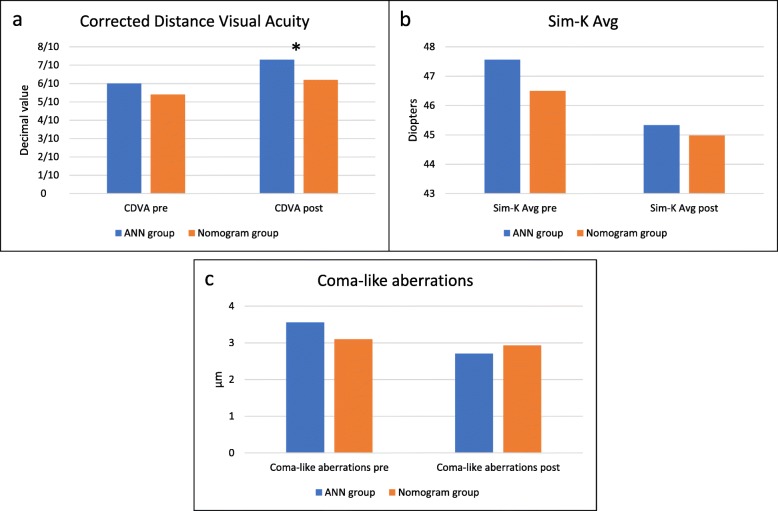
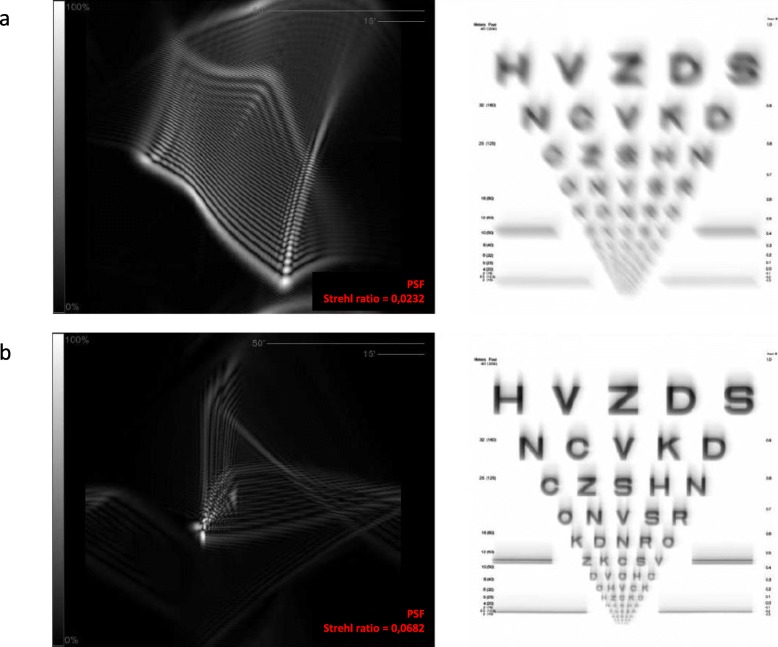
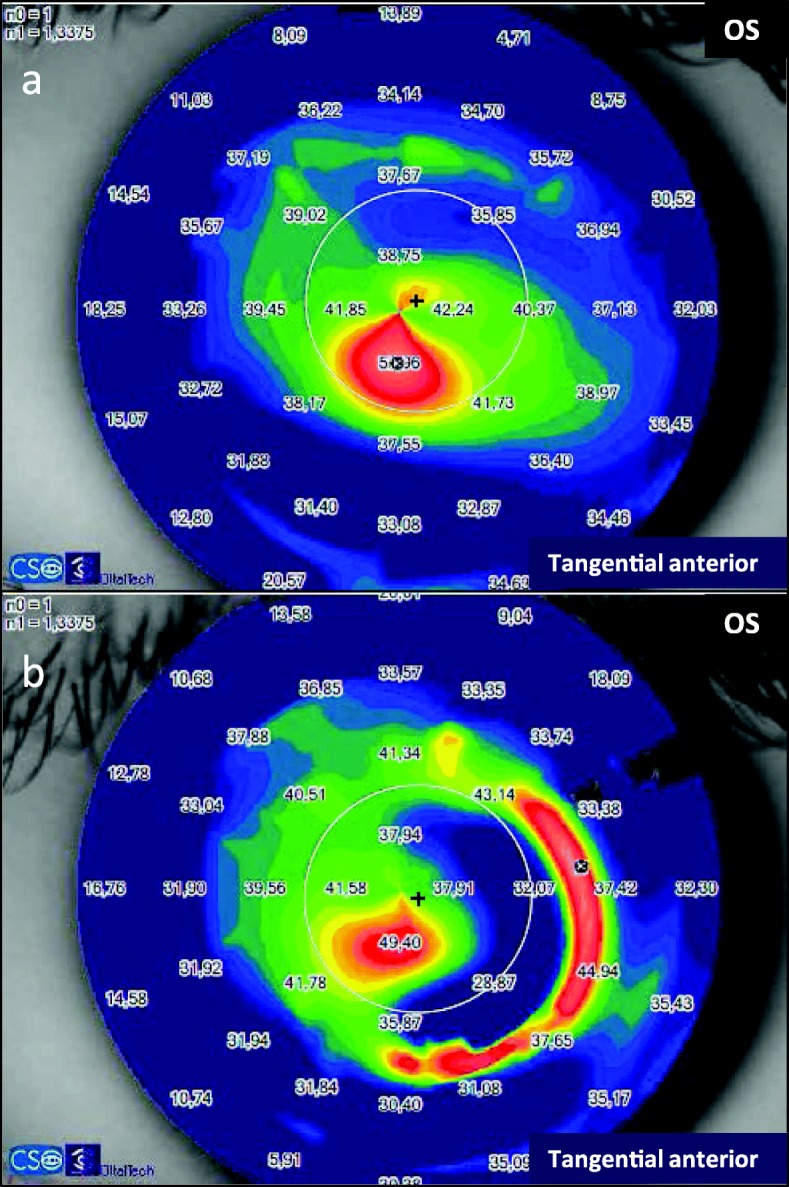
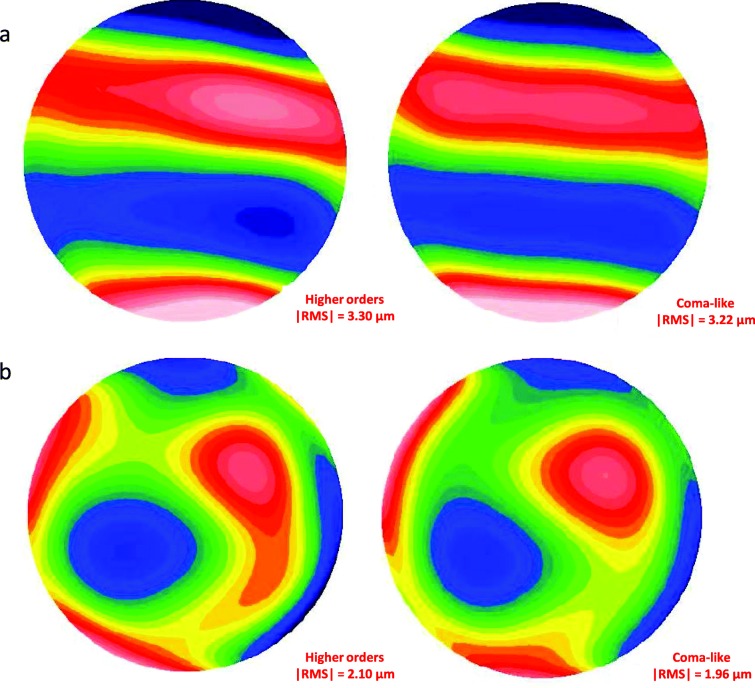
The spherical equivalent and the keratometric values decreased significantly in both groups. The CDVA improved from 0.60 ± 0.23 (0.22 LogMAR) pre-operatively to 0.73 ± 0.21 (0.14 LogMAR) post-operatively in the ANN group ( < 0.005), and from 0.54 ± 0.19 (0.27 LogMAR) pre-operatively to 0.62 ± 0.19 (0.21 LogMAR) post-operatively in the nomogram group ( < 0.01), with statistically significant difference between the two groups ( < 0.05), being better in the ANN group. Coma-like aberrations decreased significantly in the ANN group, while in the nomogram group they did not change significantly, but no statistically significant difference was found between the two groups.
ANN to guide ICRS provides an increase in the visual acuity, reduction in the spherical equivalent and improvement in the optical quality of keratoconus patients. ANN gives better results when compared with the manufacturer's nomograms in terms of better corrected vision and reduction of the coma-like aberrations. The constant inclusion of new cases will make the predictability of ANN increasingly better as the software finetunes its learning.
分析经过处理的人工神经网络(ANN)在提高圆锥角膜患者角膜内环植入术(ICRS)可预测性方面的临床效果。
本回顾性、比较性、非随机、前瞻性临床研究纳入了20例圆锥角膜患者,其中10例使用人工神经网络指导植入角膜内环KeraRing(Mediphacos,巴西贝洛奥里藏特)(人工神经网络组),另外10例使用制造商的列线图指导植入KeraRing(列线图组)。术前检查包括裸眼远视力(UDVA)、矫正远视力(CDVA)(视力以小数表示,括号内为LogMAR值)、显验光、角膜地形图、断层扫描、像差测量、角膜厚度测量和容积分析(Sirius系统,CSO,意大利佛罗伦萨);人工神经网络组和列线图组在所有评估参数上术前无显著差异。将这些术前值与术后第三个月的结果进行比较。采用曼-惠特尼检验和威尔科克森检验进行统计分析。
两组的等效球镜度和角膜曲率值均显著降低。人工神经网络组的CDVA从术前的0.60±0.23(0.22 LogMAR)提高到术后的0.73±0.21(0.14 LogMAR)(P<0.005),列线图组从术前的0.54±0.19(0.27 LogMAR)提高到术后的0.62±0.19(0.21 LogMAR)(P<0.01),两组间差异有统计学意义(P<0.05),人工神经网络组效果更好。人工神经网络组的类彗差显著降低,而列线图组无显著变化,但两组间无统计学显著差异。
人工神经网络指导角膜内环植入术可提高圆锥角膜患者的视力,降低等效球镜度并改善光学质量。与制造商的列线图相比,人工神经网络在更好的矫正视力和减少类彗差方面效果更佳。随着软件对学习的微调,不断纳入新病例将使人工神经网络的可预测性越来越好。