Laboratório de Pesquisa em Infecção Hospitalar, Oswaldo Cruz Institute, Fiocruz, Avenida Brasil 4365, Manguinhos, Rio de Janeiro, Rio de Janeiro, 21040-360, Brazil.
Departamento de Bioquímica, Universidade do Estado do Rio de Janeiro, Boulevard Vinte e Oito de Setembro, 87, fundos, andar 4, Vila Isabel, Rio de Janeiro, Rio de Janeiro, 20551-030, Brazil.
BMC Genomics. 2020 Mar 23;21(1):255. doi: 10.1186/s12864-020-6650-9.
The Brazilian endemic clone Pseudomonas aeruginosa ST277 carries important antibiotic resistance determinants, highlighting the gene coding for SPM-1 carbapenemase. However, the resistance and persistence of this clone is apparently restricted to the Brazilian territory. To understand the differences between Brazilian strains from those isolated in other countries, we performed a phylogenetic analysis of 47 P. aeruginosa ST277 genomes as well as analyzed the virulence and resistance gene profiles. Furthermore, we evaluated the distribution of genomic islands and assessed in detail the characteristics of the CRISPR-Cas immunity system in these isolates.
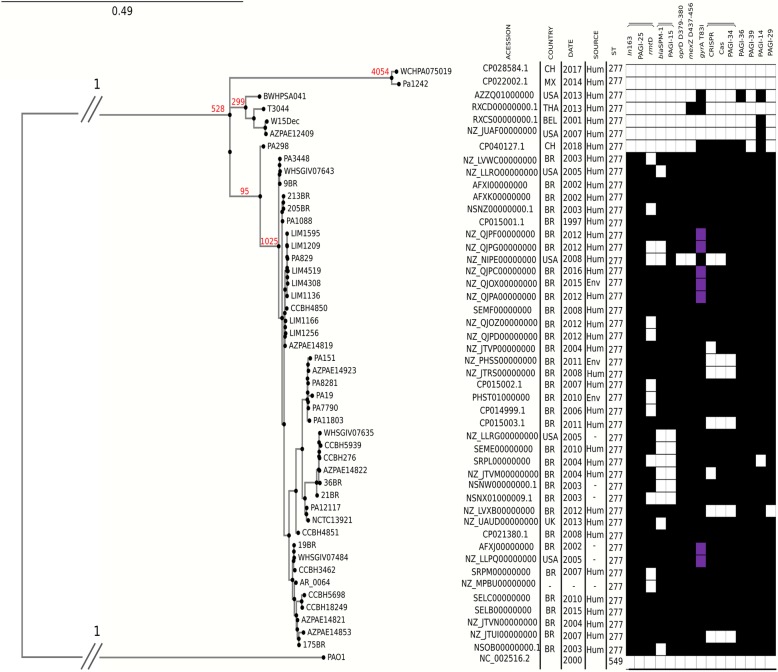
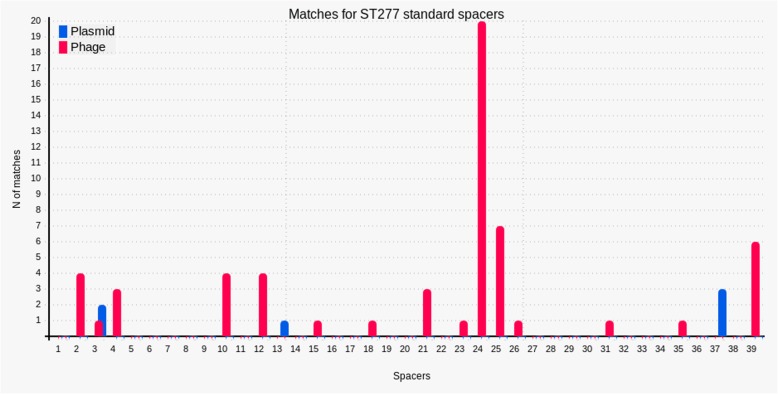
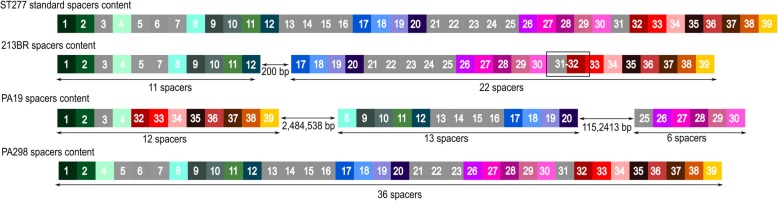
The Brazilian genomes presented a typical set of resistance and virulence determinants, genomic islands and a high frequency of the CRISPR-Cas system type I-C. Even though the ST277 genomes are closely related, the phylogenetic analysis showed that the Brazilian strains share a great number of exclusively SNPs when compared to other ST277 genomes. We also observed a standard CRISPR spacers content for P. aeruginosa ST277, confirming a strong link between sequence type and spacer acquisition. Most CRISPR spacer targets were phage sequences.
Based on our findings, P. aeruginosa ST277 strains circulating in Brazil characteristically acquired In163 and PAGI-25, which can distinguish them from strains that do not accumulate resistance mechanisms and can be found on the Asian, European and North American continents. The distinctive genetic elements accumulated in Brazilian samples can contribute to the resistance, pathogenicity and transmission success that characterize the ST277 in this country.
巴西地方性克隆铜绿假单胞菌 ST277 携带重要的抗生素耐药决定因素,突出了编码 SPM-1 碳青霉烯酶的基因。然而,该克隆的耐药性和持久性显然仅限于巴西领土。为了了解巴西菌株与其他国家分离株之间的差异,我们对 47 株铜绿假单胞菌 ST277 基因组进行了系统发育分析,并分析了毒力和耐药基因谱。此外,我们评估了基因组岛的分布,并详细评估了这些分离株中 CRISPR-Cas 免疫系统的特征。
巴西基因组具有典型的耐药和毒力决定因素、基因组岛和高频率的 I-C 型 CRISPR-Cas 系统。尽管 ST277 基因组密切相关,但系统发育分析表明,与其他 ST277 基因组相比,巴西菌株具有大量特有的 SNP。我们还观察到了铜绿假单胞菌 ST277 的标准 CRISPR 间隔子含量,这证实了序列类型和间隔子获取之间的紧密联系。大多数 CRISPR 间隔子靶标是噬菌体序列。
基于我们的发现,在巴西流行的铜绿假单胞菌 ST277 菌株特征性地获得了 In163 和 PAGI-25,这可以将它们与不积累耐药机制的菌株区分开来,这些菌株可以在亚洲、欧洲和北美大陆发现。在巴西样本中积累的独特遗传元件可以有助于该 ST277 在该国的耐药性、致病性和传播成功的特征。