Department of Neurology, Tongji Hospital, Tongji Medical College, Huazhong University of Science and Technology, Wuhan, Hubei, 430030, People's Republic of China.
Department of Obstetrics and Gynecology, Union Hospital, Union Medical College, Huazhong University of Science and Technology, Wuhan, Hubei, 430022, People's Republic of China.
BMC Cancer. 2020 Apr 15;20(1):320. doi: 10.1186/s12885-020-06828-y.
The aim of this systematic review and meta-analysis was to compare overall survival and disease-free survival after fertility sparing surgery (FSS) vs radical surgery in stage 1 epithelial ovarian cancer (EOC).
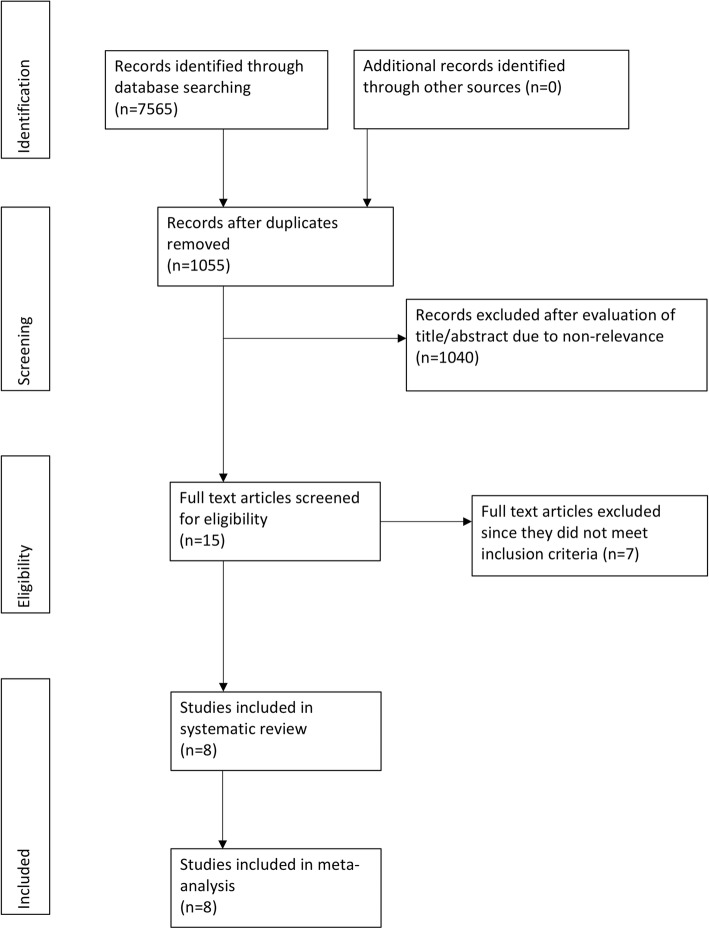
A systematic literature search of PubMed, BioMed Central, Scopus, CENTRAL (Cochrane Central Register of Controlled Trials) and Google scholar was carried out. Databases were searched for English language studies from inception to 1st November 2019. Adjusted hazard ratios (HR) were extracted and pooled for a meta-analysis. Meta-regression was performed for baseline patient characteristics.
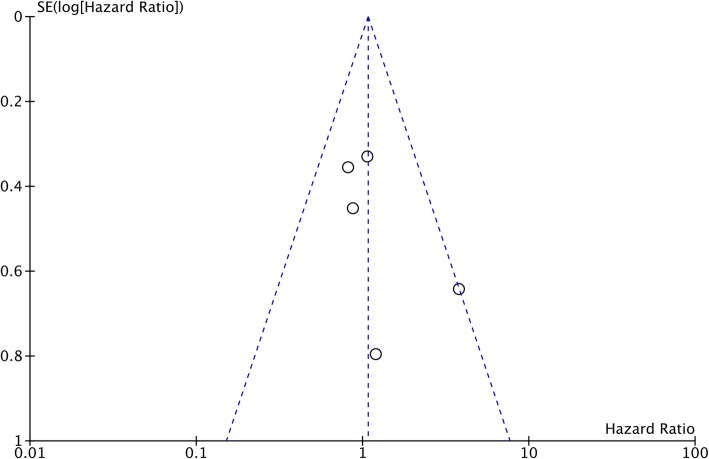
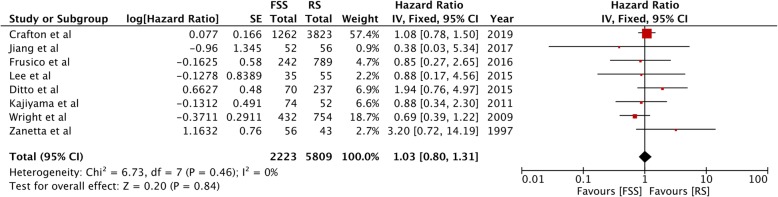
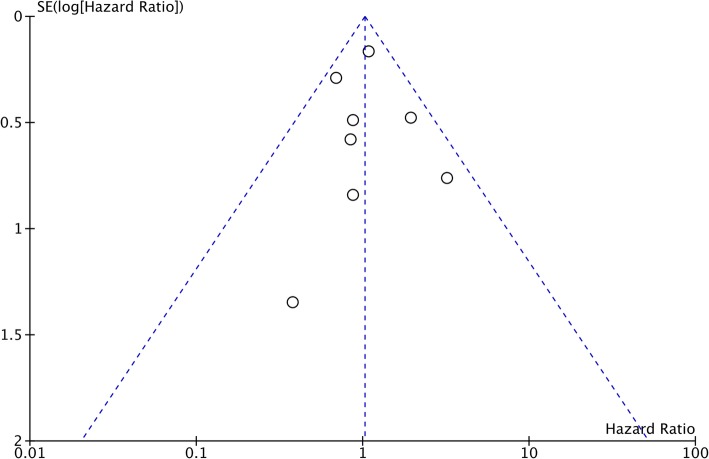
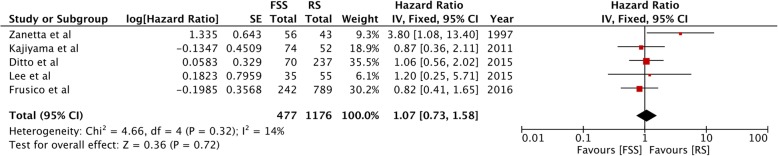
Eight observational studies compared 2223 patients undergoing FSS with 5809 patients undergoing radical surgery. Overall survival was reported from all eight studies. The pooled HR was non-significant (HR, 1.03; 95%CI, 0.80-1.31; p = 0.84) denoting no difference in overall survival between FSS and radical surgery. Data on disease-free survival was available from five studies. Our analysis indicated no difference in disease-free survival between EOC patients undergoing FSS or radical surgery (HR, 1.07; 95%CI, 0.73-1.58; p = 0.72). On meta-regression, there was no a statistically significant effect of cancer stage, grade and histology on the pooled HR.
On the basis of currently available observational studies there seems to be no difference in overall survival and disease-free survival with either surgical techniques for stage 1 EOC patients. Disease stage, tumor grade and histology does not appear to influence outcomes. Further homogenous studies shall improve the quality of evidence on this debatable subject.
本系统评价和荟萃分析的目的是比较保留生育功能手术(FSS)与根治性手术治疗 1 期上皮性卵巢癌(EOC)患者的总生存率和无病生存率。
系统检索了 PubMed、BioMed Central、Scopus、CENTRAL(Cochrane 对照试验中心注册库)和 Google Scholar,检索时间截至 2019 年 11 月 1 日。提取并汇总了调整后的风险比(HR)进行荟萃分析。对基线患者特征进行了元回归分析。
8 项观察性研究比较了 2223 例接受 FSS 治疗的患者和 5809 例接受根治性手术治疗的患者。8 项研究均报告了总生存率。汇总的 HR 无统计学意义(HR,1.03;95%CI,0.80-1.31;p=0.84),表明 FSS 和根治性手术治疗在总生存率方面没有差异。有 5 项研究报告了无病生存率的数据。我们的分析表明,FSS 和根治性手术治疗 EOC 患者的无病生存率无差异(HR,1.07;95%CI,0.73-1.58;p=0.72)。元回归分析表明,癌症分期、分级和组织学对汇总 HR 无统计学显著影响。
基于目前现有的观察性研究,FSS 和根治性手术治疗 1 期 EOC 患者的总生存率和无病生存率似乎没有差异。疾病分期、肿瘤分级和组织学似乎并不影响结局。进一步的同质研究将提高这一有争议问题的证据质量。