Department of Neurosurgery, Penn State Hershey Medical Center, University Dr (H110), 850, Hershey, PA, 17033, USA.
Department of Neural and Behavioral Sciences, Penn State Hershey Medical Center, Hershey, PA, USA.
Fluids Barriers CNS. 2020 Apr 16;17(1):28. doi: 10.1186/s12987-020-00190-8.
Iron is crucial for proper functioning of all organs including the brain. Deficiencies and excess of iron are common and contribute to substantial morbidity and mortality. Whereas iron's involvement in erythropoiesis drives clinical practice, the guidelines informing interventional strategies for iron repletion in neurological disorders are poorly defined. The objective of this study was to determine if peripheral iron status is communicated to the brain.
We used a bi-chamber cell culture model of the blood-brain-barrier to determine transcytosis of iron delivered by transferrin as a metric of iron transport. In the apical chamber (representative of the blood) we placed transferrin complexed with iron and in the basal chamber (representative of the brain) we placed human cerebrospinal fluid. Cerebrospinal fluid (CSF) samples (N = 24) were collected via lumbar puncture. The integrity of the tight junctions were monitored throughout the experiments using RITC-Dextran.
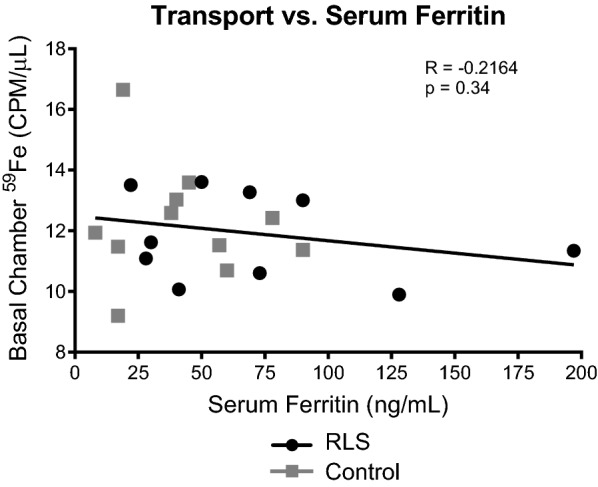
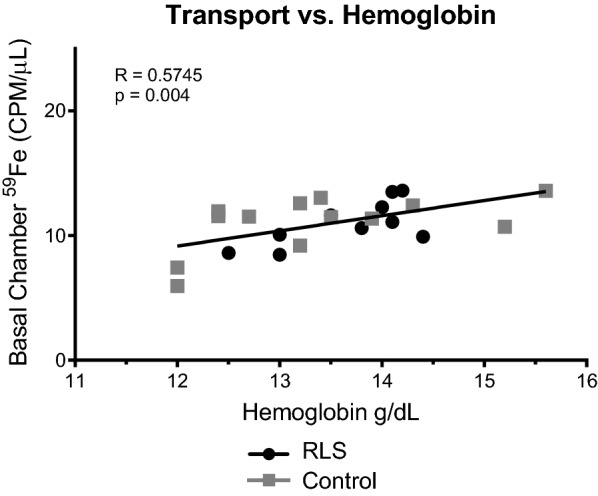
We demonstrate that iron transport correlates positively with plasma hemoglobin concentrations but not serum ferritin levels.
The clinical ramifications of these findings are several- fold. They suggest that erythropoietic demands for iron take precedence over brain requirements, and that the metric traditionally considered to be the most specific test reflecting total body iron stores and relied upon to inform treatment decisions-i.e., serum ferritin-may not be the preferred peripheral indicator when attempting to promote brain iron uptake. The future direction of this line of investigation is to identify the factor(s) in the CSF that influence iron transport at the level of the BBB.
铁对于包括大脑在内的所有器官的正常功能至关重要。铁的缺乏和过量很常见,会导致大量发病率和死亡率。虽然铁在红细胞生成中的作用推动了临床实践,但指导神经疾病中铁补充的干预策略的指南定义得很差。本研究的目的是确定外周铁状态是否能传递到大脑。
我们使用血脑屏障的双室细胞培养模型来确定转铁蛋白传递的铁的转胞吞作用作为铁转运的指标。在顶端室(代表血液)中,我们放置了与铁结合的转铁蛋白,在基底室(代表大脑)中,我们放置了人脑脊液。通过腰椎穿刺收集脑脊液(CSF)样本(N=24)。整个实验过程中,使用 RITC-Dextran 监测紧密连接的完整性。
我们证明铁的转运与血浆血红蛋白浓度呈正相关,但与血清铁蛋白水平无关。
这些发现的临床意义有几个方面。它们表明,铁对红细胞生成的需求优先于大脑的需求,而且传统上被认为是反映全身铁储存并用于指导治疗决策的最具体测试的指标,即血清铁蛋白,在试图促进大脑铁吸收时,可能不是首选的外周指标。这一研究方向的未来是确定 CSF 中的因素,这些因素在 BBB 水平上影响铁的转运。