Department of Physiology, Anatomy and Genetics, University of Oxford, Oxford, United Kingdom.
Nuffield Department of Clinical Neurosciences, University of Oxford, Oxford, United Kingdom.
PLoS Genet. 2020 Apr 16;16(4):e1008630. doi: 10.1371/journal.pgen.1008630. eCollection 2020 Apr.
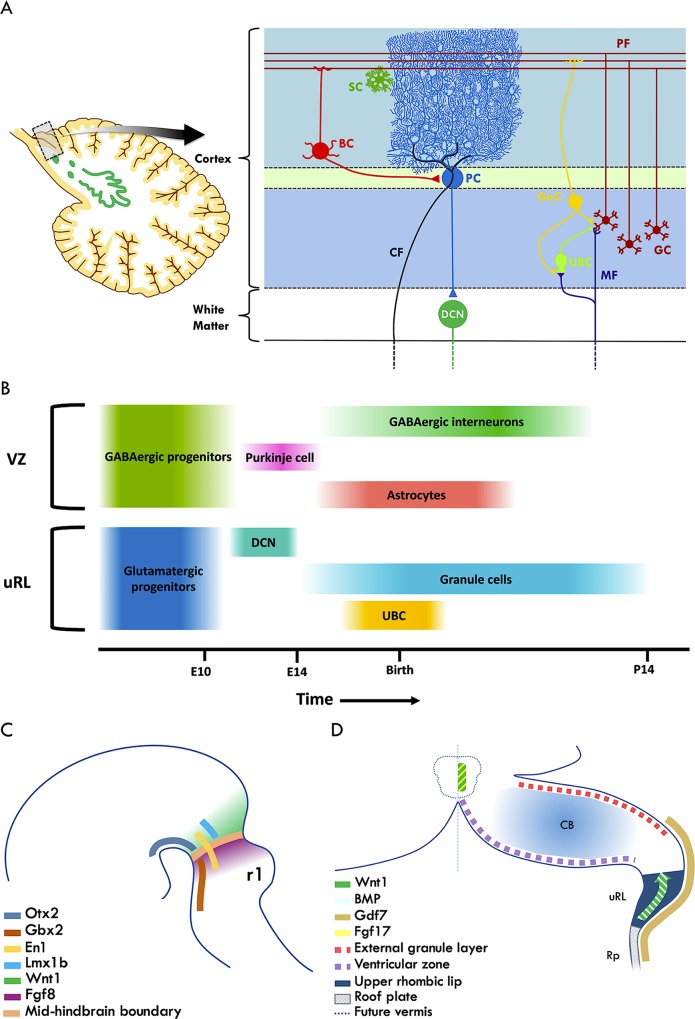
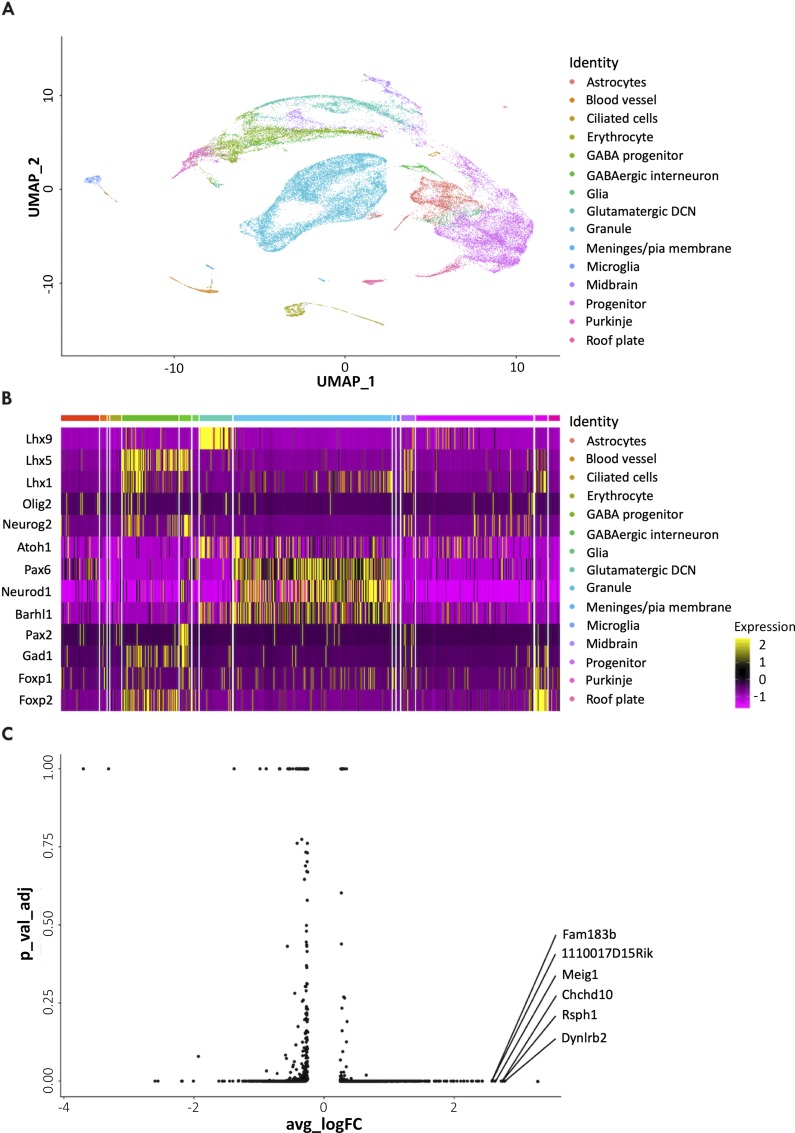
The cerebellum is a pivotal centre for the integration and processing of motor and sensory information. Its extended development into the postnatal period makes this structure vulnerable to a variety of pathologies, including neoplasia. These properties have prompted intensive investigations that reveal not only developmental mechanisms in common with other regions of the neuraxis but also unique strategies to generate neuronal diversity. How the phenotypically distinct cell types of the cerebellum emerge rests on understanding how gene expression differences arise in a spatially and temporally coordinated manner from initially homogeneous cell populations. Increasingly sophisticated fate mapping approaches, culminating in genetic-induced fate mapping, have furthered the understanding of lineage relationships between early- versus later-born cells. Tracing the developmental histories of cells in this way coupled with analysis of gene expression patterns has provided insight into the developmental genetic programmes that instruct cellular heterogeneity. A limitation to date has been the bulk analysis of cells, which blurs lineage relationships and obscures gene expression differences between cells that underpin the cellular taxonomy of the cerebellum. This review emphasises recent discoveries, focusing mainly on single-cell sequencing in mouse and parallel human studies that elucidate neural progenitor developmental trajectories with unprecedented resolution. Complementary functional studies of neural repair after cerebellar injury are challenging assumptions about the stability of postnatal cellular identities. The result is a wealth of new information about the developmental mechanisms that generate cerebellar neural diversity, with implications for human evolution.
小脑是整合和处理运动和感觉信息的关键中心。它在出生后的时期内得到了广泛的发育,使其容易受到各种疾病的影响,包括肿瘤。这些特性促使了深入的研究,不仅揭示了与神经轴其他区域共同的发育机制,还揭示了产生神经元多样性的独特策略。小脑中表型不同的细胞类型的出现取决于理解基因表达差异如何以空间和时间协调的方式从最初同质的细胞群体中产生。越来越复杂的命运映射方法,最终以遗传诱导的命运映射为手段,进一步加深了对早期和晚期出生细胞之间谱系关系的理解。通过这种方式追踪细胞的发育历史,并结合基因表达模式的分析,为指导细胞异质性的发育遗传程序提供了深入的了解。迄今为止的一个限制是对细胞的批量分析,这模糊了谱系关系,并掩盖了支持小脑细胞分类的细胞之间的基因表达差异。本文重点介绍了最近在小鼠和平行的人类研究中的发现,强调了单细胞测序,这些研究以前所未有的分辨率阐明了神经祖细胞的发育轨迹。对小脑损伤后神经修复的补充功能研究对出生后细胞身份的稳定性提出了挑战。其结果是,关于产生小脑神经多样性的发育机制的大量新信息,对人类进化具有重要意义。